

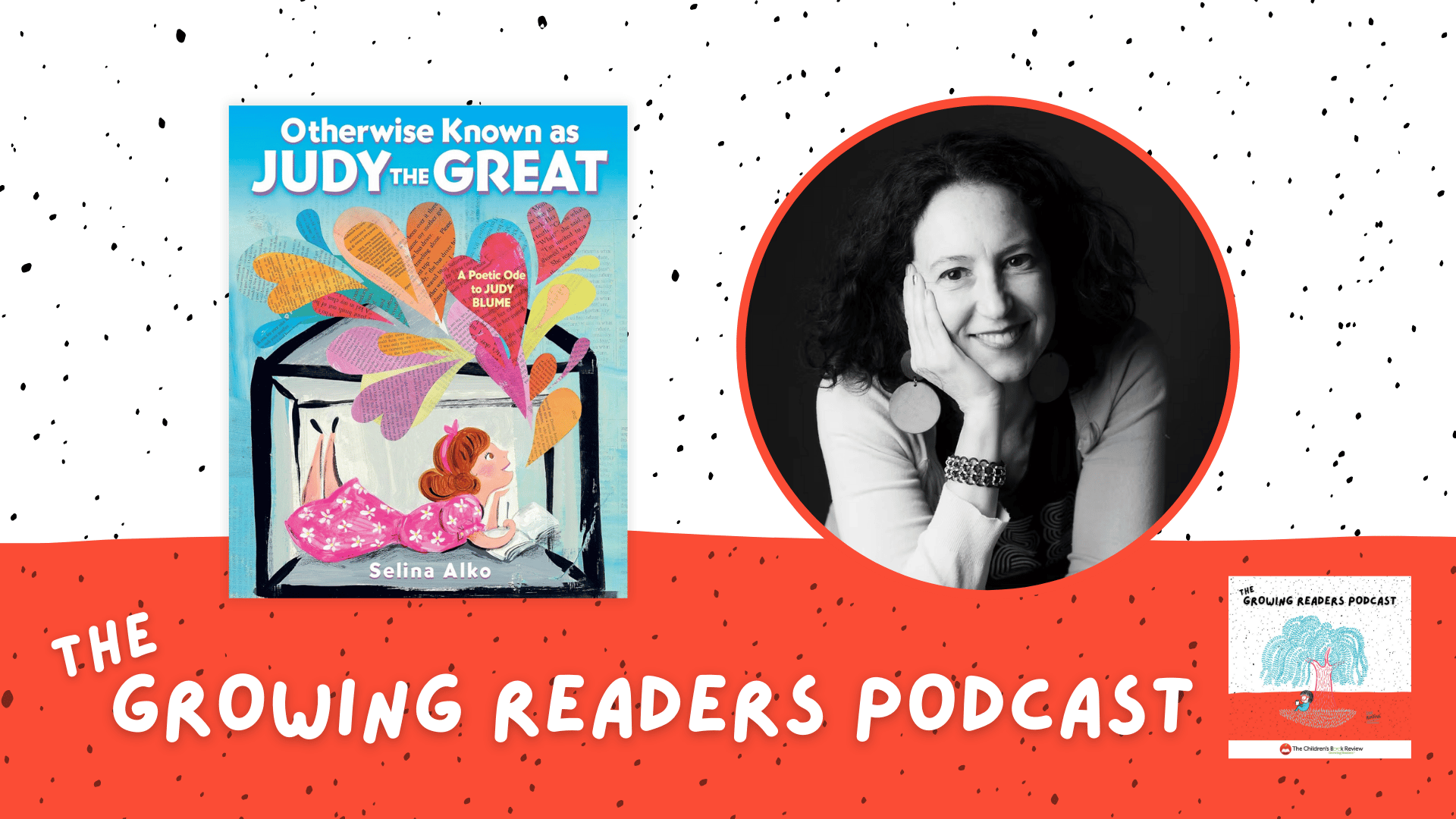
A podcast interview with Selina Alko discussing Otherwise Known as Judy the Great: A Poetic Ode to Judy Blume on The Growing Readers Podcast, a production of The Children’s Book Review.
Author Selina Alko’s heartfelt collection of poems, Otherwise Known as Judy the Great, shines a light on Judy Blume’s childhood and the stories that have shaped generations of readers.
Ever wonder how childhood fear becomes fearless storytelling? In this episode, Selina reveals how young Judy—growing up Jewish during WWII—turned her anxieties into the stories that would break taboos and change children’s literature forever. From Are You There God? It’s Me, Margaret to the Fudge series, learn how Judy’s childhood struggles shaped the books that made generations of readers feel less alone. Selina shares her creative process of capturing Judy’s voice through verse and vibrant illustration, making this literary icon accessible to a whole new generation of young readers.
Listen now to explore how one girl’s stories became a legacy of courage—and discover why introducing Judy Blume to today’s children matters more than ever.
Subscribe to The Growing Readers Podcast to ensure you never miss an episode celebrating the creators shaping young readers’ lives.
Listen to the Episode
The Show Notes
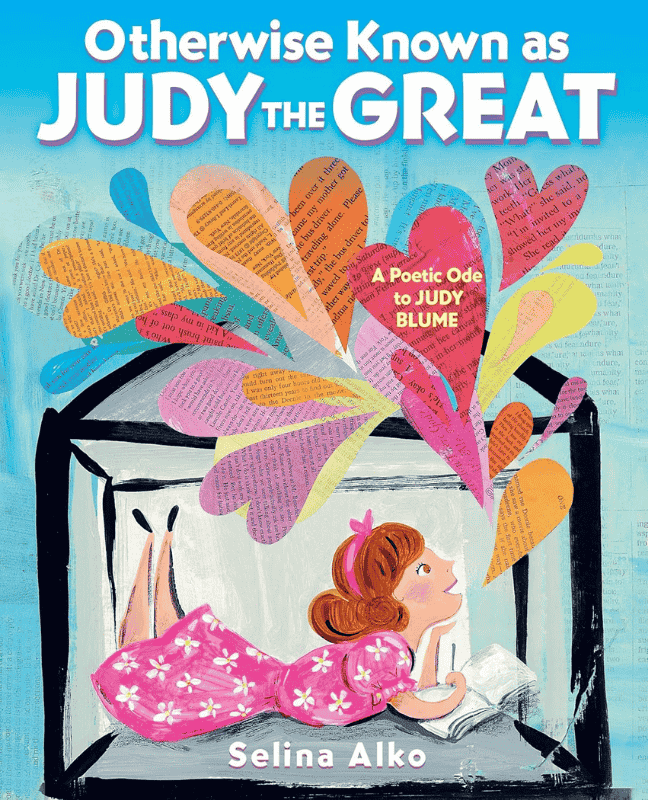
Otherwise Known as Judy the Great: A Poetic Ode to Judy Blume
Written by Selina Alko
Ages: 6-10 | 48 Pages
Publisher: Christy Ottaviano Books | ISBN-13: 978-0316570633
Publisher’s Summary: Beloved and trailblazing author Judy Blume comes to life in this poetic picture book about her childhood.
Judy Blume is known for fearlessly discussing topics that were once considered taboo. As a young girl, Judy was not encouraged to share her feelings, so instead she invented stories as a way to understand the world around her. Growing up Jewish, during and in the aftermath of WWII, dramatically shaped Judy’s childhood. Her younger years were full of fear. Judy processed her conflicted emotions by making up stories where she could control the conflict as she worked through challenging life scenarios. These stories became the subjects of the books she later published for children, tweens, teens, and adults including Are You There God? It’s Me Margaret, Freckle Juice, and the Fudge series. This inspiring collection of poems celebrates the childhood years of Judy Blume, one of the most beloved American writers of all time.
Buy the Book
About the Author
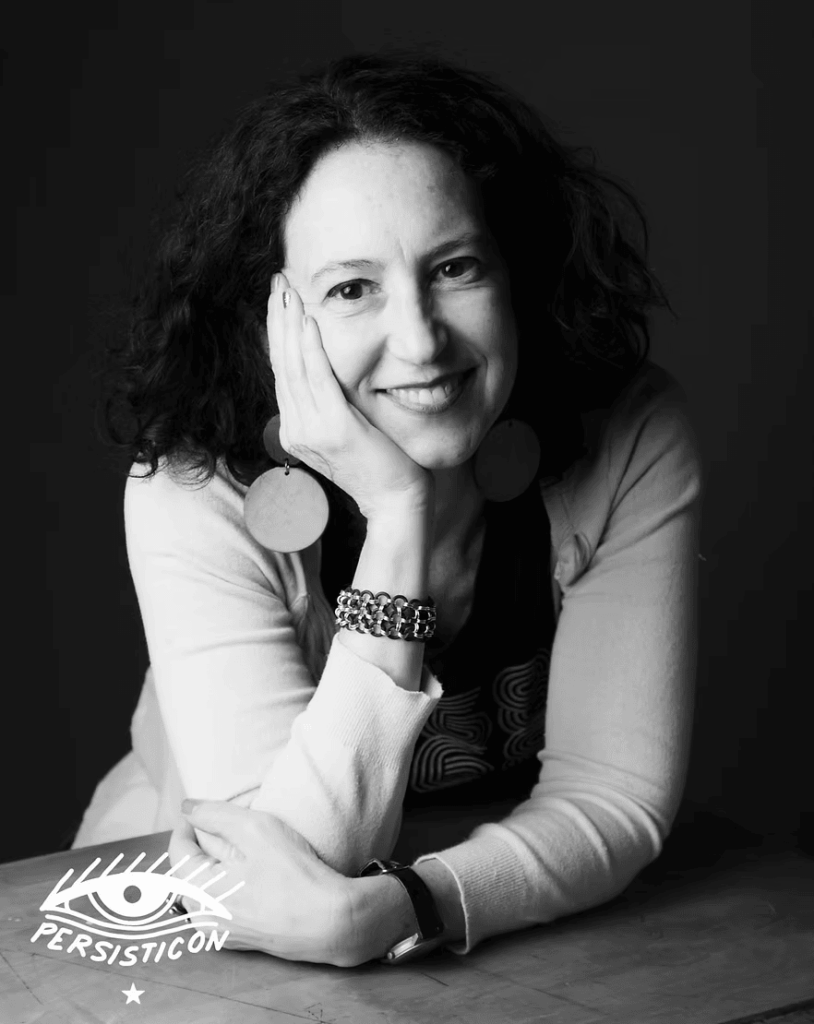
Selina Alko is an award-winning author-illustrator of many books for young readers, including I Is for Immigrants, B Is for Brooklyn, Daddy Christmas & Hanukkah Mama, and The Case for Loving: The Fight for Interracial Marriage — illustrated by Sean Qualls. She lives in Brooklyn with her family.
She invites you to visit her online at selinaalko.com.
Credits:
Host: Bianca Schulze
Guest: Selina Alko
Producer: Bianca Schulze
Read the Transcript
Bianca Schulze: Hi, Selina, welcome to The Growing Readers podcast.
Selina Alko: Hi! Thanks!
Bianca Schulze: I love to just kind of jolt us right into a warm-up conversation with some rapid-fire questions. So just like the first things that pop into your mind here. So finish this sentence: Every child’s bookshelf needs…
Selina Alko: Books by Eric Carle.
Bianca Schulze: What’s one book from your own childhood that you’d love to see make a comeback for today’s kids?
Selina Alko: Starring Sally J. Freedman as Herself.
Bianca Schulze: If you could have lunch with any children’s book character, who would it be and what would you talk about?
Selina Alko: Pippi Longstocking. Adventures.
Bianca Schulze: Okay, and then quick on this one: Name a picture book illustration by anyone that still takes your breath away.
Selina Alko: Sophie Blackall’s Farmhouse. The whole book. Yeah.
Bianca Schulze: That’s a beautiful book. Yeah, it’s beautiful. All right, longer answers now. What’s one thing you do in your day-to-day practice that would be either the most surprising or the most relatable to listeners? So something that could inspire others or just demonstrate that they’re not alone.
Selina Alko: I have a pretty intense coffee ritual. I have in my bedroom a mini fridge and a Keurig coffee maker. So I start off my day like I’m in a bed and breakfast, and I make myself a coffee with my cream. And then I have another similar setup right outside my studio, which is at home on the ground floor. So I’ve got these—I sort of treat my day and my space like I’m on vacation, like, you know, it’s a way to treat myself well and have delicious coffee. And I also stock it with all different flavors of seltzer and some chocolate in the fridge as well.
Bianca Schulze: I love that. I was going to—if you didn’t tell me what was in the mini fridge, I was going to ask, so I’m glad you did. So you have your coffee ritual with setups in both your bedroom and your studio. And I also know that you have a yoga practice that gets you out of the house. So talk to me about how these routines—how you think they support your creative work, especially when you’re deep in a project.
Selina Alko: Well, I’ve always worked from home, and over the years it’s become clearer. And I’ve dabbled in yoga over the years, but finally about a year and a half ago, I joined a studio. So I have a membership and I have to fulfill a certain number of classes a month. So it forces me to go to a third space, and I don’t have my phone on, and I’m with community, and I’m basically breathing. I don’t go there really for any kind of major exercise. I mean, I think stretching is important, but I breathe. I really try to unwind and use it as almost a time to meditate and let creative ideas just kind of percolate or don’t think at all. It’s really helped a lot to integrate this yoga practice. But the key for me is not doing it at home. It’s going to a studio, and there’s a little bit of a nice community here in the South Slope of Brooklyn at the place I go to. Yeah.
Bianca Schulze: Yeah, I love that. I think sometimes being around other people can foster some creativity as well somehow. I don’t know. I do think that there’s this common saying—I don’t know who to attribute this to. Some people say it’s like Stephen King, but there’s so many different authors that say this: To be a writer, you need to be a reader first. Was there a pivotal moment in which you considered yourself a reader?
Selina Alko: Absolutely. In my adolescence, I was absolutely obsessed with Judy Blume books. I just read them over and over again late into the night. So many of her titles were my favorites. It’s hard to even choose one, but she was the first author I think that I was obsessed with. And I’m a big reader now as an adult. I’m in an adult book club. I love reading as well as writing and making art.
Bianca Schulze: Yeah, yeah. I feel the same about Judy Blume in terms of chapter book reading. Like my first books were—I loved the Where’s Waldo books and we had in Australia Graeme Base who did this gorgeous I Spy book called Animalia. And so those were like my first sort of segue into enjoying books, but my first novels were the Judy Blume books, like Tales of a Fourth Grade Nothing and Are You There God? It’s Me, Margaret. I mean, I think she’s the one that helped me to enjoy reading for sure. So let’s talk about maybe a fourth-grade version of you thinking about Tales of a Fourth Grade Nothing. So fourth-grade version of you, Selina, devouring Judy Blume books. What was it about her writing that captivated you, do you think?
Selina Alko: Her characters are just so relatable, and I always felt like the dilemmas or the things that were happening in her stories were completely things that mirrored my own world. Like whether it was in Blubber, the bullying incident—you know, there were times that I was picked on at that age. And you develop empathy for every character in that book. She’s kind of really brilliant in how she’s able to do that. What else? I’m sorry, a call just came through and that threw me off. What was—
Bianca Schulze: It threw you off, it’s fine. Just in terms of like what is it about her writing that captivated—but I think you also nailed it. And you just reminded me, I need to turn on my Do Not Disturb, which I didn’t do before. There we go. Now I’m on Do Not Disturb too. So Judy Blume’s books obviously inspired you. And so many of us come to writing and creating art, creating books for so many different reasons. And sometimes that shifts from when you first begin as to—you’ve been doing this for a long time now. So maybe this has changed for you, maybe it hasn’t. But what’s driving you right now personally and guiding you in creating books for kids?
Selina Alko: I mean, lately, a lot of my stories—I’ve been illustrating other people’s stories. Sometimes I write and illustrate, sometimes I just illustrate. I kind of came into children’s books as an illustrator first, because I’m a trained artist. I went to—I got a degree in illustration from the School of Visual Arts. So that’s always been my way into a story. So lately, and I’ve done sort of books that have social justice themes almost since the beginning, or that talk about identity, you know, deal with identity—mixed identity. I did a book called Daddy Christmas and Hanukkah Mama. And then I did The Case for Loving, which is the story of Loving versus Virginia, the Supreme Court case. So I’ve done these sort of identity-heavy topics for a long time, and lately they’ve been more and more Jewish identity-focused. And I’ve been fortunate to get to illustrate a bunch—a few other stories that have been super meaningful to me. And one was last year—it won the National Jewish Book Award. It’s called Sharing Shalom. And do I have it handy to pull up? I don’t know if I do, but—and then this year I just illustrated The Remembering Candle and The Keeper of Stories, which were two more very meaningful projects. One is about a library fire at the Jewish Theological Seminary, nonfiction written by Carolyn Cousin Pritchard, and how a community comes together to save the books. And that book came out about a year ago. And The Remembering Candle is about a yahrzeit candle, which is a Jewish memory candle that’s lit on the anniversary of a loved one’s death anniversary, I guess you could say. And that one is written by Alison Goldberg and it came out about six months ago, and it’s on the Jewish Book Council National Jewish Book Awards shortlist for this year.
Bianca Schulze: Congratulations.
Selina Alko: Thank you, thank you. So I’m very thrilled that these books seem to be getting recognized and also like—I mean, there’s also, I should mention, my Eyes for Immigrants book, which is coming out in spring, and that’s with Candlewick. And I also illustrated a book with Nancy Churnin that’s coming out also in spring called Everyone Eats, which is about the universal language of food. So I’m sort of touching on like universal themes and identity and community through my Jewish lens, through my mixed-race lens, through all these sort of intersecting identities that I’m proud of.
Bianca Schulze: Yeah, absolutely. I mean, it’s clear that you’re drawn to stories about identity and community and social justice, and you’ve been illustrating texts by other authors. But I know that you also write your own books sometimes. So can you talk to me a little bit about the difference in your creative process when you’re illustrating someone else’s words versus writing and illustrating your own story?
Selina Alko: Yeah, I mean, when I’m illustrating someone else’s words, I feel like I’m in service to their vision. And I try to—I try to bring my own artistic voice to it, but I’m also trying to honor what they’ve written and what they’re trying to say. And I think that’s a really interesting challenge because you’re kind of collaborating with someone, but you’re also bringing your own perspective to it. When I’m writing and illustrating my own stories, I feel like I have more freedom to kind of let my voice come through in both the words and the pictures. And I think that’s a different kind of creative challenge. But I also think that it’s really important for me to do both because I think that they inform each other. Like, when I’m illustrating someone else’s words, I’m learning about storytelling in a different way. And when I’m writing my own stories, I’m thinking about how the pictures can tell the story in a way that the words can’t. So I think that they’re both really important parts of my practice.
Bianca Schulze: Yeah, I love that. And it sounds like they’re both challenging in different ways, but they also complement each other really nicely. So let’s talk about your latest book, Otherwise Known as Judy the Great: A Poetic Ode to Judy Blume. This is obviously a very personal project for you. Can you tell us about the genesis of this book and what it means to you to have created the authorized biography of Judy Blume?
Selina Alko: Yeah, I mean, this book is—it’s a dream come true. I mean, I’ve been obsessed with Judy Blume since I was a kid, and to be able to create a book about her life and her work is just—it’s surreal. I mean, I still can’t believe it’s happening. And the book is—it’s a picture book biography, but it’s told in verse. So it’s a poetic ode to Judy Blume, and it’s about her life and her work and her impact on children’s literature. And I think that what makes this book special is that it’s authorized, which means that Judy was involved in the process. And so I was able to interview her and ask her questions and get her feedback on the book. And that was just—it was incredible. I mean, to be able to talk to your childhood hero and ask her questions about her life and her work is just—it’s amazing. And I think that the book is—it’s a celebration of Judy and her work, but it’s also a celebration of the power of books and reading and how they can change lives.
Bianca Schulze: Yeah, I love that. And I think that’s such a beautiful way to frame it. And I think that’s what makes this book so special is that it’s not just about Judy Blume, but it’s about the impact that she’s had on so many readers over the years. So can you tell us a little bit about the process of creating this book? Like, what was it like to work on a project that was so personal to you?
Selina Alko: Yeah, I mean, it was—it was intense. I mean, I think that when you’re working on something that’s so personal, there’s a lot of pressure to get it right. And I think that I put a lot of pressure on myself to make sure that I was honoring Judy and her work and her legacy. And I think that the process was—it was a lot of research and a lot of reading and a lot of thinking about how to tell her story in a way that would be meaningful to young readers. And I think that the verse format was really helpful because it allowed me to kind of distill her life and her work into these little moments that I think are really powerful. And I think that the illustrations also helped to tell the story in a way that the words couldn’t. So I think that it was—it was a really collaborative process between the words and the pictures. And I think that that’s what makes the book special.
Bianca Schulze: Yeah, I love that. And I think that the verse format is such a beautiful way to tell her story because it allows you to kind of capture these moments in time and these emotions in a way that maybe prose wouldn’t. So can you talk to me a little bit about the visual style of the book? Like, what inspired your artistic choices for this particular project?
Selina Alko: Yeah, I mean, I think that I wanted to create a book that felt warm and inviting and nostalgic. And I think that Judy’s books have that quality to them. They feel like you’re spending time with a friend or you’re spending time in a world that feels familiar and comfortable. And so I wanted the illustrations to reflect that. And I think that I used a lot of—I used mixed media, so I used collage and paint and drawing. And I think that that helped to create a kind of layered effect that I think feels very personal and intimate. And I also used a lot of warm colors, like oranges and yellows and reds, to kind of create that warm, inviting feeling. And I think that the overall style is—it’s kind of playful and whimsical, but it’s also grounded in reality. And I think that that reflects Judy’s work as well. Her books are very realistic, but they also have this kind of magical quality to them. And so I wanted the illustrations to reflect that as well.
Bianca Schulze: Yeah, I love that. And I think that’s such a perfect way to describe both Judy’s work and your illustrations. They have that kind of magical realism quality to them. So you mentioned that you were able to interview Judy Blume for this project. Can you tell us what that experience was like? Like, what was it like to meet your childhood hero and talk to her about her life and her work?
Selina Alko: Oh my gosh, it was—it was incredible. I mean, I was so nervous. I was so nervous going into it. I mean, this is someone who I’ve admired for so long, and to be able to talk to her and ask her questions—it was just—it was surreal. And she was so warm and generous with her time. And she answered all my questions, and she was so open about her life and her work. And I think that what struck me the most about her was how humble she is. I mean, she’s had such an incredible impact on so many people, and she’s so humble about it. And I think that that’s—that’s really inspiring. And I think that the conversation we had really informed the book. I mean, I learned so much about her process and about how she thinks about writing and about how she thinks about her readers. And I think that that really came through in the book. And I’m so grateful that she was willing to be part of this project because I think that it made the book so much richer and so much more meaningful.
Bianca Schulze: Yeah, I think that’s so beautiful. And I think that it’s so special that you were able to have that connection with her and to have that conversation with her. So let’s talk a little bit about the research process for this book. I know that you did a lot of reading and a lot of research about Judy’s life and her work. Can you talk to me about what that process was like and what you learned about Judy that maybe surprised you or that you didn’t know before?
Selina Alko: Yeah, I mean, I think that the research process was—it was intense. I mean, I read all of her books again, which was—that was a joy. I mean, I got to revisit all these books that I loved as a kid. And I also read a lot of interviews with her and articles about her. And I think that what surprised me the most was how much she struggled in the beginning of her career. I mean, she faced a lot of rejection, and she faced a lot of censorship. And I think that that’s—that’s really inspiring to me because it shows that even someone like Judy Blume, who’s had such an incredible career, faced obstacles and had to persevere. And I think that that’s a really important message for young people to hear. And I think that the book talks about that as well. It talks about how she faced rejection and how she kept going. And I think that that’s—that’s a really powerful message.
Bianca Schulze: Yeah, I love that. And I think that’s such an important message for young readers to hear because I think sometimes we look at successful people and we think, “Oh, they just had it easy.” But the reality is that most successful people have faced a lot of obstacles and have had to work really hard to get where they are. So I think that’s such an important message. So you’ve been working on this book for a while now. Can you talk to me about what the timeline was like and what the process was like of bringing this book to life?
Selina Alko: Yeah, I mean, I think that the book took about—I think it took about three years from start to finish. And I think that that’s pretty typical for a picture book. I mean, there’s a lot of—there’s a lot of back and forth with the editor and the art director. And there’s a lot of revising and refining. And I think that that’s what makes a good quality book. You know, especially in a world right now where it’s so easy for somebody to just pump out a book and self-publish it and—you know, there’s so much garbage, right? And so I think that that is what makes such a difference is those multiple years of effort and love. And so thank you for putting in that effort and love for our readers.
Selina Alko: Yes. Thank you again. I love that word “marinating.” That’s very true.
Bianca Schulze: Well, it’s definitely a marination. So Judy Blume has so famously written about topics that were considered taboo in children’s literature. While listeners couldn’t see what was in your journal right now that we were flipping through the pages, but there were images of puberty and girls with their period and—she wrote about divorce and so many complex emotions. And you’re often writing and creating work about kids overcoming obstacles. And so on a greater picture of all of that, those complex things of just growing up and being a kid and existing in the world, why does it matter to you today to keep creating stories like that?
Selina Alko: Hmm. I mean, I think that stories are—well, they’re ways for—they’re like roadmaps for kids. So if they can—you know, the way that I could see myself in Judy’s stories, and then it helped propel me forward. And her topics were difficult and often kind of groundbreaking actually. I feel like if just one kid can identify with a book I do that helps them in some way, maybe see themselves in a positive way or understand history better or realize that we’re all one community, or they see their culture reflected in, say, my Eyes for Immigrants book and a food that they like—just these little moments, these little—I want to say validating—or, you know, the experience you get from a book can really change lives. I mean, I don’t want to be too lofty and think like, “Oh, my books are—” you know, but I do feel like I’m doing work that matters in this really difficult kind of world that we’re living in and society, and there’s so many challenges. And I mean, it feels good to do work that I feel is somehow making a small difference.
Bianca Schulze: Yeah, absolutely. I love that you said they’re like roadmaps—books are like a roadmap. And maybe it goes back to what we were talking about before in terms of, you know, if you have a goal or maybe you’re not even sure what your end goal is, but you know you’re on a path, that path is not linear. And I think books show that. Books show the multitude of ways that you can exist in the world and show up and learn about yourself and learn about others. And so I love that you use the word that they’re roadmaps. So if you could go back and tell that fourth-grade version of yourself, the one who was reading Judy Blume, that one day you’d create her authorized biography, what do you think your fourth-grade self would say to you now?
Selina Alko: Wow. I think my fourth-grade self was actually okay. I think my difficult years came after. So maybe my fourth-grade self wouldn’t be so surprised. Maybe my fourth-grade self would think this makes sense. Because I think little Selina was quite confident. And then I got knocked down by the bullies. And then high school was hard. You know, these difficult years, yeah. But I mean, maybe that’s why I go back to my fourth-grade self, because I kind of remember that sort of confidence and that—yeah, I think we would be friends.
Bianca Schulze: Yeah, I love that. And it’s like your fourth-grade self was the confident person that knew you could do this somehow in the future. But it’s all of that adversity in between that you almost have to learn so that you can create an art that has depth and poignancy to it. And so fourth-grade Selina knew you could do it, and then you had to live and experience the adversity. Sadly, we often have to so that we can get to this point of creating something beautiful to give hope to those that are back at the beginning phase. So I don’t know, did that make sense?
Selina Alko: Yes, that was so well articulated. You kept—my gosh, you just helped me unlock a part of my childhood and my journey. Thank you. That was good. That was good. That was really good, Bianca.
Bianca Schulze: Yeah, you’re welcome. Therapy for all of us. Well, of everything that we’ve discussed today, what would be the most crucial point that you would want our listeners to take away of everything we just talked about? I know that’s kind of an overwhelming question, but if you just pick one thing that you’d want to leave them with to really think about, what would it be?
Selina Alko: I mean, maybe it is stay true to your younger self or your initial dreams. Like, what did you always want? And maybe like you can go back in time, or there’s a way to hold on to your true passion, I guess. I don’t know. I don’t know if I said that quite right, but—because I sort of love the way you framed or you’ve asked me that question. And then it helped me realize that maybe that is—you know, when I think about myself as a persistent person and a driven person, maybe I’m always going back to my fourth-grade self and remembering like, “You can do this.” Like, you know—and it, yeah. So people need to try to—you know, have more—yeah, I don’t think I have a more articulate way of saying it other than what I’ve—
Bianca Schulze: That’s—yeah. No, honestly, I think that’s fine. And it’s like perseverance and believing in yourself. And on that note, Selina, thank you so much for joining us on The Growing Readers podcast and for sharing your journey from that fourth-grade reader devouring Judy Blume books to the multimedia artist creating her authorized biography. I think your passion for storytelling and art and your dedication to introducing a new generation to Judy Blume’s extraordinary legacy truly shine through. And I have no doubt that Otherwise Known as Judy the Great: A Poetic Ode to Judy Blume is going to inspire countless young readers to discover both Judy’s work and their own creative possibilities. So thank you for the beautiful reminder that dreams really do come true when we work hard, persist, and believe in ourselves.
Selina Alko: Thank you so much. This was such an amazing conversation.
Bianca Schulze: Thank you for being here, Selina, and it was such a joy for me too.
Selina Alko: Thank you.
