

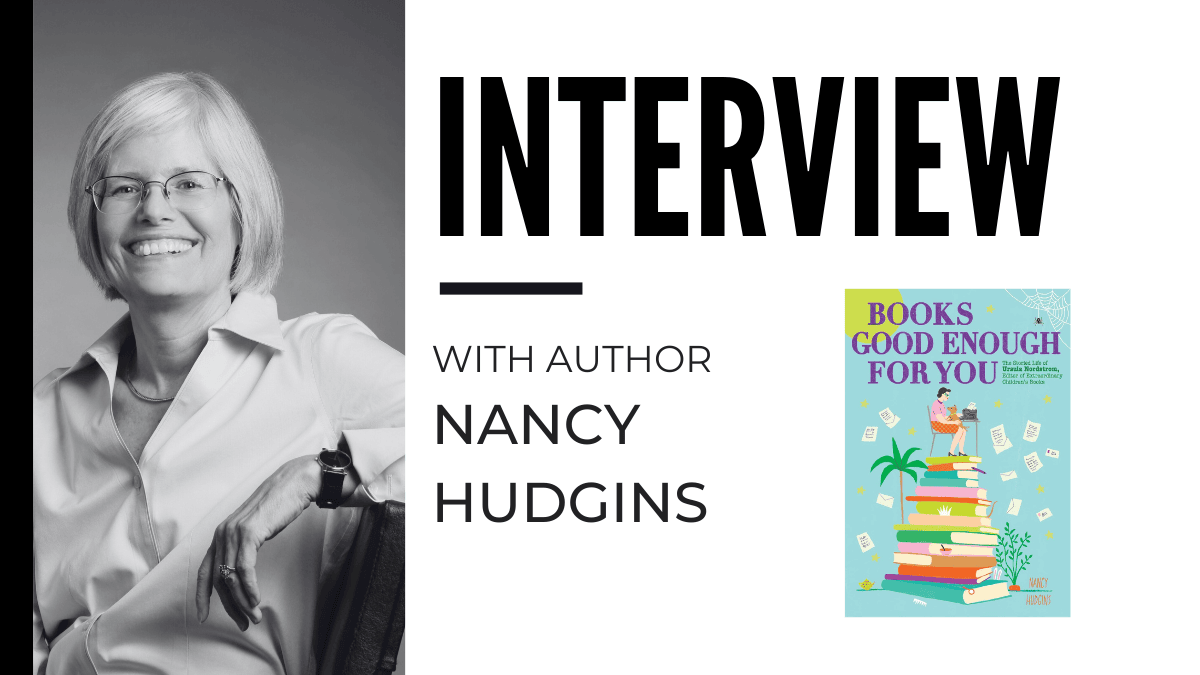
An interview about Books Good Enough for You: The Storied Life of Ursula Nordstrom, Editor of Extraordinary Children’s Books by Nancy Hudgins, presented in partnership with The Children’s Book Review.
In this conversation, Nancy Hudgins takes us behind the scenes of Books Good Enough for You, a fascinating look at the legendary editor Ursula Nordstrom, who helped redefine children’s literature.
Through meticulous research and a deep admiration for her subject, Nancy Hudgins brings to life the remarkable legacy of legendary editor Ursula Nordstrom, whose bold vision helped shape modern children’s literature. From championing groundbreaking works by authors like E. B. White and Maurice Sendak to standing firmly against censorship, Nordstrom believed that young readers deserved stories that were honest, imaginative, and deeply respectful of their intelligence.
In this discussion, Hudgins reflects on the research discoveries that surprised her most, the letters that revealed Nordstrom’s wit and editorial brilliance, and why telling the full human story behind such an influential figure felt essential for today’s readers.
Ursula Nordstrom championed books that were honest, emotional, and often controversial for their time. What first drew you to her story, and when did you know you had to be the one to tell it?
Nancy Hudgins (NH): I first met Ursula through Leonard Marcus’s book, Dear Genius. I wasn’t in the children’s book world then, so I didn’t know much about her historic, revolutionary career. What drew me to her as a person was her sense of humor, and also the different ways she cajoled the creative people she worked with to produce their best work.
Later, when I became serious about writing biographies for children, I looked for women who led interesting, impactful lives and I remembered Ursula. I re-read her letters, and now, they took on a new significance—in fact, many of them taught me how to be a better writer. The more research I did, the more I found to like about her. Championing a child’s right to read! Editing so many iconic books! I just had to write about her! And I wanted kids to know about her.
Your book is dedicated to Amy Novesky “for believing that you would find a way to tell Ursula’s story.” What does it mean to have someone in your corner who believes in you — especially during the long, uncertain journey of writing a biography?
NH: I was new to writing for children when I met Amy at a writing retreat where I took my rough draft of a picture book biography of Ursula. Amy and I couldn’t stop sharing stories about her. From that moment on, Amy encouraged me to keep writing. Over the next several years we were in touch episodically. Her message was always encouraging. I didn’t have an agent and I was trying to figure out how to write for children. I received tons of rejections. It was disheartening. When you feel like you’re out in the desert trying to break into children’s books, and someone shows an interest, it’s like being handed a glass of cool water. I’m not sure I would have pivoted to middle-grade if Amy hadn’t remained positive that I could write a book about Ursula. And then I realized middle-grade gave me the space to tell the stories behind the stories of 16 iconic books Ursula edited.
You spent time researching in archives to bring Ursula’s story to life. What was the most surprising or moving thing you discovered that you hadn’t expected to find?
NH: The most surprising thing was that Ursula never graduated from high school. Just let that sink in.
The most moving thing was a letter she wrote to a mentor who had known her a long time, in which she described going to her father’s memorial service. The service was very short and unsatisfying, as it was presided over by someone who didn’t know Henry. People were getting ready to leave when one of Henry’s old friends from the theater spontaneously stood up and talked about Henry as a fellow actor, followed by more and more actors standing up and telling stories about him and the theater. It seemed very moving to Ursula, and therefore, in her telling, to me.
What did Ursula’s editorial letters reveal about her that you couldn’t have learned any other way?
NH: In my research I found additional editorial letters at various archives. In an unfiltered way, the letters “showed” rather than “told about” her self-deprecating sense of humor. I thought her letters were brilliant. The letters made it clear that, while it could be argued that cajoling with a light touch might be a pose she used as an editor, more likely, it’s who she was. I could have written about a few funny things she said, but it wouldn’t have the impact that reading letter after letter did. I felt the best way to convey who she was to young readers was to quote extensively from her letters.
Your book sheds light on Ursula’s personal life, including her relationship with Mary Griffith, the woman she loved, and her championing of books featuring Black children and LGBTQ experiences — at a time when that was truly radical. How important was it to you to tell that full, human story alongside her professional legacy?
NH: I can’t remember reading an adult biography in which a subject’s spouse was never mentioned. Why should a children’s biography be different? Ursula and Mary weren’t married, but they were is a relationship for 40 years. Mary was part of Ursula’s life. I can’t imagine not writing about her. Ursula worked long days. At the end of the day, she went home to Mary. Writing about Mary was a way to show that editors are people, too.
Professionally, Ursula was a trailblazer in publishing books by Black and LGBTQ authors—not only because she wanted young readers to see themselves in the books they read, but also because other young readers they might learn something about and develop empathy for people who were not like them.
Nordstrom fought back against censorship and book banning throughout her career. Given the climate around banned books today, what do you hope readers take from her example?
NH: Ursula believed in the artistry of the writers and artists she published. When their books were attacked, she always stood up for their freedom of expression. For instance, she used her extensive rolodex—it was the Seventies, after all—to rally 450 writers, artists, editors, agents and publishers to sign a statement when Sendak’s In the Night Kitchen was attacked. Her statement said a private person who owns a book could do with it whatever he or she pleased; but when the government censors a work purchased with government funds, it distorts the artist’s or writer’s work and restricts their freedom of speech.
In a sidebar, I encouraged readers to “Be Like Ursula,” by standing up for what you believe in and by challenging accepted ways of thinking. There were others, but I think these two relate most to censorship and book banning.
You have a background in history, political science, and law — not a typical path to writing a children’s book biography. How did that lens shape the way you approached Ursula’s story and her advocacy work?
NH: It was super helpful in doing the research and no help at all in doing the writing!
It was fun to find the sworn testimony in her parents’ lawsuits in the same format as the trial transcripts I’d regularly read as a lawyer. I probably took some of the organizational skills about marshalling facts from being a lawyer, but the shaping of the story was due to having two skillful editors—Amy Novesky and Courtney Code. They are pro’s, who knew where to prune and where to push me to be clearer. And, of course, when I got to the censorship and book-banning part, I had to go read all the court opinions myself. I tried to distill them into a coherent few paragraphs, but Courtney wasn’t having it. She drew me back from that abyss. I’m glad she did! No kid needed to read those torturous paragraphs.
Ursula was guided by the belief that only fresh, original, and honest stories were worthy of young people. As you finished writing this book, what do you most want young readers — and the adults who champion books for them — to carry with them from her legacy?
NH: Ursula definitely met that goal. It’s a testament to her that many of those stories have proven to be timeless. Charlotte’s Web is seventy years old; Where the Wild Things Are is sixty years old.
I think her legacy stems from the fact that she was on the side of kids from the start. She cultivated writers and artists who felt the same way—Margaret Wise Brown, E. B. White, Maurice Sendak, Gwendolyn Brooks, John Steptoe, Charlotte Zolotow—in fact, most of the people I wrote about. They all saw children as creative and perceptive. They didn’t write down to them, and to “Be Like Ursula,” I didn’t write down to them either.
I hope readers will appreciate how hard she worked to make books good enough for them.
About the Book
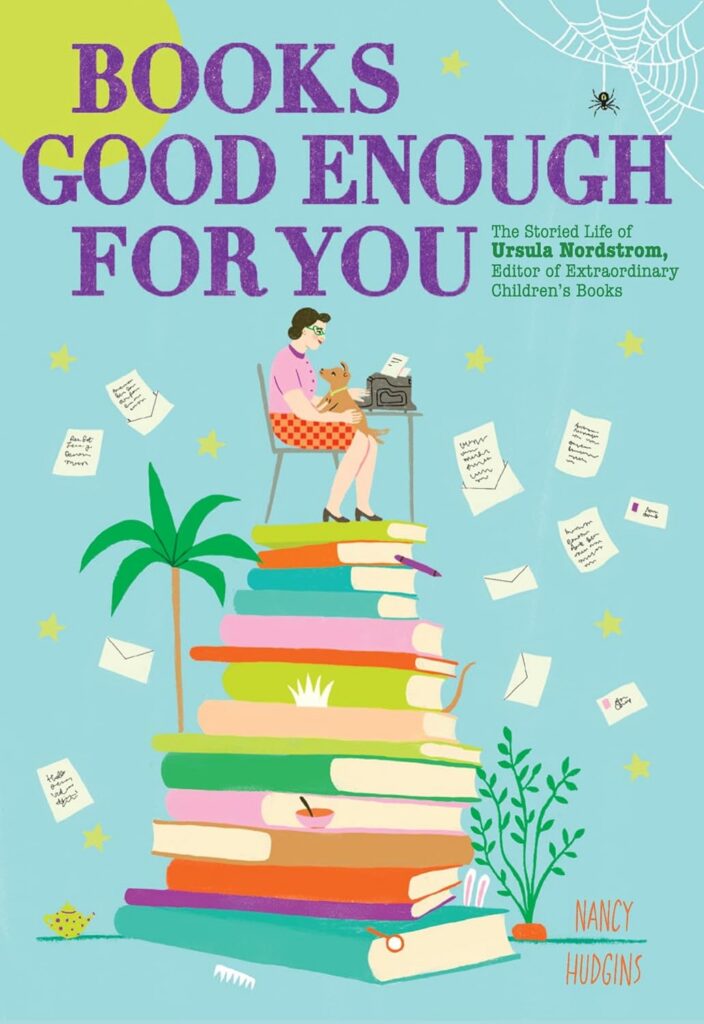
Books Good Enough for You: The Storied Life of Ursula Nordstrom, Editor of Extraordinary Children’s Books
Written by Nancy Hudgins
Ages: 10-14 | 168 Pages
Publisher: Abrams Books for Young Readers (2026) | ISBN: 979-8887075426
Publisher’s Book Summary: A celebration of the life and work of Ursula Norstrom—the groundbreaking editor of classic children’s books like Charlotte’s Web and Where the Wild Things Are—and a powerful defense of a child’s right to read
Legendary Harper & Row children’s book editor Ursula Nordstrom was a trailblazer. Her books were honest, smart, emotional, and firsts of their kind. And—perhaps because they challenged the status quo—they were often censored or banned. But Nordstrom always fought back.
Books Good Enough for You follows Nordstrom from childhood through her extraordinary career as book editor, literary revolutionary, and advocate. Full of anecdotes about some of Nordstrom’s most famous collaborators, like Maurice Sendak, Margaret Wise Brown, and E. B. White, this biography is a true celebration of collaboration and friendship.
Many of Nordstrom’s books—from to Where the Wild Things Are to Charlotte’s Web—are now considered classics, but back in her day, these stories faced fierce opposition from those who deemed them inappropriate for children. In the face of this criticism, Nordstrom pushed back, building up her authors and proudly defending young readers’ access to literature that reflected their worlds.
Filled with quotes from her eloquent, empathetic, and often sharply humorous editorial letters, Books Good Enough for You is a timely reminder that children deserve fresh, groundbreaking, and deeply human stories.
Buy the Book
About the Author
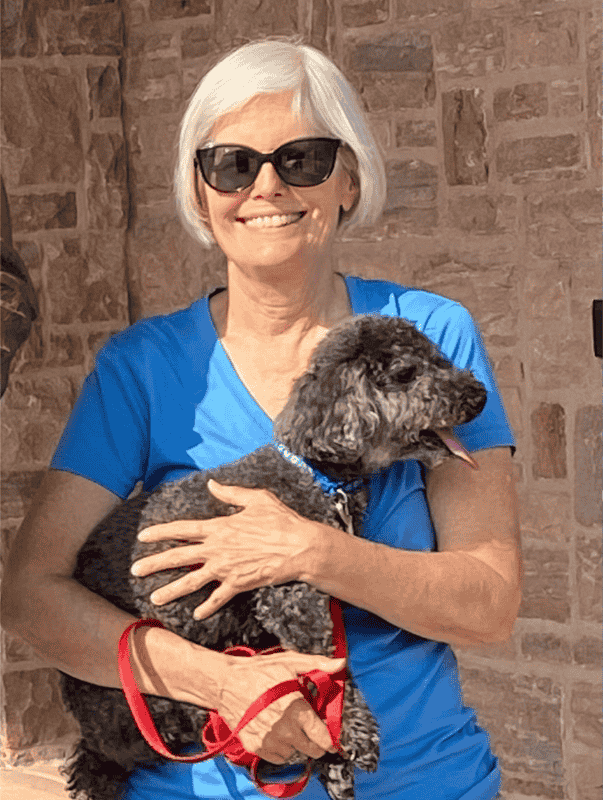
Nancy Hudgins received her undergraduate degree in history and political science from Boston University and her law degree from the University of Virginia. Now, Hudgins and with her rescue dog, Buddy, are the cofounders of a Little Free Library dedicated to children’s books. When not writing, revising or researching in some far-away archive, Hudgins plays bocce. Like Ursula Nordstrom, she enjoys jigsaw puzzles.
To learn more, visit nancyhudgins.com.
This interview with Nancy Hudgins, Author of Books Good Enough for You: The Storied Life of Ursula Nordstrom, Editor of Extraordinary Children’s Books, was conducted between Nancy Hudgins and Bianca Schulze.
