

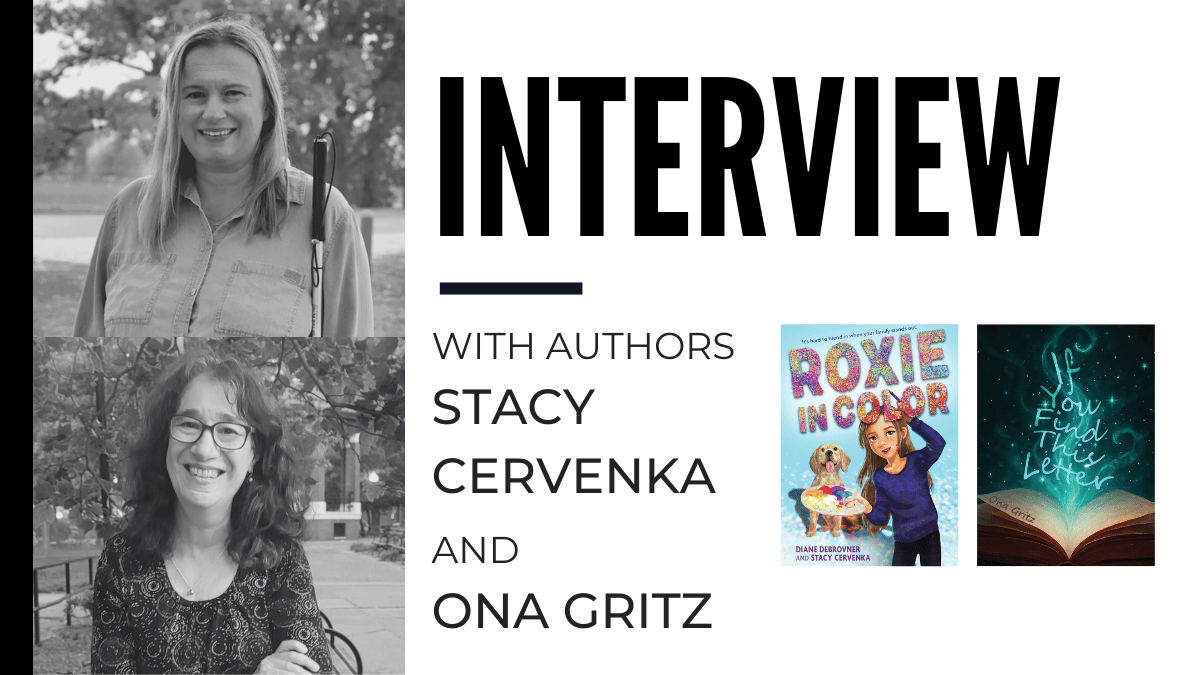
An interview between middle grade authors Stacy Cervenka and Ona Gritz for The Children’s Book Review.
What began as an exchange of advance reader copies quickly became a rich conversation about storytelling, disability, and the unexpected threads connecting their new middle grade novels.
Stacy Cervenka and Ona Gritz met in an online community of disabled kidlit writers. They exchanged advance reader copies of their new middle grade novels, and though the two books differ in many ways, including narrative structure and voice, the common elements and themes astounded the authors. An immediate literary friendship grew. Here they are in conversation:
Protagonists and Perspective
Ona Gritz (OG): The uncanny thing you and I share—what in fact first brought us into conversation—is that both our new books feature non-disabled protagonists with disabled parents. This is a unique choice, especially given that we’re both writers with disabilities. How did you come to envision Roxy’s story in this way?
Stacy Cervenka (SC): I’ve had some blind adults express concern that the novel centers the nondisabled gaze, because both Roxie and Nash are sighted and all of the blind characters are seen from a sighted perspective, which is a fair observation. At the same time, I think there’s something important (and unique in a children’s book) about the fact that the adult authority figures in Roxie’s world are blind. She worries about disappointing them, getting in trouble, whether they’ll say no to things she wants, and how they’ll respond to her choices. Often in children’s books, when there is a blind character, it’s another child, and the moral of the story is that the blind kid is just a kid. In this story, blind adults hold authority, power, and caregiving responsibilities.
You made a similar choice in If You Find This Letter. What drew you to this perspective?
OG: When I first began conceptualizing If You Find This Letter, I was thinking of story first. I knew my protagonist Dani would somehow correspond with her mother Amanda back in time when she, known as Mimi then, was Dani’s age. Her mother’s overprotectiveness is really getting to Dani when we meet her, and I wanted Dani to have the misbelief that if she could change Amanda’s past, she could change their present. I put an accident in Mimi’s near future that Dani could potentially prevent, which causes Mimi to lose a limb. This brought disability into my story and, with it, a clearer idea of who Amanda is. As soon as I knew that she, like me, is a woman and mom with a physical disability, I knew I wanted her to be accomplished, creative, and enmeshed in disabled community.
Mothers and Daughters
SC: In both of our books, Roxie and Dani connect with their moms when they were the same age as Roxie and Dani are now, which is also when both their mothers acquired their disabilities. Roxie’s mom, Penny, found out she had retinitis pigmentosa in middle school, which Roxie may inherit. Roxie thinks about this a lot. Dani actually gets to interact directly with her mom, Amelia, at age twelve. How does Dani getting to know her mom at that age change the way she sees her in the present?
OG: Dani and Mimi exchange several letters and develop a friendship before Dani comes to realize that Mimi is not only writing from an earlier time but is, in fact, her mom as a girl. This gives Dani a chance to get to know Mimi without any of the frustration and resentment she’s been feeling in their present-day relationship. She even shares some of these feelings with Mimi, who has quickly become a trusted confidante. Once she pieces together who Mimi actually is, she has a lot more empathy and understanding toward her. She’s now experienced what a fun and carefree person her mother used to be, and, knowing the losses to come (there will be several), she longs to protect her.
As for your own book, while Roxie doesn’t communicate or interact with her mom’s younger self, she does have a unique connection to her. What does Roxie learn about her mother in her youth that changes the way she thinks about both her mom and herself?
SC: Growing up, Roxie has known that she might inherit retinitis pigmentosa from her mother. But it’s something she and Penny have never really talked about in depth, so Roxie makes a lot of assumptions. She assumes that Penny must have handled her diagnosis with the same calm confidence she shows now as a mother. She assumes that Penny doesn’t know what it feels like to be embarrassed by your parents, because, after all, Penny had bigger things to worry about when she was in middle school. When Roxie finally talks to her, she learns that her mom had a lot of the same feelings and concerns that she does now, and she turned out happy and successful. These conversations don’t just allow Roxie to become closer to her mother, but also position her mother as a mentor, someone who can help Roxie navigate her own potential vision loss.
The Important Role of Disability Community
OG: Can you talk about the role of disability community in your story?
SC: It was very important to me that Roxie’s parents not be the only blind parents in the book. I didn’t want it to be viewed as unusual or noteworthy that a blind couple would have children, as blind people marry and have kids at about the same rates as sighted adults. Roxie’s parents, Penny and Joe, are not an anomaly or super-blind. They’re just regular blind adults doing what adults do. I also wanted to show that Roxie and Theo have richer lives because their parents are a part of a close-knit blind community. They enjoy their time with other families who have blind parents. Beyond that, Roxie’s parents’ involvement in the disability rights community is how they met, as they were both active in the New York Association of Blind Students.
I notice that being a part of not only the disability community, but specifically the disability rights community, was a huge positive force for both Amelia and Dani. I loved that Dani’s parents met when Amelia and other activists sued a movie theatre for not being wheelchair accessible. Why was it important to you to write in this aspect of the book?
OG: I love my disabled life, and that largely has to do with the disabled community I’ve found. That community consists mostly of artists and activists, so I made Amelia both. After Dani takes it upon herself to try to prevent the incident that caused Amelia’s disability, it was important to me that she quickly come to realize—and that readers learn with her—that Amelia would have a lot to lose if her past were reshaped and she never became disabled. She’d lose her identity, her family, and her friends and, with them, their shared sense of purpose. There’s a common belief among nondisabled people that, if given the choice, those of us with disabilities would gladly give our disabilities up. But the belief behind that belief is that disability is purely negative. I gave Amelia a vital disability-centered life to show readers that this isn’t true.
Appreciation for Their Families
SC: In both of our books, the main characters gain a sense of genuine appreciation and gratitude for the loving families they have and also an understanding of how their parents’ disabilities played an important role in that. What do you hope readers will take away from the ending of the book?
OG: A theme in my book, which Amelia states directly toward the end, is that what happens to us, what we go through in our lives, makes us who we are. It’s useful for Dani to learn that her mother wouldn’t change even the hardest parts of her experience. And getting to know Amelia as a girl, before the hard things happened, helps Dani appreciate the woman she’s evolved into. Are there ways Dani still wishes her mother would change? Sure. But having a fuller picture allows her to understand how layered and complex all of us are. I’d love readers to come away with that understanding too.
As you say, Roxie also grows to genuinely appreciate her parents exactly as they are. An added element is that Roxie ultimately tests positive for retinitis pigmentosa and will likely lose her sight in coming years. What would you like young readers to come away understanding about disabled family members navigating a change like this together?
SC: One thing that’s unique about disability is that many disabled people grow up as the only disabled member of their family. In many other marginalized communities, whether based on race, ethnicity, religion, or culture, children often have family members who share those identities and can help them navigate the world. They have parents and relatives who can prepare them for bias, model resilience, and pass down hard-earned knowledge and experience. Parents have “the talk” with their children. They share strategies for combatting discrimination they experience.
Many disabled people don’t have that. They may be a minority not only in their school or community, but also within their own family. Of course, there are exceptions. Some families have multiple generations with the same disability, or siblings who share it, and that can be incredibly valuable. Having family members who truly understand your experience can give you real-world advice on handling bullying, ableism, and discrimination. They can introduce you to the disability rights community and help you find your own place within it.
When Roxie learns that she has inherited retinitis pigmentosa, she isn’t stepping entirely into the unknown. She has a mother who has lived through the same diagnosis. She has parents who can show her that blindness is not the end of a happy, successful, meaningful life because they are already living one. They can help her find her own place in the blind community.
I hope readers come away understanding that disability is not just a medical condition or a loss. It can also be a source of knowledge, culture, community, and connection between generations.
About the Books
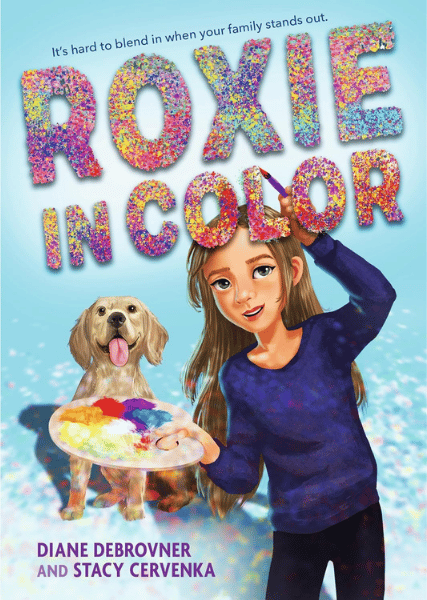
Roxie in Color
Written by Diane Debrovner and Stacy Cervenka
Ages: 9-12 | 336 Pages
Publisher: Candlewick Press (2026) | ISBN-13: 978-1536246605
Publisher’s Book Summary: Roxie wants to blend in at a new school, which is hard to do when your parents are blind, in this remarkable novel, typeset in a font for low-vision readers, about friendship, misperceptions, and family—plus a dog’s view of the world.
Roxie loves her parents, but other people can’t seem to see past the fact that they’re blind—and they don’t really see Roxie, either. To them, she’s just “the girl with the blind parents.” So when her family moves to a new town and Roxie starts seventh grade at a new school, she’s determined to be known for the other parts of who she is: an artist, an animal lover, and the kind of person who bakes cookies for people she cares about for no special reason. But that means keeping her parents’ blindness a secret from the kids at school and definitely not telling anyone that she might inherit the eye condition that caused her mother’s vision loss—at least until they get to know her.
For a while, Roxie is happier than she’s ever been. But when her lies and omissions lead to a visit from Child Protective Services, will Roxie find the courage to be fully honest with her friends, her parents, and herself? This heartfelt depiction of a girl establishing her own identity, with some chapters told from the perspective of her mother’s loyal guide dog, is an authentic portrayal of the joys, challenges, and everyday ordinariness of being raised by parents who have a disability.
Buy the Book
Borrow the Book
About the Author
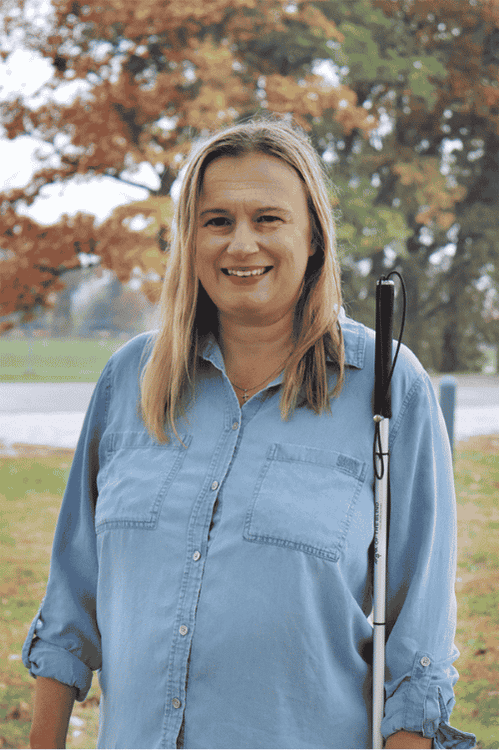
Stacy Cervenka is the Director of the Iowa Department for the Blind and a middle-grade author and writer with over 20 years of experience. Her novel, Roxie In Color, co-written with Diane Debrovner, is out now from Candlewick Press.
Stacy currently holds the position of Director at the Iowa Department for the Blind, working to empower blind and low vision Iowans to work, live independently, and pursue the lives they choose.
As a passionate advocate for parents with disabilities, Stacy serves on the Consumer Advisory Panel for the Mitsubishi Electric America Foundation, which invests in innovative strategies to empower youth with disabilities.
She divides her time between Des Moines and Lincoln, Nebraska, where she lives with her husband and two children. Just like Roxie’s family in her book, Stacy and her husband, Greg, are blind, while their children, Leo and Josephine, are sighted.
Learn more at www.stacycervenka.com.
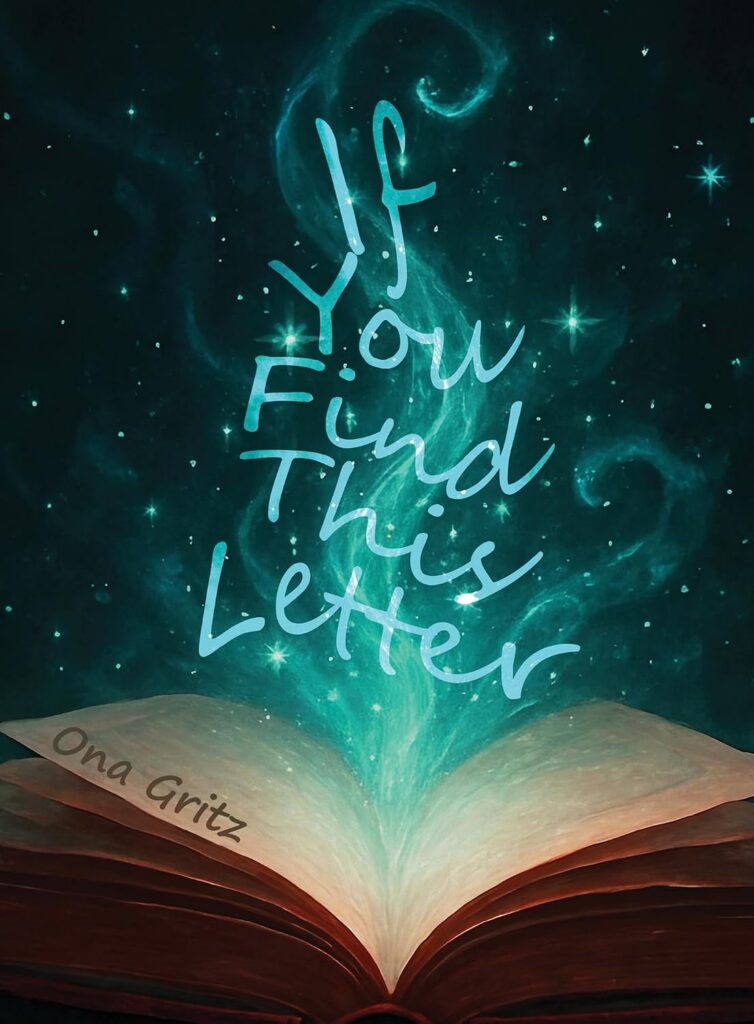
If You Find This Letter
Written by Ona Gritz
Ages: 10-13 | 160 Pages
Publisher: West 44 Books (2026) | ISBN-13: 978-1978598386
Publisher’s Book Summary: Few things feel worse than being left behind by your best friends, but that’s what’s happening to thirteen-year-old Dani. She has far less freedom than they do when it comes to roaming their New York City neighborhood, thanks to her over-protective mom. Dani knows her mom has her reasons–including having lost her leg in an accident when she was Dani’s age. But it still doesn’t seem fair. Following an especially painful falling out with her friends, Dani finds herself wishing she could change her mom’s past, making life easier for both of them. Soon after, she wanders into an oddity shop where she discovers a letter in an old book. It’s from a girl named Mimi who is seeking a friend. The two begin leaving daily letters for each other in the book, growing close and connecting over losing their best friends. Some of Mimi’s sayings and experiences are very dated, but Dani manages to explain this away–until she can’t ignore the strange coincidences and odd references. Who is her mysterious new friend? Do her letters hold the clues Dani needs to heal her broken relationships, especially with her own mother? Or is she too late?
Buy the Book
Borrow the Book
About the Author
Ona Gritz is the author of the hi/lo young adult verse novels, Take a Sad Song, a Kirkus Reviews’ best YA title, and The Space You Left Behind, a Children’s Book Council Disability Pride Month Recommended Read. Her most recent book is If You Find This Letter, a middle grade verse novel about friendship, family, grief, and time-traveling letters. Children’s author, Kimberly Behre Kenna, calls it “a gem of a novel… that’s as accessible as it is profound.”
Ona also writes poetry and nonfiction for adults. Her 2024 memoir, Everywhere I Look won the Clara Johnson Award in Women’s Literature, the Readers’ Choice Gold Award, the Pencraft Best Book Award, and was named a Kirkus Reviews “Indie Worth Discovering” and the StoryTrade Nonfiction Book of the Year. She has a new YA verse novel, The Shape of Wings, forthcoming from West 44 Books in August 2026.
Learn more at www.onagritz.com.
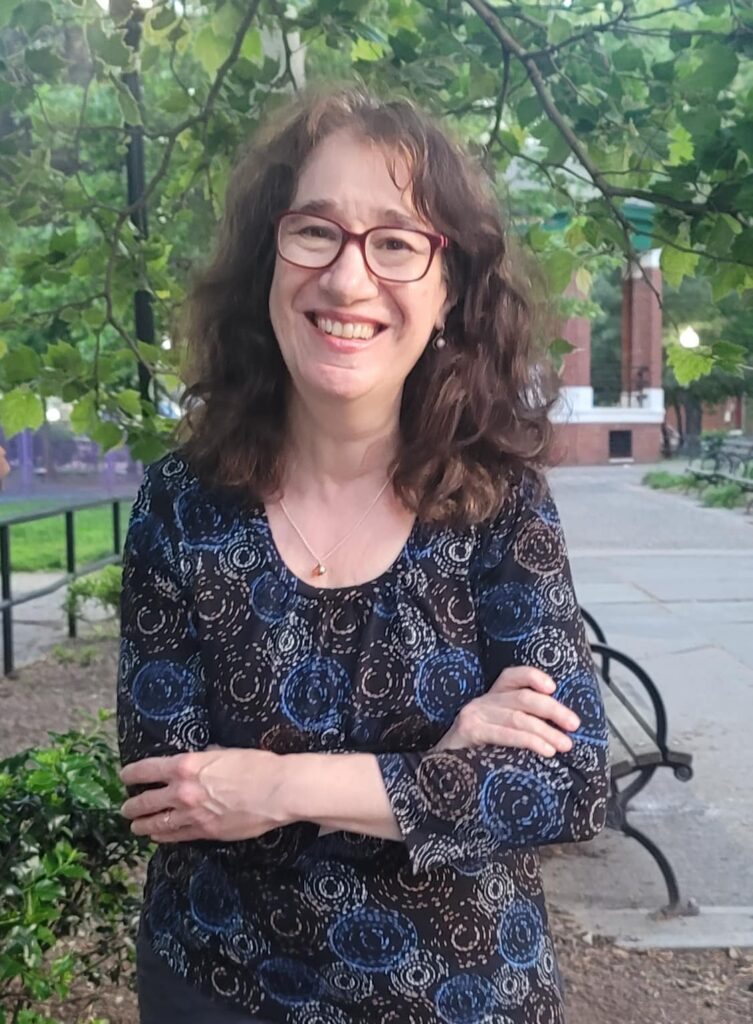
This interview—Middle Grade Authors Stacy Cervenka and Ona Gritz in Conversation—was conducted between Stacy Cervenka and Ona Gritz.
