

By Sarah Morris on behalf of Primrose Schools,* for The Children’s Book Review
Published: October 25, 2011
Children that learn to appreciate language at an early age tend to find more interest in books and learning and, consequently, they usually do better in school.
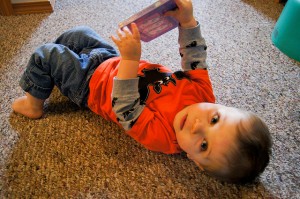 Studies have shown that children respond to the sounds of language even while in the womb. The familiar tones of a parent’s voice become a soothing tonic to the child, something that they know as safe and loving. Once a child is born, reading to them from the very first day is a good way to encourage their linguistic development and cognitive abilities.
Children are essentially language sponges when they are first born.
For the first 6 months of their lives, children are learning to recognize voices and understand which vocal tones mean something good and which mean something bad. By 2 years, a child has an understanding of how to relate language and external objects. By 4 years a child can form compound concepts and will be able to respond to complex questions.
Each of these phases is a perfect opportunity to use reading in order to help your child’s development. At first use exaggerated tones and rhythmic words – this will keep the infant’s interest and while they may not know it’s a book in your hand, they will associate it with positive emotion. After they are a little older, pictures become a key factor. Pointing to the pictures and telling the child what it is will help them develop their vocabulary faster. Even though they may not yet understand what all the words in a sentence mean, they will quickly catch on to the concept that single words need things in between to make them work.
After a while, your child will understand what a book is and associate it with the time that you and the child spend together, free from the bad words like “no!” that he or she inevitably has to face every day. They will begin to develop favorite books and the ability to request that you read to them. In time they will be capable of reading along with you and eventually be able to pick up a book and read on their own.
Tips for keeping a child engaged and interested:
• Try out lots of different books and see where your child’s interests lie.
• Use exaggerated facial expressions and voices to make the story come alive.
• Make sure to use correct pronunciation to facilitate proper language development.
• Encourage your children to participate by asking questions or even asking them to read to you before bed.
• Even if they can’t read yet, leave books lying around their room so if they have an interest they can pick one up and look through it.
• Make reading a regular event, such as right before bed every night – let your child look forward to it.
• Carry books with you in the car for when there might be some waiting time, such as at the doctor’s office.
There cannot be enough stress put on the importance of starting a child’s love of reading early. All things in life stem from knowledge and a healthy desire for knowledge will give your child an edge in the world that many, unfortunately, do not have.
*Primrose Schools: preschools that emphasize balanced learning.
Image courtesy of StubbyFingers. Copyright © 2011
