

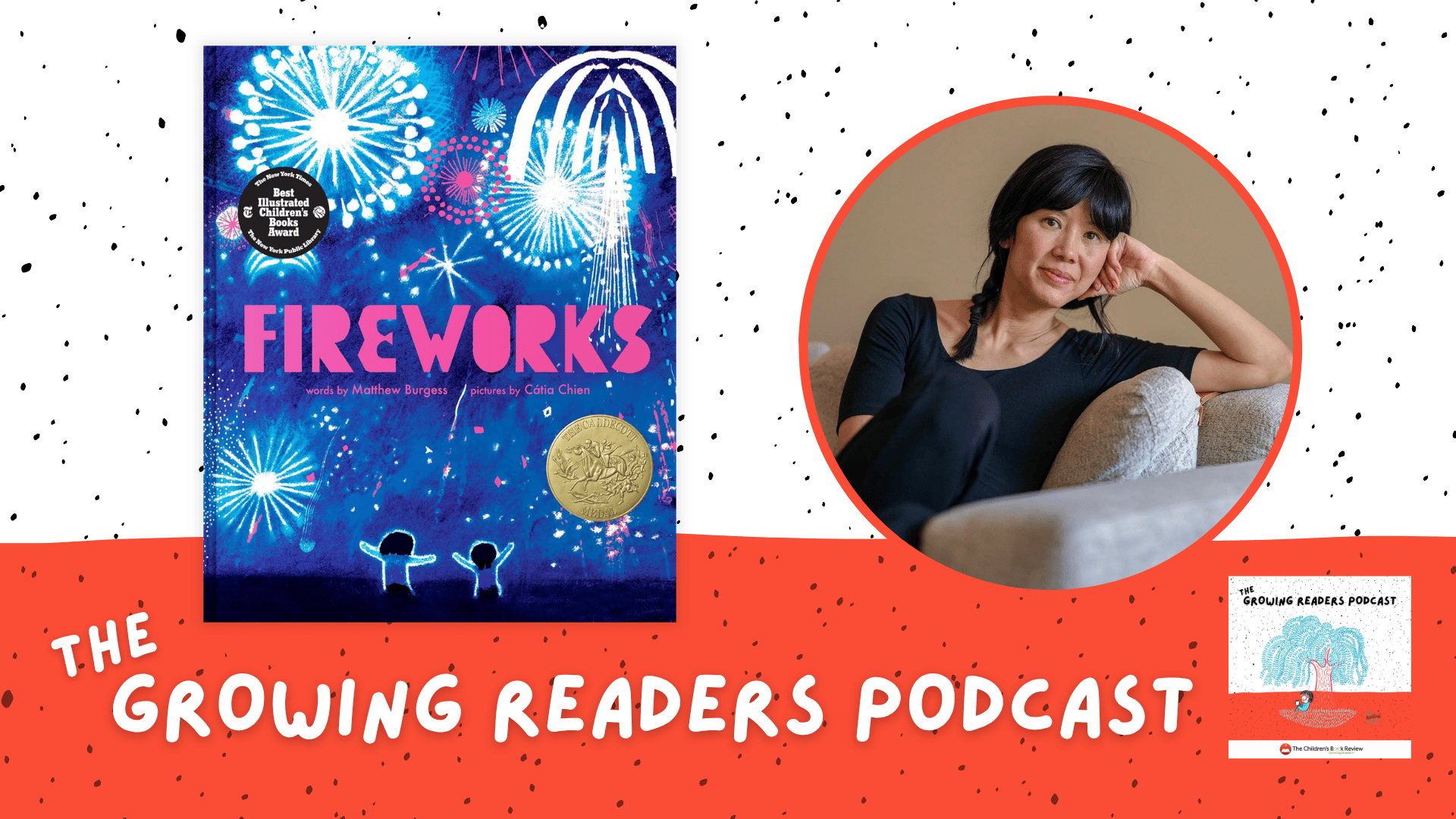
A podcast interview with Cátia Chien discussing her Caldecott Medal-winning illustrations for Fireworks on The Growing Readers Podcast, a production of The Children’s Book Review.
What does it take to capture the sights, sounds, and excitement of a fireworks-filled summer night? Illustrator Cátia Chien shares the story behind Fireworks.
Winner of the 2026 Caldecott Medal, Fireworks is a dazzling celebration of summer, family, and the magic of seeing the world with wonder. Created by author Matthew Burgess and illustrator Cátia Chien, this acclaimed picture book transforms a hot July day and a neighborhood fireworks display into an immersive sensory experience filled with movement, color, sound, and joy.
In this episode, Cátia Chien joins us to discuss the artistic choices behind the book’s radiant illustrations that bring the story to life, and how she captures emotion, energy, and memory on the page. Whether you’re an illustrator, educator, picture book enthusiast, or a summer-lover, this conversation offers a fascinating look at the creation of one of the year’s most celebrated books.
Subscribe to The Growing Readers Podcast to ensure you never miss an episode celebrating the creators shaping young readers’ lives.
Listen to the Episode
The Show Notes
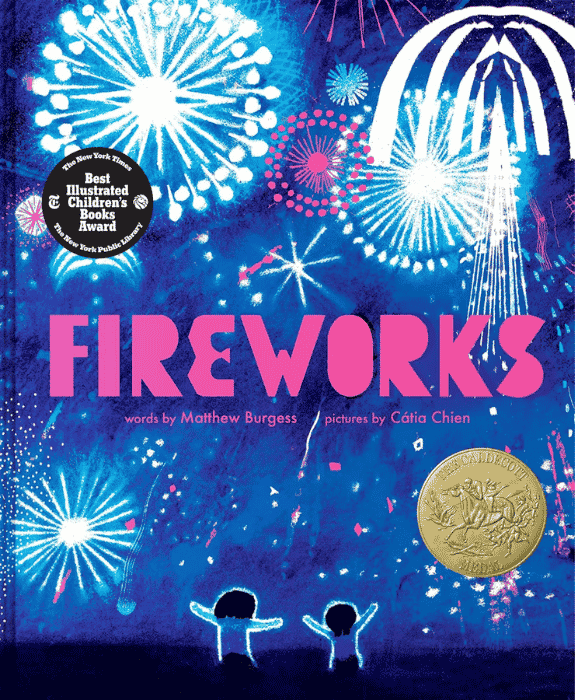
Fireworks
Written by Matthew Burgess
Illustrated by Cátia Chien
Ages: 4+ | 44 Pages
Publisher: Clarion Books (2025) | ISBN-13: 978-0063216723
Publisher’s Summary: Fireworks is a sparkling picture book from the award-winning team of Matthew Burgess and Cátia Chien, highlighting the simple delights of a steamy July day in the city as two siblings eagerly anticipate a spectacular fireworks display.
POP!
As a hot day sizzles into evening, everyone on stoops and sidewalks looks skyward on this special summer night—the Fourth of July! Words and art blossom into flowers of fire across the sky, making this a perfect read for firework enthusiasts in cities and suburbs everywhere.
Buy the Book
Borrow the Book
About the Illustrator
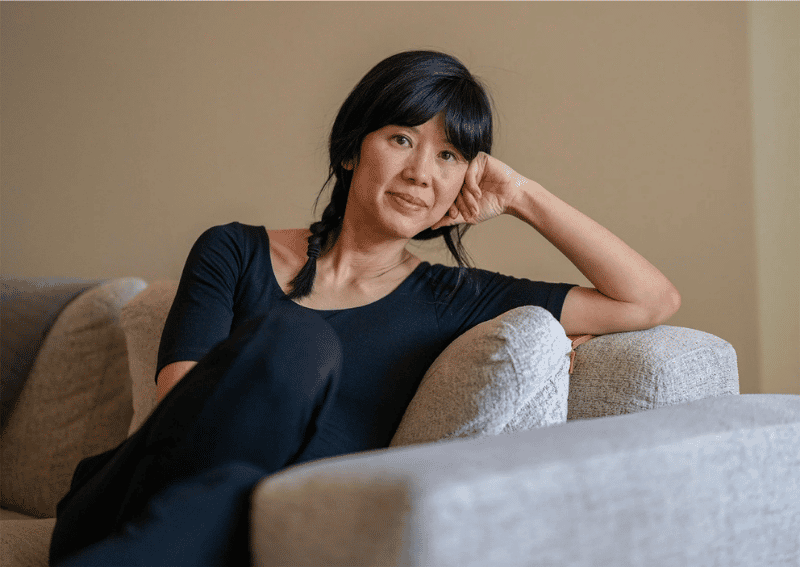
Cátia Chien is the 2026 Randolph Caldecott Gold Medalist for Fireworks, recognized for her luminous and evocative picture book art.
She is also a winner of the New York Times/New York Public Library Best Illustrated award and a two-time Society of Illustrators Gold Medal recipient for Original Art.
A three-time Golden Kite Award winner, her acclaimed works include The Longest Letsgoboy, The Bear and the Moon, and A Boy and a Jaguar—the latter also named an ALA Notable Book and recipient of the Schneider Family Book Award.
Beyond publishing, Chien has worked as a visual development artist on animated features such as Wish Dragon and The Little Prince. Her work has been exhibited internationally, including at the Beijing National Gallery and the Bologna Children’s Book Fair.
She founded A THOUSAND WORLDS, a free, evolving intersectional bookshelf of BIPOC creators’ picture books curated by BIPOC leaders in the industry.
To learn more, visit www.catiachien.com.
Credits:
Host: Bianca Schulze
Guest: Cátia Chien
Producer: Bianca Schulze
Read the Transcript
Bianca Schulze: Hi, Cátia. Welcome to the Growing Readers Podcast. I have been so looking forward to this conversation.
Cátia Chien: Hi, Bianca. I’m really looking forward to it. Thank you for having me.
Bianca Schulze: So I have recently been kicking off my conversations with some rapid-fire questions, just because I think it’s a fun way to get into the mood of the conversation. Are you good for that? Amazing. All right. Art store or art supplies already on hand?
Cátia Chien: Oh my gosh, art store, always. I’m a collector. I love art supplies.
Bianca Schulze: I love it. Colored pencils or a paintbrush?
Cátia Chien: Oh, don’t do this to me. I have to pick one? Paintbrush.
Bianca Schulze: You could change your mind another day. First mark on a blank page — do you find that exciting or terrifying?
Cátia Chien: Exciting.
Bianca Schulze: Sparklers or fireworks?
Cátia Chien: Sparklers.
Bianca Schulze: The anticipation of fireworks or the finale?
Cátia Chien: Phew. Finale. Yeah.
Bianca Schulze: Awesome. Well, before we dive into your beautiful book, Fireworks, I want to start with a pretty special moment, because I think every kidlit community listener wants to hear it from you directly. I understand that you were in a bowling alley parking lot when the Caldecott call came. So take us there. What do you remember about that moment?
Cátia Chien: I had just finished playing some bowling with my son, who just turned eight. He wanted to go bowling, and I lost to him. We were walking to the car to go home, and that’s when I got the call. Immediately, my husband could tell something was happening because I had that face, and he gave me some space. I sat on the curb taking the call. Jewel Davis, the Caldecott Committee chair, introduced herself, and then everyone was cheering, and I began to cry. That’s when my husband and my son came in and gave me a hug. My husband was filming the entire time — I didn’t know — but he captured the whole thing. Yeah, it was quite special.
Bianca Schulze: That’s amazing. So, how would you say that this whole season of recognition landed within your family?
Cátia Chien: Wow, yeah. So my husband — I am not even kidding, I know people say that a lot about their partners being their biggest fan — but my husband really is one of my biggest fans. Within my inner circle of friends, a lot of my friends don’t really know what I do. We don’t talk about it. A lot of our friendships are based on family ties or a history of going to school together or something else, and so I don’t necessarily bring my art into my inner world very much. But when I started dating my husband, one of the first things he wanted to do was find out what kind of art I liked. He really does have a genuine appreciation and love for what I do, and it’s continued through the years. He cried. He was very, very moved.
To give you an example, my agent had texted me that morning to say, “I’m really proud of you, no matter what happens.” I started to cry getting that text, and my husband said, “I want him to text you every week with that, because you’re always doing something great.” He is just such a cheerleader.
And then my son — he and I make art together quite a bit, but it’s never about how good or bad art is. So he was quite confused when I got the Caldecott. He was like, “Well, where’s my Caldecott?” Because he was just like, “What does this mean? We make art together.” And so the genie was out of the bottle — now we had to talk about what the Caldecott means, and what giving someone an award means. Where does it
fit into someone’s practice and process and all that? We had many conversations about art, about awards, about inner validation and external validation, what that all means. Yeah.
Bianca Schulze: Yeah. I mean, that is such a big conversation. And I feel like those are conversations a lot of parents end up having with their kids in the schooling world, too, because there are a lot of awards that go out, especially in the public school system, and not every kid gets an award. So what does getting an award mean? That is such a big question. Do you have thoughts on what it means to get an award?
Cátia Chien: Well, the way that I talk to my son about it —
So recently I went to a school visit for second- to fourth-graders, and at the end I took Q&A. And even after the Q&A, a little girl came over to get her book signed. She asked me, “What do you do when someone thinks that your work is not good?” I think she was about nine or ten years old. And then she said, “And what do you do when you think your work is not good?”
I said to her, “First off, when someone thinks that your work is not good, it’s actually their opinion of the work. It comes with their own idea about what art is for them. It makes sense that they would have an opinion that work needs to look a certain way that may be different than what you intended, because everyone is carrying with them their own history and their own way of looking at the world.”
“And the most important thing is the second question you asked. What if I think my work is not good? Now we’re getting to something, because now we’re really focusing on what you want your work to look like and what you want your work to be.”
The way I answer that question when I come to it — when I think my work doesn’t look good to me — is I ask myself a different question instead of “Why doesn’t this work look good to me?” I ask myself, “What do I have to learn?”
And so then I find ways. I imagine what I want it to look like and what I want to do with it, and then I think about all the steps I need to take to get there. I find the people who may be able to help me. That’s how I break down that feeling that something isn’t good enough — so that there’s a path to get there.
And that’s kind of the way that I think about awards, too. There’s something external that happens to your work. Sometimes it’s amazing, like a big award. And sometimes it’s a bad review — and I’ve gotten those too. Reviews that misunderstand a book, or that aren’t really connecting to what you meant it to be about.
There’s that external validation part, which is someone’s opinion of it. But then there’s the internal motivation — the part in you that’s asking questions and wants to find an answer. That’s the part you have control over. That’s the part that is your creative process, and that’s the part we focus on. I make that distinction between what is external and internal.
Bianca Schulze: So great. Well, let’s step into the book that started all of this award conversation. What went through your mind when you first read Matthew Burgess’s manuscript?
Cátia Chien: Oh wow. When I first read the manuscript, it was titled Fireworks in Alphabet City — it was only later that we changed it to Fireworks. And immediately, I missed my sister. Growing up with my sister in Brazil, she was my constant, my best friend, and we were only two years apart. So much of my childhood being outside is tied with discovering the world with her.
The sensory experience that Matthew created in the words — the onomatopoeia — it was thrilling as an artist to encounter a manuscript where there are so many opportunities to play and so many things to discover. Not only did it conjure up memories of myself as a child with my sister, but it really made me yearn to find a way to get it on the page. It gave me the calling to do it — and the excitement of how much fun I would have creating the fireworks and some of the sensory experiences. That’s what came up for me.
Bianca Schulze: Well, let’s talk about the opening spread. There’s Grandma in the kitchen cooking breakfast, and it does something essential before the fireworks even begin. What is it setting up, and why does that matter to everything that follows?
Cátia Chien: Yeah. When you open up the book, you see Grandma cooking breakfast, and then you see the sisters eating and feeding each other breakfast — the older sister feeding the younger sister. The sense of care within the family, you can really feel that they all love each other, they’re all taking care of each other. That is a really important place to start the story, because on the next page turn, the children are on their own, venturing out into the world.
What I wanted to establish there is the sense of security and safety — that kind of courage to step out into the unknown starts with the security and the love from the family unit, from the grandma. Just as I think as a parent, we pour all the love that we can into our children before they go out into the world on their own, and we hope that they’ll carry that love with them.
My son is eight. Every morning when he goes to school, my husband works at the school, so he drives him — I say, “Take my love with you.”
And that’s what this book is, right? It opens with the grandma doing just exactly that. Feeding them — because in Asian culture, food is so much a gesture of love — so their bellies are full, they feel full of love and courage, and they can take that love with them as they venture out into the city and experience all the little fireworks.
Bianca Schulze: Yeah. I’ve never done this in a conversation before, but we’ve talked about how the book opens — I want to jump right to the finale spread, which critics have called staggering. The spectacle gives way — all of the spectacle of the day, the adventure, the excitement, the watermelon, the fireworks, the excitement — and now it’s something way more intimate. It’s this light and darkness interacting. Can you walk us through what you were trying to do visually in that final double-page spread?
Cátia Chien: Thank you so much, Bianca, for highlighting that. That moment is so important because it sort of takes the journey to its landing. Matthew, with the word “within,” really opened up that possibility. The way I saw it is — you have this big spectacle that is built up through all the little fireworks of the children experiencing all the little moments in their day, and then the big spectacle of the fireworks display. And then they get tucked in with all of that experience inside of them, and the fireworks dissolve into something more intimate and emotional, where you get to see what’s happening within a child.
What that is doing, hopefully, is creating a sensory experience of the depth and the capacity in which children are able to take in the world. They have such an open heart, and they’re able to feel so much. I wanted to really capture that depth and that radiance of a child’s inner world. So much of the way that children understand and learn about the world is processed non-verbally. I wasn’t a big talker when I was a kid, but I was a big feeler. I felt everything so, so big. And sometimes we get caught up in needing something to be explained for it to mean something.
I think we can trust that children are taking in the world through their bodies and that they’re processing it, and that we honor that. That’s what this moment is — so much of that is in their body, and I wanted to honor that.
Bianca Schulze: When I look at that spread, you just know how wonderful those kids are feeling as they’re tucked in at night. And if every child could feel that way every day, it would be so amazing. I’ve said this so many times on this podcast, but I love a conversation book — and just that spread alone, you could have so many beautiful conversations with your kids: what does this mean to you? What do you think they’re feeling? Have you ever felt that way? I love that you’ve enabled that, with that spread and Matthew’s words.
Cátia Chien: I think you pointed to something really important there. One of the things I do with my son Emi is we talk about roses and thorns — where you share what happened in your day — and that’s sort of an opportunity to open things up. Even recently, a child at a school visit asked me, “What is summer on the skin?” Just that sensation — the idea of what is summer on the skin.
Bianca Schulze: Yeah, and it’s probably a whole lot of different things to different people. I love that. Kids ask the best questions. And so that leads me to this: some of the questions you had to sit with during the creation of this book were, what does sound look like? And what does heat feel like? So how do you actually work through translating a sensation into an image a child could hopefully feel?
Cátia Chien: I think the first and foremost thing is to allow myself to experiment and to fully be in the experience myself. It’s a combination of things. Coming from the discipline of formal art school, we have a lot of tools — color theory and other academic things tucked in the back pocket. But more than anything, I feel into it. There’s a tactile quality to different art tools, and knowing that nothing is off limits really helps.
With sound, for example, for the fireworks, like that first “pop,” that first spread where the children are completely immersed, it looks like a big umbrella of light — the pop of that moment, to me, feels like a movement forward and in. So I really immerse myself in that experience, and then I start to create using different textures, and from those textures I narrow down to colors, and then composition comes into play.
And then of course there’s the storytelling — where all of that fits into the storytelling. It’s a bunch of different layers of thinking, but a big part of it is play.
Bianca Schulze: Yeah. Well, I imagine for many people the big fold-out spread of the kaboom finale firework is a big favorite. And I think my favorite spread — a thousand percent — is the watermelon spread.
Cátia Chien:
*Laughter*
Bianca Schulze: To me, I can feel the stickiness of the juice on my hands. I found that illustration so delicious. It was adorable, and just — the pinkness of it all, the juiciness of it all. That was my favorite. Do you have a favorite spread?
Cátia Chien: I have a couple of favorites. The last spread is one of my favorites, which we talked about. And I also like the first spread, which we talked about, too. I liked drawing the image of her with her mouth open, looking sad — for some reason, that was really fun. And also the spread with the kids jumping through the water. That was really fun to do, too.
Bianca Schulze: Yeah. As I was reading it, I could almost hear music. I mean, there’s the description of the saxophone player, and I don’t know if it’s because I watched In the Heights — the musical — but I could almost hear music playing throughout the book. That’s a testament to the words and the art that I could hear sounds that weren’t even there.
Bianca Schulze: But let’s talk more about your process. You’ve said the advice you’d give your youngest self is experimentation over mastery. Even years into your career, I know that you still sketch, erase, and revisit again and again. What does that look like on a day-to-day basis in your studio?
Cátia Chien: Yeah. When I talk about experimentation over mastery, it’s one of the things I would tell my younger self, because my younger self was more focused on technique and wanting to master something. And I think there is something to be said about understanding what the rules are before you break them.
But my day-to-day now is keeping all those elements in mind — the color theory and all of that — but really it’s more focused on integrating my creative practice with who I am today and what my curiosity interests are now, so that it’s a living practice. It’s not formula-based; it’s not a disassociated technique-based approach. It’s looking at the children as they are today, and being with myself as I am today, and understanding that our humanities connect in real time. It isn’t something I’m putting on a shelf and taking out when the moment comes. It’s an evolving practice, and rich because of that.
One thing I find really interesting is that when I’m afraid, I want control. I want to make sure everything is correct and shows up perfectly. We see a lot of that on social media, where people curate everything. I get that — there’s a way in which, when you’re public-facing, there are little things you don’t want people to see. But in a book, it’s different. There’s something about sharing the humanity of a book with children and adults that is so hopeful.
I feel it’s important right now to practice my openness in the world — how I show up — and to take that and show up in my work with experimentation. That means I play a lot. It means there’ll be many days of not knowing, many uncertainties, many doubts. I have a lot of doubtful days where I don’t know if I’m going to get to an image I can use. My husband is a great emotional counselor for that reason. But my day-to-day is really about finding my practice — very playful, but also uncertain, and full of beginning again, starting new, staying open to where my curiosity takes me.
Bianca Schulze: Yeah. Well then, how do you know when a piece is done? And when you’re in those moments of doubt, how do you move through it?
Cátia Chien: I think the only way to move through it is to give yourself the grace to start anew and to know that you can always begin again. And of course, there are deadlines — let’s be honest, we have to meet certain deadlines. So I hold it very, very lightly in my mind when I practice. I give myself as much space as possible. I kind of go through the back door of my mind — past the part that holds the schedule — and into this place of giving myself all the time in the world.
I think we’ve all been there: we’re feeling emotionally overwhelmed and we want to talk to someone about it, and then they say, “You have all the time in the world. I’m here.” There’s something about that that allows the nervous system to settle. And then you already know that you’ve arrived — okay, I know I’ll get there. It’s not that you’re fantasizing that you have all the time in the world and you’re going to take twenty years. It just lets your emotions and nervous system settle.
So I do that — I give myself that space. And then when I’m in that space, I can actually see clearly whether something is working or not. The clarity of that voice comes up more than the voice of “you need to finish this in three hours.” And so I’m able to see when something actually clicks and connects with where I emotionally want to take it — and it emotionally resonates with me because I’m allowing it to have space to resonate. I’m not anxious, I’m not worried about what other people are thinking. I’m really trusting my connection with it, and then I will know that it’s done.
Bianca Schulze: Yeah. Well, on that concept of experimentation over mastery, is there something in Fireworks where you feel that philosophy really served you well? Is there a moment in Fireworks that you hadn’t produced any kind of art like before? What do you think makes Fireworks resonate so much with people? Do you think it’s because of that concept of allowing yourself to experiment beyond the idea of mastery?
Cátia Chien: Yeah, thank you for that question. I love it because it’s such a mystery sometimes as to why certain books connect, and others don’t. There’s a wisdom in understanding that it’s not really up to you, in the moment of creating a book, to crack that code. There’s magic that happens when a book goes out into the world — just as with a child, you do what you can to have them be ready for the world, but then the world will do whatever the world does. A book kind of wants to be its own thing, too.
What I can say about the magic of experimentation in this book is that I didn’t need to reference what fireworks actually look like. I’ve seen them, I know what they look like, and I did look at some photos to refresh. But in terms of being in that place where I felt scared that people might think it’s something else — especially with the first pop, which is a little more abstract — in a world of experimentation, there’s a lot of trusting.
When you’re playing from a stance of understanding that your experience as a human having gone through fireworks — and other people’s experience — will carry them through something that may be visually a bit different, adjacent perhaps, that actually creates a sense of the experience itself. It’s not like looking at an archive of the thing, but actually creating a sensory experience. The most transformative experiences in my life were not the ones where someone told me what it was. They were the ones I discovered myself, because I felt it in my body.
And with the way children approach life, they’re not in the “accept and categorize” world yet. They’re creating meaning for themselves. So much of that comes through the feeling of a thing. Part of the feeling of a thing has to do with seeing it anew — actually seeing it for what it is — because the moment you name something, it gets filed away into something you’ve already figured out.
There’s something about fireworks that makes people feel like a child again — the element of surprise, the delight in that surprise. What’s going to come up next? What are we going to see? And also: how did they do that? Because it never gets old. You never think, “Well, I know the pyrotechnics.” It’s still magical. I think in the experimentation of something, you create that same kind of conjuring of something new. And perhaps that energy is what people have responded to. But I’ll never know for certain. I just know that in my process, I try to be as honest to that place as possible.
Bianca Schulze: Yeah. Well, I realized I was saying “evolution over mastery” before, when I meant “experimentation over mastery.” So now I do want to go into the world of your evolution — the evolution of Cátia Chien. Will you share a little about your school librarian, the first school librarian who brought you picture books, when you were fifteen and newly arrived in the US from Brazil?
Cátia Chien: I love talking about her. Thank you so much for bringing her up. So — Mrs. Novosel. When I came to the US, English was hard for me to speak, and I was a teenager. As we know, it’s hard to be a teenager. There’s so much you’re figuring out about who you are and where you fit in the world, and being in a new country, not knowing the culture, not knowing the language — there was a sense of it being scary, vulnerable, but also a little bit embarrassing at times.
Mrs. Novosel was our school librarian. I know we hear a lot of stories about librarians and their magic, but it really is true — librarians save people. I would not want to live in a world without a library. It truly was a safe space for me. She built that. She was a force of nature — outspoken, irreverent. And she was someone who was very, very curious about people. She asked me lots of questions about myself. She didn’t assume she knew me. She saw me.
And she brought me picture books at a time when I might have been embarrassed to be reading picture books. She showed me that any book, at any age, is a bridge to who you are. It’s not a category you place yourself in — you just find the book that is for you in the moment. She was able to find a place for me in her library, and I was able to find a place for myself in the books with her. So that was really special.
Bianca Schulze: So, so special. I feel like for all of the Mrs. Novosels out there — because there are so many of them — we are just so grateful for all the librarians and anyone putting books into the hands of kids, because as you said, they are bridges. So she made you feel seen when you felt invisible. And I imagine that experience lives somewhere in the books you make now. Between your dual Brazilian and Taiwanese heritage, your years in New York City, and that experience of arriving somewhere new and having to find your footing — how consciously do those layers inform your storytelling?
Cátia Chien: When I look back at the common thread of all of those experiences, I think the sense of belonging is a really big one. I grew up in Brazil speaking Portuguese — my parents are Taiwanese, so my heritage is Taiwanese and culturally Brazilian and Taiwanese — and I spoke Portuguese, Taiwanese, and Mandarin growing up. I moved around a lot in Brazil, too, so I was constantly the new kid. It’s not easy.
My family in Taiwan is quite global — I have family in Taiwan and also in Egypt and Japan. When we would go to Taiwan to visit my grandparents and extended family, it felt like a gathering of countries. As a child, I really felt a bit like an astronaut, where I could see the whole planet Earth — a global citizen, in some way. But on the one hand, you feel like you belong to everything. And on the other hand, you belong to no one. It’s such a funny feeling. A lot of third culture kids feel that way — neither here nor there — and the sense of belonging becomes something you have to find a way to answer for yourself. What does that mean? That was definitely a through line from Brazil to the United States.
Even in my inner circles, people will tell you I’m the kind of person who is very keen on making sure everyone has a voice, that not one person dominates a conversation. It filters in through many different aspects of me. And so in my work, it definitely comes through — the sense of being seen, the sense of wanting children to feel seen in their inner experience, their sensory experience.
It’s beyond language, because one of the things I experienced through my moves is that language can only capture one aspect of someone. When someone of a different language learns a new language, the way they speak it is so poetic, so beautiful, because they’re actually feeling the language and understanding it — it’s not a given. They’re actually thinking about it.
It’s about capturing that sense of universality and really wanting the sense of belonging to belong to everybody, but in a specific way — the processing of emotions, the sensory experience. Because that’s so personal. The way that you meet something, it lives in your body, and it changes you. So I think belonging comes through in that way. It’s not always conscious — it’s just a part of who I am.
Bianca Schulze: All I could think about while you were speaking was: can you please distill all of that and put it into a picture book? I had visuals — this astronaut — but I mean, you’d have to do it because I couldn’t. It was so clear to me that if you could distill that and put it into —
Cátia Chien: Should we collaborate on a picture book?
Bianca Schulze: It would be abstract, but it would be amazing. I was thinking of Sophie Blackall’s If You Come to Earth — but yours would be different. That was the beginning of the idea that popped into my head. And then I was like, if you haven’t read Remy Lai — it’s a highly illustrated middle grade novel called Pie in the Sky —
Cátia Chien: Pie in the Sky. I haven’t seen it. No. I love the term “pie in the sky.”
Bianca Schulze: Have you read it? No? Okay. So it’s an immigrant family that moves to Australia, and there’s grief involved, but it’s that essence of light language. And almost — instead of the astronaut concept, they almost feel like aliens. So it was almost like a contrast to what you were describing. But anyway, I was like: please, can you make that a book?
Bianca Schulze: All right. Well, I think following on from that, let’s talk about how you founded the website A Thousand Worlds, which is a free, evolving bookshelf of picture books by BIPOC creators, curated by the BIPOC community. Tell us about that website and the gap you were trying to fill when you built it.
Cátia Chien: Thank you so much for highlighting that. I started that project in 2020. It’s been a while, but it’s been a labor of love. It came out of 2020 — COVID, Black Lives Matter — and that confluence of things and the feeling of wanting to contribute, wanting to make a difference, to create a place and a platform to uplift.
It actually came out of being asked to curate a mini community library. I was approached by a nonprofit to do a little curation, and I looked at their past curated exhibits. I realized that the books they had curated — even though they were for a BIPOC community, and the books themselves depicted people of color — the creators were mostly white. I realized there’s an understanding of wanting children to see themselves in picture books, but what about seeing people in the picture book industry that they can relate to, too?
I reached out to ask if there was a curiosity or interest in making sure that was the case — what was the obstacle? They mentioned it was hard for them to find a directory of BIPOC creators that would be easy to look through. I thought, let me look — I’m sure there is one. I looked, and of course, there’s We Need Diverse Books and other amazing organizations, but I couldn’t find a bookshelf directory — a directory of BIPOC creators and their BIPOC-created books. I couldn’t find something easy. So I thought, okay, data entry time. I started entering books and creators, put together a list for the nonprofit. Then the more I thought about it, I thought — maybe we need to make this public. Maybe there’s a way to create something easy for consumers, for educators, for people who want to tap into this.
Before I knew it, I was creating a website, and it was a lot. My husband became the main data entry person. I was doing research. And I was able to ask one of my best friends, who is a coder — she’s now the official head of technology for the project and oversaw a lot of the website building.
And then I was thinking about community, and how it doesn’t make sense for me to be the one to put all of these together — there are titles out there that are really beautiful and worthy to be lifted up too. So I started to brainstorm ideas for how to bring the community together. And that’s where the community aspect of having BIPOC leaders in the industry curate BIPOC-created books came into being. That’s the short of it.
Bianca Schulze: No, you did explain it well. I’ll put the link in the show notes so anyone listening can find it really easily. One of my favorite features is how you can filter to find just the right book using the sidebar menu. I really liked that. And I do love that you opened it up to the community. I consider myself a literacy advocate and a curator of children’s books, and I think it’s so important to include other voices because we all have our biases and our preferences. Making something a community project — I love that. I think it’s great.
Cátia Chien: Yeah, and I should mention, Bianca, that we are going to do an actual launch this year, because the features are not yet finalized. It can be used now, but there’s so much happening behind the scenes still, and we’re adding tons of books to it. So it will have a whole other kind of big launch this year with all the other features, and more books. We have a lot of books to process through.
Bianca Schulze: Awesome. I love it. Well, I want to go back to something you’ve said — that you don’t aim to simplify emotions, but you aim to honor them. So why do you think we sometimes get it wrong about what children can hold? Just off the top of your head, Cátia, what do you think we get wrong about what children can hold?
Cátia Chien: I think it’s really well-intentioned — our desire to protect children from hard things. I understand that inclination as a parent to want to curate an experience for my own child. But being a parent clarifies it even more for me now. Whether or not I wish for things to be different, they aren’t. Their world is complicated, and humans are sensitive, and children, even before they can explain or speak of something, they’re already experiencing it. And in that space of experiencing it, if they can’t see it depicted in a book — in all its complex, complicated emotional ways — they may feel alone in that.
In the best-case scenario, a book can be the vehicle through which that can come out, whether through talking about it after reading, or just through internal processing with a book. I find that something that really honors the complexity of our emotional lives. And it also honors the child within myself, who understands that I didn’t get a chance to have that place be honored when I was a kid. Within my family growing up, there were certain expectations — to kind of push away anger, to tame it down. Feelings are inconvenient. There are a lot of books that do honor children and their emotions, so this is not a new concept, but I certainly feel strongly about it.
Bianca Schulze: Yeah. It’s hard for me to explain, but I feel like that answer is exactly why your art connects with people. So, all right — if a parent or caregiver is sitting down with Fireworks sometime around the Fourth of July, what would you invite them to do with your book?
Cátia Chien: Really good question. What do I invite them to do with the book? I think I would love for them, first off, to just be with the book and see what comes up for them in their own experience. And what I would also invite them to do is to visit their own memories of summer, at any time of year. There are things you do in the summer that can actually carry you through a winter. Perhaps sitting with Fireworks, the book, you can relive those memories, and it can actually give you warm feelings of summer even during wintertime.
And the other thing is — as we mentioned — just exploring the inner world of a child, really tapping into those questions: what does summer on the skin feel like? Roses and thorns — what is it that you experienced today that were little fireworks? Can we notice all the little things in our day-to-day that create those little pops of emotion? And even before the big fireworks — what does that anticipation feel like? Having moments of presence and pause to honor and to revere how beautiful the ordinary is. There’s something about that, too.
Bianca Schulze: Yeah. And could you imagine — whether you have a classroom of students or you’re at home with your kids — you pull out a big roll of butcher paper, have them lie down on it, trace around them, and then with whatever art supplies you have — collage, paints, crayons, whatever it is —
Cátia Chien: Oh my God.
Bianca Schulze: You say, “Okay, we’ve gotten to the end of this book. This is what the kids were feeling inside. What’s inside of you? Put it inside this.” Can you imagine? That’d be so cool!
Cátia Chien: You are brilliant! Oh my gosh, yes! I am definitely — okay, I’m going to do that in my next video. Yeah!
Bianca Schulze: Yeah. And please tag me in a picture or something, because I want to see it. I just think it’d be so great.
Cátia Chien: We should make that a workshop or something — that sounds brilliant. I will immediately do that tonight with my son.
Bianca Schulze: And then finally, if our listeners were to take away one thing from our conversation today, what would you want it to be?
Cátia Chien: One thing I would say — honor yourself. There is no wrong way to read a book, and your feelings matter. Reading is such a personal and creative act, so embrace whatever comes of that. Yeah, to just honor yourself in that.
Bianca Schulze: Yeah. Well, Cátia, I want to say this before we go. What you’ve created with Fireworks, along with Matthew, is the kind of book that reminds us why picture books matter — not just for children, but for all of us who have forgotten how to let something move us without needing to explain why. The fact that you trusted that, that you didn’t reach for easy answers or tidy meaning, is such a gift. And the fact that the kidlit world recognized it with the Caldecott feels exactly right. So thank you for the care that you bring to this work, for the children who will grow up with this book on their shelves, and for being so generous with your time today. It’s been a true joy for me, and I have to imagine it has been for the listeners, too. Thank you so much.
Cátia Chien: Aw, thank you, Bianca. It was a joy for me to be here with you.
