

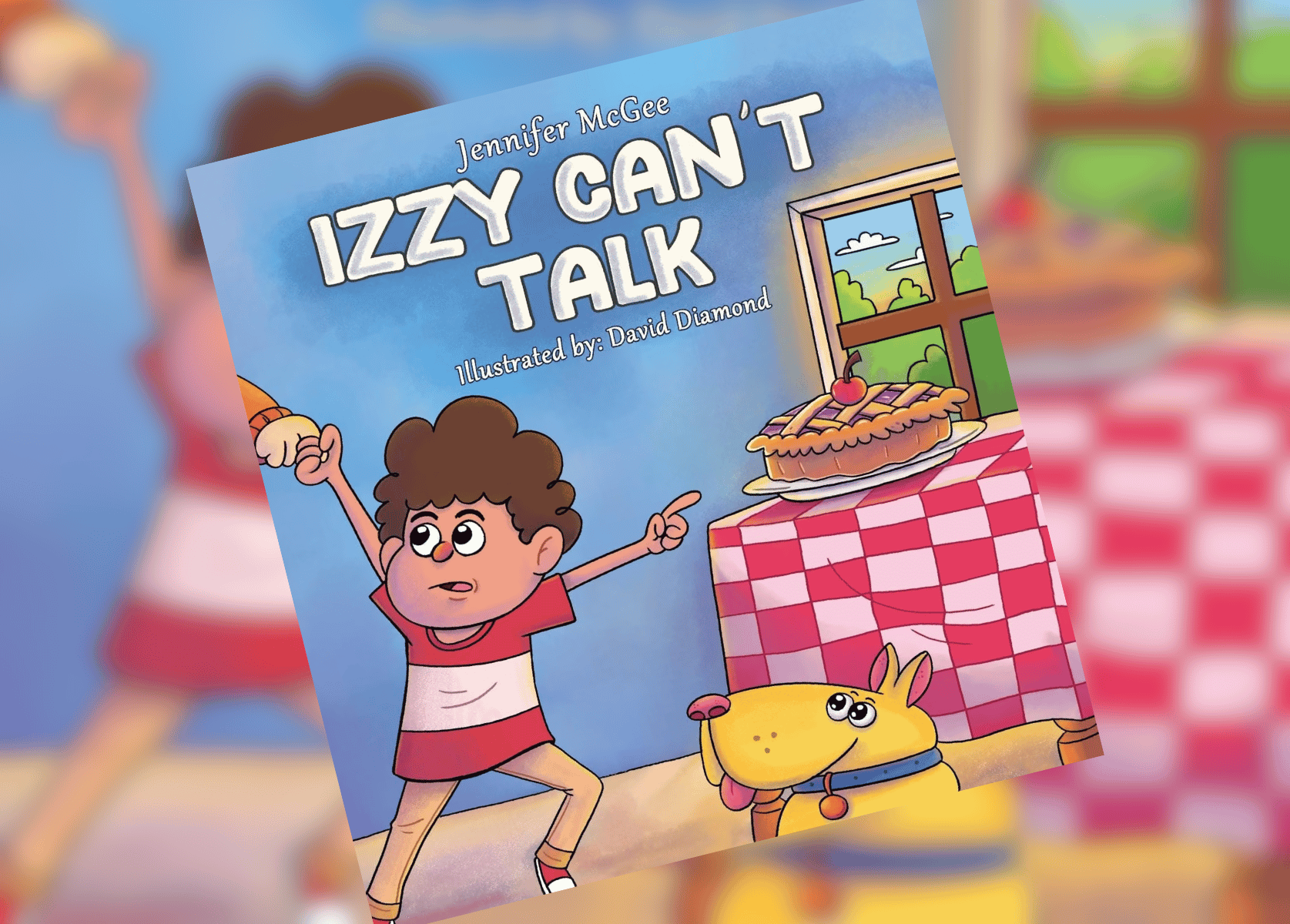
Book Review of Izzy Can’t Talk
The Children’s Book Review
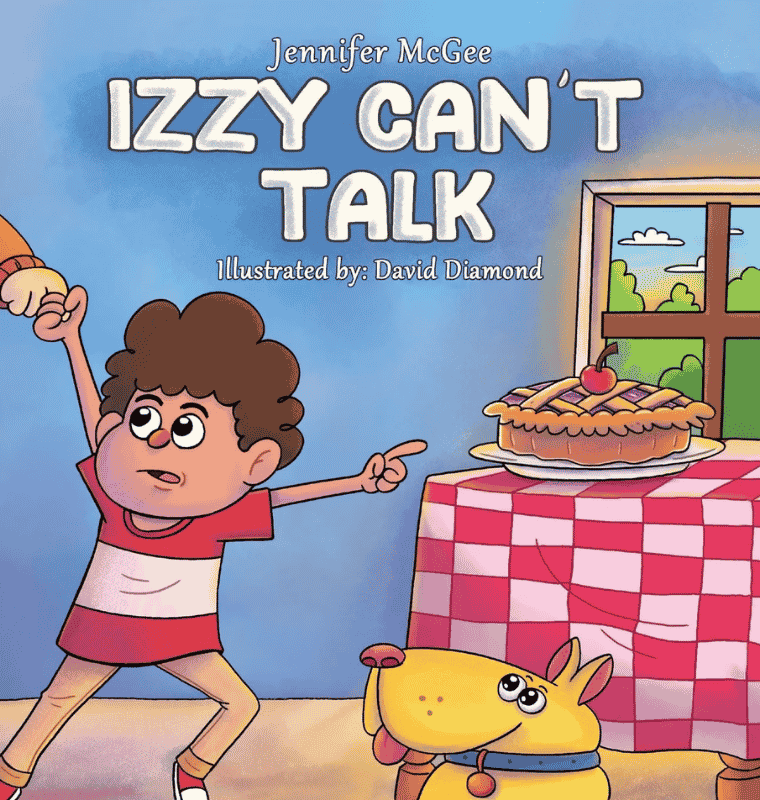
Izzy Can’t Talk
Written by Jennifer McGee
Illustrated by David Diamond
Ages: 3+ | 32 Pages
Publisher: Inclusive Art House, LLC (2023) | ISBN: 978-1962636001
What to Expect: Autism, Nonverbal Communication, Service Dog, Family, and Inclusivity.
An encouraging and insightful picture book about a nonverbal boy with autism who finds a way to share his thoughts and feelings with his loving family.
When Aunt Bee bakes a delicious razzleberry pie, young Izzy is burstingly eager to try a piece. Because Izzy has autism and does not speak, his excited behavior and attempts to signal his desire lead to playful mix-ups around the house—from pillow forts to trampoline jumping. With patience, love, and a little help from his loyal service dog, Lucky, Izzy’s family discovers the right tool to help him express exactly what he wants.
Through wonderfully accessible, warm, and gentle prose, Jennifer McGee handles nonverbal communication with immense care, presenting everyday challenges through engaging, lighthearted scenarios that resonate with young listeners. By incorporating real-world techniques such as sign language, picture cards, and speech pads, the narrative gracefully normalizes alternative communication. The story maintains a smooth, rhythmic cadence throughout, which works well for reading aloud.
David Diamond’s expressive illustrations add warmth and visual clarity, capturing the subtleties of body language, emotional expression, and sensory reactions in a way that gives young readers visual cues to deepen their understanding of Izzy’s world.
Izzy Can’t Talk is a heart-filling read that empowers nonverbal children and fosters empathy in their peers; families navigating autism and educators seeking inclusive classroom literature will especially enjoy it.
Buy the Book
Borrow the Book
About the Author
Jennifer McGee is a full-time creative visual Artist, entrepreneur, and parent to a special needs person.
After her special needs nephew, Isahiah, came to live with her full-time, her understanding of the needs of the special needs community became clearer. She saw a disconnect in understanding and a lack of inclusion for people with Autism, and disabilities as a whole. She began observing the different strategies and practices the community and public policies have towards special needs and disabled persons as she traveled across the country. She also began educating herself by taking classes and joining many advocacy groups to be better prepared to serve the disabled community through her talents in art and leadership. Writing has become an important tool for creating awareness and understanding of the many challenges that disabled persons experience.
