


Ismée Williams | The Children’s Book Review | September 13, 2017
It was Spring of 2010 when I decided to write. I was on bed-rest, pregnant with my third child, my bustling life as a pediatric cardiologist brought to a complete halt. I picked up a YA novel–my first pleasure reading in years–and was transformed by the emotion it evoked. I was thankful and relieved to be reminded of my love for books. I wanted to do that for another. My goal was to create something that would make the reader feel.
I did not write about a baby with a life-threatening heart defect because of my eleven years of medical training. I did not write about a young Dominican-American girl because I was once a young Cuban-American girl. I wove these elements into my story because they made me feel intense emotion and that was what I wanted to convey.
My clinical work as a doctor involves caring for pregnant women, checking the hearts of their fetuses with ultrasound. Most often, the heart looks normal and I can reassure the mother. At least once a day however, the baby’s heart is not normal. It is a uniquely human moment to tell a parent her unborn baby is sick. To explain the infant will need life-saving surgery shortly after birth. It is not what most people imagine when they embark on the journey of parenthood. It is humbling to be present in that moment, a guide but also an observer of another’s raw grief. Each family is different. Each individual reacts in her own way. Some respond with disbelief and silent shock, blinking as if hoping to awaken from a bad dream. Some respond with denial, claiming God or nature will make it right. Most cry. I keep at least one box of tissues in my office, the exam room, and the counseling room. There are always questions. Some I can answer. How old will my baby be when she needs to have surgery? Some I cannot. Why did this happen to us? Is my baby going die? Those are the hardest. As a physician, my job is not just to inform the family about medicines and surgeries but also to support them through one of the most emotionally charged moments of their lives. As a writer seeking to infuse emotion into my work, I built off what I had seen as well as what I felt as a parent myself.
Maribel Pujols, the teen mother in WATER IN MAY, is a fictional character. But she was inspired by the young women I had the privilege of caring for while working in Washington Heights. My own mother is Cuban. My father is not. Like Mari, I grew up in a mixed-culture family. I don’t believe this helped me be a better doctor towards women like Mari, but it helped me understand, as a writer, the inner conflicts that would drive someone like her. My mother’s parents lived with us and helped raise my brother and I while our parents worked. Having arrived from Cuba in middle-age, mis abuelos wanted to practice their English with their nietos. I didn’t learn to speak fluent Spanish until I was taught in school. Yet my abuelos taught us to sing nursery rhymes, had us scream out ‘¡Dale!’ in the car when red lights turned green, and coaxed us with sticks of Big Red gum until we could roll our r’s like a native speaker. There were trips into Spanish Harlem to visit great-aunts and uncles (my abuelo was one of eleven children). We’d stop for pastelitos de guayaba before entering moth-ball scented apartments where we’d sit on couches covered in plastic and try not to get in trouble as the grown ups talked over our heads, our ears perking up when laughter rattled their tiny cafecito cups. And when we went to see my dad’s family in New Jersey, we’d run down wide suburban streets and well-groomed lawns with our blond-haired cousins, whooping and shrieking, the visits to the inner city a distant memory. But they are part of my childhood. They informed my writing as surely as the many doctor-patient relationships with Dominican-Americans did.
While my family background led me to feel affinity for the young Dominican women I cared for–and I was lucky to care for many given I was one of the few fetal cardiologists who spoke Spanish at the hospital–it was more than kinship that made me create a Dominican-American protagonist. These young mothers were ecstatic about having a baby. It didn’t matter that they hadn’t finished high school yet, lived with their parents (or grandparents) and had no job. Part of this was cultural. The Dominican community values babies highly. Being a pediatrician among such parents is wonderful, by the way. Coming from a Latina background, I understood the importance of children in the society. It was the same for the Cubans. These young Dominican women were dedicated to becoming mothers. Even when told their baby had a severe heart defect, would be very sick and might not survive, they were undeterred. They would accept whatever God and life dealt them. The women were right. They did deal with it. They were good mothers. Excellent mothers. Never missing a prenatal appointment. Spending weeks in the hospital by their baby’s side. Bringing their baby back after discharge, sometimes three to four times a week, for follow up visits with surgeons, doctors, social workers and therapists. Their determination was impressive. I wanted to capture that as well.
###
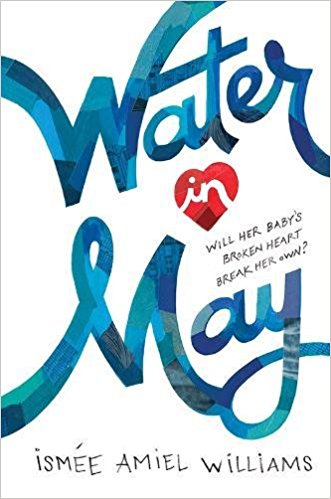 Water in May
Written by Ismée Williams
Publisher’s Synopsis: Fifteen-year-old Mari Pujols believes that the baby she’s carrying will finally mean she’ll have a family member who will love her deeply and won’t ever leave her—not like her mama, who took off when she was eight; or her papi, who’s in jail; or her abuela, who wants as little to do with her as possible. But when doctors discover a potentially fatal heart defect in the fetus, Mari faces choices she never could have imagined.
Surrounded by her loyal girl crew, her off-and-on boyfriend, and a dedicated doctor, Mari navigates a decision that could emotionally cripple the bravest of women. But both Mari and the broken-hearted baby inside her are fighters; and it doesn’t take long to discover that this sick baby has the strength to heal an entire family.
Inspired by true events, this gorgeous debut has been called “heartfelt, heartbreaking and—yes!—even a little heart-healing, too” by bestselling YA novelist Carolyn Mackler.
Ages 14+ | Publisher: Amulet Books | 2017 | ISBN-13: 978-1419725395
Available Here:




Ismée Williams is the author of WATER IN MAY (September 12, 2017; Abrams/Amulet Books), a pediatric cardiologist who trained and practiced for 15 years at Columbia University Medical Center in New York City, the daughter of a Cuban immigrant partially raised by her abuelos, and the mother of three daughters, all of which have helped her to understand the many Maris she has met along the way. You can visit her at www.ismeewilliams.com
Ismée Williams, author of Water in May, wrote The Art of Writing About What You Know. Discover more articles on The Children’s Book Review tagged with Young Adult Authors and Young Adult Fiction.
