

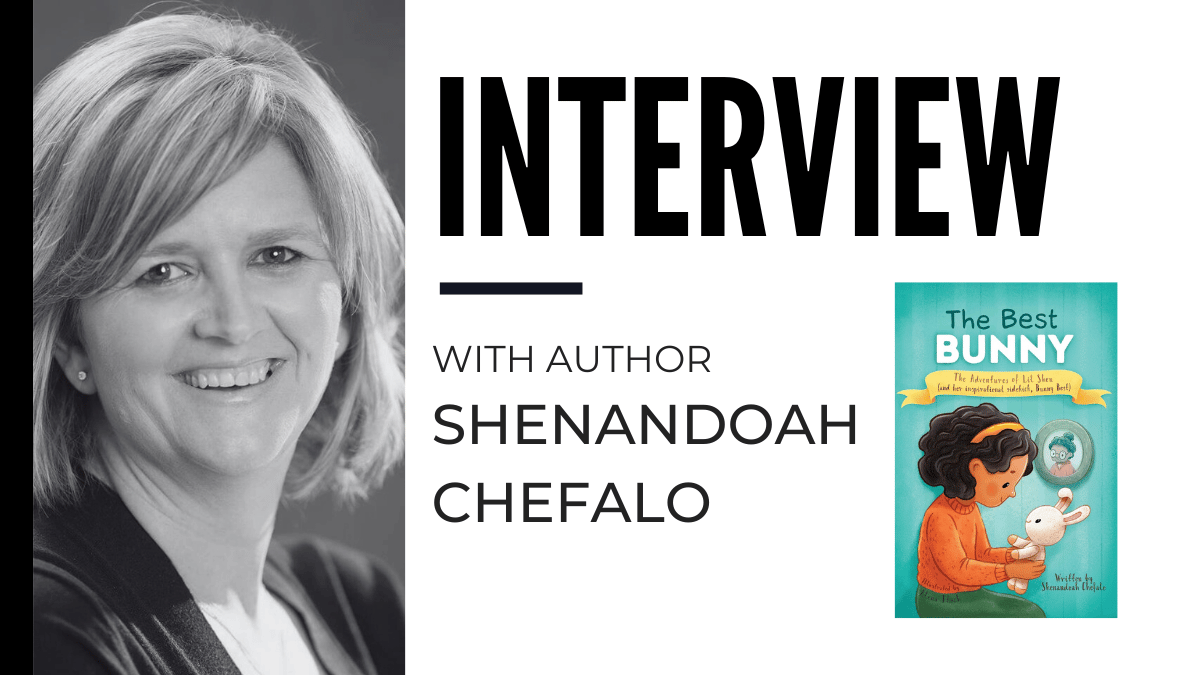
An interview about The Best Bunny: The Adventures of Lil Shen by Shenandoah Chefalo, presented by The Children’s Book Review.
Today, we chat with Shenandoah Chefalo about The Best Bunny: The Adventures of Lil Shen, the inspiration behind the story, and how comfort, grief, and emotional resilience shape both the book and its young readers.
With a trauma-informed lens and a deep empathy for children’s emotional worlds, Shenandoah Chefalo brings heartfelt honesty to The Best Bunny: The Adventures of Lil Shen. Drawing from her own experiences in foster care, Chefalo crafts a tender, meaningful story about loss, comfort, and the quiet strength found in connection—with ourselves, with others, and with the soft companions who help us feel seen.
In our conversation, Chefalo opens up about the real-life inspiration behind Lil Shen and her beloved Bunny Best, the emotional needs of children navigating grief or change, and how stories like The Best Bunny can support healing, resilience, and emotional growth.
Tell us a little bit about the inspiration for The Best Bunny—did you have an emotional support stuffie when you were a child?

Shenandoah Chefalo (SC): Absolutely. I grew up in the foster care system and had very little consistency in my life, but I did have a stuffed animal that stayed with me through dozens of placements. That little stuffie wasn’t magical in the traditional sense, but it gave me emotional safety and a constant presence in a world that often didn’t seem to have either. That sense of comfort and connection became the heart of The Best Bunny. I wanted to write a story that honors the quiet power of comfort objects and their special connectedness for us, especially for kids navigating grief, trauma, or change.
Can you tell us about Lil’s background, her home life, and her family?
SC: Lil Shen, the main character, has just lost her grandmother, the person who made her feel most seen and loved. Now she is staying with Muriel, a caregiver who means well but struggles to connect emotionally. Lil’s world is suddenly quiet, structured, and emotionally distant. Her grief is raw, but she doesn’t have the words or support to express it. That silence and emotional invisibility is something many kids experience, whether in foster care, grief, or family transitions. Lil’s story gives voice to that experience.
In the story, Lil doesn’t receive very much support from the adults in her life when it comes to managing her stress. Is there a message in the story for grown-ups about what children need when coping with a traumatic event, such as a death or funeral?
SC: There’s a quiet but powerful message for adults: children feel everything, even when we don’t talk to them about it. I’ve heard adults say that children are resilient, and while I agree, it doesn’t mean they aren’t feeling anything at all or don’t need to be recognized. Lil isn’t asked how she’s doing. She’s not included in the grieving process. No one explains what’s happening. That emotional disconnection can be just as painful as the loss itself. What kids need in those moments isn’t perfection—they need presence, validation, and room to grieve in their own way. The Best Bunny gently reminds us to slow down and show up emotionally, not just practically.
The story leaves open the question of whether Best Bunny is really talking or if Lil is imagining these conversations. Can you tell us a bit about this plot device?
SC: That was intentional. I wanted to honor how children use imagination to process difficult emotions. Whether Bunny Best is “real” or a voice from Lil’s own heart doesn’t matter—what matters is that they’re helping Lil cope, reflect, and heal. Often in trauma-informed therapy, there is the utilization of tools such as puppets or role-playing to help children safely express their emotions. Bunny Best is a soft, friendly extension of that same idea: an emotionally safe way for Lil to be heard.
Validating Lil’s feelings seems to be an important part of Best Bunny’s role. Do you think children need more validation for their feelings in today’s society?
SC: Yes. We often rush kids through big feelings—telling them to be brave, move on, or cheer up. But what they need is to be heard. Bunny Best doesn’t try to fix things for Lil. Bunny Best listens. Bunny Best reflects. Bunny Best reminds her that it’s okay to feel how she feels. That kind of validation builds emotional resilience. In today’s world, where kids face more pressure and disruption than ever, stories that model emotional acceptance are essential.
Many children are teased in school about having an attachment to a toy or stuffed animal. What is your message in this story to such children?
SC: My message is simple: If your stuffie makes you feel safe, keep holding on. There is nothing childish about needing comfort. Bunny Best helps Lil through some of the hardest days of her life—and that’s something to be proud of. Comfort objects are powerful emotional tools, not something to be ashamed of. Children who possess that kind of courage and connection are stronger than they realize. In my own life, I’m approaching 50, and my childhood stuffie sits behind me every day in Zoom meetings. It’s been eye-opening to see how many adults comment and share stories of their childhood comfort items. It’s a reminder not to rush childhood. The theme of slowing down, while also remembering what truly gives us comfort and joy, is a lesson for everyone.
How do you envisage this story could be used in a classroom or therapy setting to support young readers struggling with grief or change?
SC: The Best Bunny works beautifully in classrooms and therapy offices. Teachers and therapists can use it to open conversations about grief, emotional safety, and imagination. Some ways to use it include:
- Read-aloud followed by journaling or drawing: “What would your Bunny Best say to you?”
- Group discussions: Let Bunny Best “ask” the questions to make it feel safe
- Calm corners: Include the book as part of a sensory-friendly space
It’s a gentle entry point for exploring hard feelings in developmentally appropriate ways. We have also developed several downloadable grief worksheets to help initiate conversations and support individuals in their grief journey.
What advice do you have for readers who are struggling to cope with grief or change?
SC: You don’t have to have the right words. You don’t have to be “strong.” Just be real. Grief isn’t something to get over—it’s something we carry, and it changes shape over time. Whether you’re a child or an adult, allow yourself to feel what you feel. If you’re supporting a child, be present. Let books like The Best Bunny speak when you’re not sure what to say. Perhaps the worst thing we can do is nothing at all.
What are some other favorite toy stories that you would recommend to readers who have also benefited from The Best Bunny?
SC: If your child connected with The Best Bunny, they may also love:
- The Velveteen Rabbit by Margery Williams — a classic story of love and becoming real
- Knuffle Bunny by Mo Willems — about attachment, frustration, and parental connection
- A Sick Day for Amos McGee by Philip C. Stead — a story about care, tenderness, and reciprocity
Willie’s Gift by Clairmarie H. Field— a beautiful, quiet story about the emotional connection between child and object, and the comfort found in imagination
The title of the story hints at more adventures for Lil and Best Bunny in the future. Can we look forward to a series of additional stories?
SC: Yes! Lil and Bunny Best have more emotional adventures ahead. The next book explores the experience of starting school while still grieving and what it means to carry your bravery with you. The coming books also introduce us to more of Best Bunny’s friends. I plan to create a series that supports children as they grow, offering gentle, emotionally intelligent stories that validate the challenges they face while celebrating the strength they already possess within themselves.
About the Book
The Best Bunny: The Adventures of Lil Shen
Written by Shenandoah Chefalo
Illustrated by Alena Tkach
Ages: 4-6 | 28 Pages
Publisher: Self Published (2025) | ISBN: 979-8990059412
Publisher’s Book Summary: When Lil Shen loses her beloved grandmother, her world suddenly feels unfamiliar, quiet, and full of sadness. On a day filled with gray skies and heavy hearts, she receives a mysterious gift—an ordinary-looking stuffed bunny with extraordinary comfort to offer. Bunny Best, a soft companion stitched with love, becomes her guide through grief, helping Lil Shen remember, imagine, and feel all the feelings she thought she had to hide.
Tenderly told and beautifully illustrated, The Best Bunny is a story of loss, resilience, and healing. Through imagination and the memory of love, Lil Shen discovers that she doesn’t have to be “okay” to move forward. She has to do her best.
Inspired by author Shenandoah Chefalo’s lived experience in the foster care system and her work in trauma-informed care, this heartfelt picture book is an essential resource for families, educators, and professionals helping children navigate grief, big emotions, and life’s most complex changes.
Buy the Book
About the Author
Shenandoah Chefalo is a sought-after speaker, award-winning author, and expert trauma-informed specialist with over 20 years of leadership consulting experience. As the Founder and Lead Strategist of Chefalo Consulting, she provides trauma-informed professional development programs. She leads multi-year systems change projects across various sectors, including health care, human services, education, and nonprofits.
Shenandoah Chefalo’s acclaimed 2016 memoir, Garbage Bag Suitcase, chronicles her challenging youth and healing journey, which has had a significant impact on the foster care system. Her unique perspective, rooted in her lived experience in the system, has led her to advocate for grassroots solutions to the United States’ broken foster care system Shenandoah Chefalo’s debut children’s book, The Best Bunny: Adventures of Lil Shen and Her Inspirational Sidekick Bunny Best, is set to release on July 22, 2025. This heartwarming tale draws inspiration from her own experiences, aiming to inspire resilience and hope in young readers. It’s a perfect example of how her personal journey has influenced her professional work.
In addition to her writing, Shenandoah is a graduate of Michigan State University, holding a BA in Interdisciplinary Studies with a focus on Social Science. She has a Core Essentials Certificate from Coach U and a DEI in the Workplace Certificate from the University of South Florida. She is also a Certified Law of Attraction Advanced Practitioner and a member of the National Speakers Association. Beyond her professional endeavors, she volunteers with several organizations locally, nationally, and internationally.

This interview—Interview with Shenandoah Chefalo, Author of ‘The Best Bunny: The Adventures of Lil Shen’—was conducted between Shenandoah Chefalo and Dr. Jen Harrison.
