

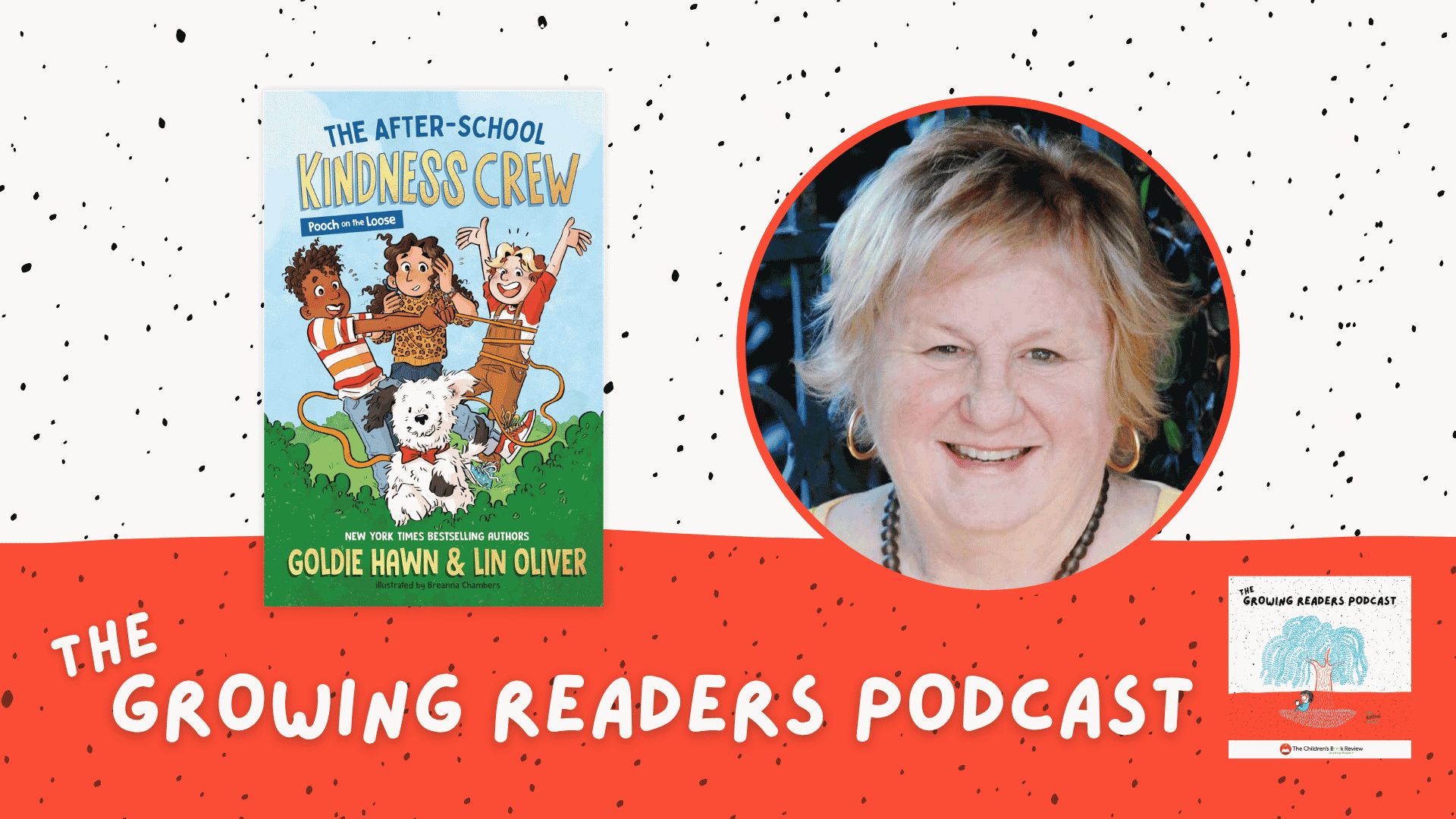
A podcast interview with Lin Oliver discussing The After-School Kindness Crew: Pooch on the Loose on The Growing Readers Podcast, a production of The Children’s Book Review.
Join us in our conversation with Lin Oliver, who discusses humor, heart, and the idea that kindness is a skill children can grow.
She’s happiest when she’s making kids laugh—and after more than 50 years in the children’s book world, Lin Oliver knows exactly how to reach them. In this episode, she joins us to talk about her newest series, The After-School Kindness Crew, and how a story about three fourth graders and a runaway dog becomes something much bigger: a chance to explore kindness as a skill kids can actually practice.
Lin shares how her collaboration with Goldie Hawn came to be, why humor is often her way into a child’s heart, and how she wove elements like brain breaks into her storytelling. We also talk about her long-standing role in the children’s book community and what decades of experience have taught her about kindness, creativity, and connection.
And for anyone who has ever believed in the power of stories to shape who we become—this conversation is one to settle into.
Subscribe to The Growing Readers Podcast to ensure you never miss an episode celebrating the creators shaping young readers’ lives.
Listen to the Episode
The Show Notes
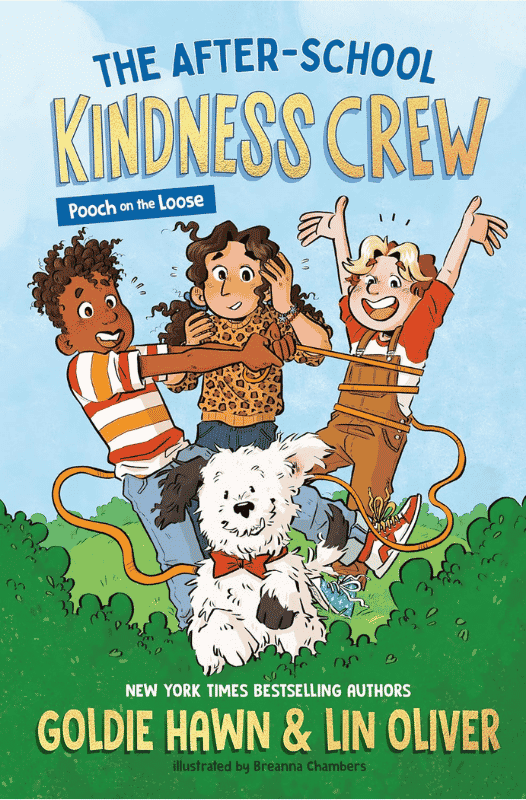
The After-School Kindness Crew: Pooch on the Loose #1
Written by Lin Oliver and Goldie Hawn
Illustrated by Breanna Chambers
Ages: 7-10 | 160 Pages
Publisher: Penguin Workshop (2026) | ISBN-13: 978-0593889442
Publisher’s Summary: From beloved Academy Award-winning Hollywood star Goldie Hawn and New York Times bestselling author Lin Oliver comes an inspiring series about friendship, community, and the power of kindness, encouraging readers to take breaks and deep breaths as they read along!
When classmates Tony, Mia, and River find themselves together in Ms. Gold’s classroom, a friendship quickly forms and leads them to creating the After-School Kindness Crew. Join the trio as they bring joy to those around them, with laughs, adventures, and brain breaks along the way.
This first book in the series introduces the origins of the After-School Kindness Crew, starting with a Surprise Us Day in their fourth-grade class, which leads to more surprises than anyone expects! From an escaped snake to a rowdy dog let loose from his cage to disguises slipped on to save the day, the hijinks and humor continue from start to finish!
Read along to get to know the crew and learn how a sweet dog in need of adoption helps bring them all together.
Buy the Book
About the Co-Authors
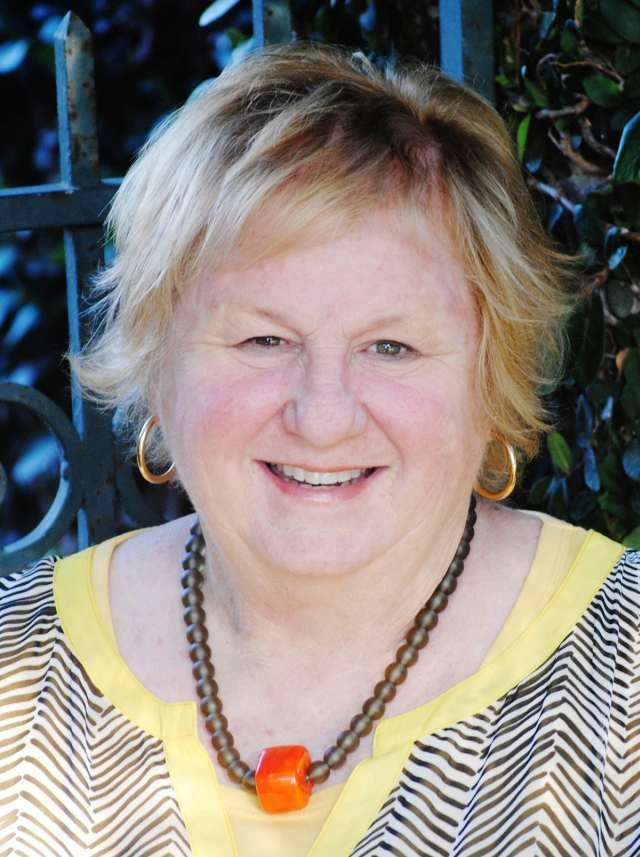
Lin Oliver (she/her) has written over sixty-five books for children, including the New York Times bestselling series Hank Zipzer: The World’s Greatest Underachiever, Alien Superstar, and Detective Duck with cowriter Henry Winkler. She is the cofounder of the Society of Children’s Book Writers and Illustrators and was its executive director for fifty years. Her books are mostly comedies with a big dollop of heart. She also writes books of poetry for very young children, including Little Poems for Tiny Ears. She is happiest when making kids laugh. She lives in California.
Goldie Hawn (she/her) is an Academy Award–winning actress as well as a producer, director, and bestselling author. In 2003, she founded the Goldie Hawn Foundation and launched MindUP, a mental health program designed to help children manage stress, build emotional resilience, and improve academic performance. MindUP now serves over seven million children in forty-eight countries and has recently expanded through a global digital platform. Hawn has authored two bestselling books and a companion journal focused on mindfulness and parenting. Hawn believes that “children light the path to joy” and has dedicated much of her life’s work to creating innovative solutions that help children thrive.
About the Illustrator
Breanna Chambers (she/her) is an illustrator and graphic novelist. She enjoys making work that emphasizes the intimacy and importance of seemingly small moments, human connection, and the beauty of the mundane. She would have loved to do good deeds with the After-School Kindness Crew when she was in fourth grade, and she’s so pleased to be an honorary member now! Breanna’s debut graphic novel, Grimm, Grimmer, Grimmest by Adam Gidwitz, is set to be published in 2027. She grew up on the Central Coast of California, and currently resides in Seattle, Washington with her partner and their cat, Mr. Goose.
Credits:
Host: Bianca Schulze
Guest: Lin Oliver
Editor: Kelly Rink
Producer: Bianca Schulze
Read the Transcript
Bianca Schulze:
Hi, Lin — welcome to the Growing Readers Podcast.
Lin Oliver:
Hi, Bianca. It’s very nice to be here with you.
Bianca Schulze:
Such a pleasure. I’ve been a fan of yours quietly from a distance since I was a wee little kid watching television, so this is super fun for me.
Lin Oliver:
Right, I’ve been at this quite a while.
Bianca Schulze:
Well, I thought just for some fun, we’ll do some warm-up rapid-fire questions. So when I ask the question, it’s just the first response that pops into your mind. Is that okay?
Lin Oliver:
That’s absolutely fine. Sounds like fun.
Bianca Schulze:
Okay — you’ve written books, produced television, and co-built the largest children’s writing organization in the world. What has been the hardest job of the three?
Lin Oliver:
I think the hardest job of the three is doing the Society of Children’s Book Writers and Illustrators, because you’re dealing with 30,000 people. And when you deal with 30,000 people, there’s a lot of personalities involved.
Bianca Schulze:
Yeah, yeah, yeah. All right — Harry and the Hendersons or Hank Zipzer, which one gets more questions at dinner parties?
Lin Oliver:
Hank Zipzer gets more questions because people are curious not only about the book, but about working with Henry Winkler. He’s such an icon that everybody wants to know about that.
Bianca Schulze:
Comedy or heart — which comes first when you sit down to start a new story?
Lin Oliver:
Well, I hope that the heart is always with me, so I don’t have to summon it. The comedy I have to call in and summon, and it’s very important to me. I’ve tried to do serious things and they come out funny. It’s very frustrating.
Bianca Schulze:
I love it. Well, since you mentioned Henry Winkler, I have to ask: Henry Winkler or Goldie Hawn — whose laugh is more contagious in a writing meeting?
Lin Oliver:
Well, for the moment, it’s Henry, because I’ve written 37 books with him, so his laugh is sort of programmed into my head. Goldie is a newer experience, but she’s got a wonderful, contagious, effervescent laugh.
Bianca Schulze:
I love it. All right, well, let’s go into the longer answers about you now, Lin. You’ve written over 65 children’s books. I like to ask this question of everybody — to be a writer, they say you should be a reader first. So was there a pivotal moment in your life when you considered yourself a reader?
Lin Oliver:
I have no recollection of a time when I didn’t want to be a writer or wasn’t a reader. It was very lucky for me — it was clear. Some people have to sort of find their vocation, and for me, it was handed to me. I was a reader from the very beginning. My mother was a reader, and my mother had my sister and me memorize poetry, which I think was very interesting. I can still recite The Owl and the Pussycat and probably 50 poems that she had me memorize. I think having language become an integral part of your personality is really crucial to being a writer.
Bianca Schulze:
Well, for over 50 years, you’ve been one of the most dedicated champions of children’s literature, both as an author and as the co-founder and longtime executive director of SCBWI. So what keeps fueling that passion after all this time?
Lin Oliver:
That’s a wonderful question. There are multiple answers. One of the reasons for the passion is knowing the people who create children’s books — knowing them and becoming friends with them. Since the very beginning, when I started the organization, I’ve been great friends with Judy Blume and Lois Lowry and Jane Yolen and Richard Peck. This is an extraordinary group of people who, as you talked about heart before, are connected to their work from their heart. And I think that’s unusual. I’m sure there are other groups of people who find similar connection, but I think the children’s book world is particular.
Bianca Schulze:
Yeah. Well, as you mentioned before, comedy is really important to you, and so much of your work — from Hank Zipzer to Alien Superstar to Detective Duck — has comedy at its core. So talk to me about why you love using humor as a through line in your stories.
Lin Oliver:
Well, humor for me is a gateway to the story and a gateway to children’s interest. A lot of what I’ve written is unusual because it goes for both boys and girls, and usually it’s middle grade or early middle grade fiction. To try and get those eight-, nine-, ten-year-old boys interested in reading and to sustain it, you have to have certain tools — and humor is one of them. Or fright. You look at R.L. Stine — he scares you and you’re interested. You look at my books and they amuse you and you’re interested. So it’s a gateway. One time I was speaking to a mother at one of my presentations, and she said, ‘The greatest feeling in the world is to walk down the hall after I’ve put my son to bed and he’s reading and to hear him laughing through the door.’ And I thought, that’s a gift that I’ve been given — for people to tell me stories like that. Because I think if you start with humor, hopefully there’s subtext of plot and storyline and heart and values there. But if you start with the humor, you’ve got the kids.
Bianca Schulze:
Yeah. And just as a mom, I thought to myself, how wonderful is it that the last thing somebody does before they go to sleep at night is to laugh? I mean, that’s beautiful.
Lin Oliver:
Uh-huh. That was one of the stories that has stayed with me. I think of it often, I think of it when I’m writing — because if you can hook their interest and their concern with humor, then they’re with you, and you can explore other themes together.
Bianca Schulze:
Yeah. Well, just in case there’s anybody listening who isn’t familiar with Goldie Hawn — Goldie Hawn is an Oscar-winning actress, a bestselling author, and the founder of a global children’s mental health program called Mind Up. And that’s, for you, Lin, a really remarkable co-author to bring into the kidlit world. So how did this partnership come about for creating the After-School Kindness Crew series, and what surprised you most about working with her?
Lin Oliver:
Well, when Goldie first called, she was actually calling because she wanted to explore writers to work with, and was talking to me as someone who knows most of the children’s book writers in the world. And then as we spoke, we kind of fell in love on the phone. The only other co-author I’ve had is Henry Winkler, and I chose to do those books because he’s an extraordinary person. I chose to work with Goldie when, after we spoke, she said, ‘I want you to do these books.’ And I said, ‘I’m really interested in Mind Up. I think the themes — particularly today, the theme of kindness and self-awareness and self-regulation — are essential skills that I think kids aren’t necessarily seeing modeled in public life.’ And so I became a passionate supporter of Mind Up and of what she’s trying to achieve, which is joy and happiness and kindness. That was how we met. Over the years, I’ve been approached by many celebrities to co-author books with them, because the books with Henry Winkler have done so well. And I always say no, because I’m not doing this for the celebrity part of it. But I was so motivated by her truly genuine concern about kids’ mental health, and looking at this moment in history and thinking, there’s nothing more necessary than that. So that was how our partnership was formed.
Bianca Schulze:
Yeah. What was the most surprising thing about working with her for you?
Lin Oliver:
Well, in her acting career, she’s done a lot of comedy. But this is a very serious concern. She approaches it with a light touch, but the depth of her concern about how children are faring these days was a pleasant surprise. And it’s the reason that I wanted to work with her and do these books, because I think the message that they’re sending out — not that the message comes first, but it isn’t unintentional — the first thing is hopefully they’re good books and entertaining stories, but underneath it all is this message of what kindness can do for you as a person and can do for the world in general. And that to me is essential, and essential at this particular moment.
Bianca Schulze:
Well, let’s talk about the three main characters. We’ve got Tony, Mia, and River, and each one feels really distinct to me and believable from the moment they’re introduced. So I want to start with Mia, who has this wonderful comfort in her own skin. She loves snakes, and she’s got this beautiful emotional capacity, even for people who aren’t her favorites. With Mia, is there anything besides what I just described about her that you would want readers to know?
Lin Oliver:
Oh, yes. So what was essential to me in starting these books — books for me start with character. In developing the character of these three kids, I wanted each of them to be distinct, and I wanted each of them to be kind of outlier kids. I like to write about the kids who may not be noticed, or may be noticed for being unusual — and that can be a struggle. The kids are in fourth grade, and that’s sort of the age when you want to be like your peers. All three kids are kids who are not like their peers. So Mia is a kid who’s interested in intellectual achievement. She loves science, she loves circuit boards, she loves robots, she loves information, she loves making charts and graphs. She’s newly come to the school. She’s Armenian — her name is Mia Terzian, her background is Armenian. She’s being raised by a single parent, and her mother is a physician’s assistant, a medical professional. I wanted to really portray working-class kids — kids whose parents are working at regular jobs. Tony, we’ll get to him in a minute, but Tony’s parents own the dry cleaner. I wanted to get away from lawyers and doctors and more elite professions, and work with kids whose parents are like all the rest of us — they’re working people. So Mia is unusual, and I would imagine a challenge to raise. But she has a mother who understands her and supports her. She has an inability to be like everybody else; she’s distinctly herself, and only comfortable in her own skin.
Bianca Schulze:
Yeah. Well, let’s talk about River next. I love that River enters the story wearing tap shoes and he’s just pure contagious joy. So where did you sort of pull his spirit from? What informed you on how to write this character whose enthusiasm just lifts up everybody around him?
Lin Oliver:
Yeah, River is a theater kid. All of us who are around children — you said you have children — you spot the theater kids. They’re the ones who are probably outliers with a lot of the kids in the class. But when they find their group — the group that loves to perform and sing and dance and be on stage and appreciate the arts — they become ensconced in that group. And that’s who River is. He’s so full of joy and the need and love to perform and to love the arts. He’s just a bundle of enthusiasm. And how great for him to find acceptance and not be an unusual kid. Those of us who are around kids a lot, we see those theater kids usually around middle school or high school find their group. They go to play rehearsals and they have a group of friends, where before that they may have been on the outside. But River has found his group in Mia and Tony early on, so that makes his life one of joy and not exclusion, but inclusion.
Bianca Schulze:
Yeah. Well, let’s talk about Tony now. So Tony’s relationship with his brothers immediately made me think of the Farley brothers from Tales of a Fourth Grade Nothing. I loved those books as a kid, and I was so delighted when your book itself gives that title a nod. So was that a conscious homage, or did the connection just reveal itself organically for you?
Lin Oliver:
Well, Judy Blume is a goddess to me. She’s not only a person who can be inside a kid’s body and write their feelings, but she’s funny — she’s a really funny writer. And having an annoying younger brother — Fudge — to me, that’s an archetypal theme. If you talk to most kids, they love their family, but the little one, the little brother or sister, is an annoyance. They want to come with them, they want to model them, they want to play with their friends, and they’re four or five years old, so they’re by definition annoying. And so that’s what Zozo — Lorenzo — Tony’s little brother is. Tony, of the three kids, is sort of the coolest. He’s a good athlete, he’s okay in school, but school is not — he’s someone who’s going to find his passion probably not on the regular academic route. And he loves art. I purposely made him interested in artists’ lives, so that he’s motivated by learning about artists who live on the edge of society as well. Even though he’s very handsome and athletic and looks to be like the regular kid, he has this passion for drawing art and also for learning about artists, which makes him unusual.
Bianca Schulze:
Yeah, yeah. I love that this has the three main characters, because while there’s something relatable that I’m sure each reader can connect with in each of the characters, I feel like it just provides this opportunity for even more readers to find themselves in the story. So on that note of having these three main protagonists, what’s the key for you to making the dynamic feel like a real friendship between them all, rather than just three kids thrown together?
Lin Oliver:
Well, friendship — I’m so happy you asked that question, because one of the enduring themes that I like to write about is friendship. For kids, their friends are the equivalent for us as adults of romance. As adults, we fall in love, or we’re interested in romance, or in young adult literature they’re interested in romantic relationships.
Lin Oliver:
Their attitude is coming from insecurity rather than just meanness. And I think that’s what Mia is able to see — that he is sort of the class bully. He doesn’t have anything good to say about anyone else. But way down deep, he’s someone who also deserves to be loved and accepted. And if you can do that, then you can mitigate the unkind behavior with kindness.
Bianca Schulze:
Yeah. I also like that — even though the majority of us walk through the world doing our best to be kind, we all have moments where we probably come across like a Lyle, even though we’re not intending to. So I also feel like Lyle’s character can help readers reflect: ‘I might have been a Lyle once before,’ and learn from it from that side as well.
Lin Oliver:
Yeah, absolutely. We’re complex human beings, so we have all the feelings. It’s unrealistic to think that you’re going to be kind 24-7. So it helps to understand your own shortcomings or your own impatience. That’s one of the areas that Mind Up explores very well — how to look at your own behavior and take a break from your own behavior and sort of regulate. There are choices in life. You have the choice to be kind or to be unkind. You have the choice to be involved or uninvolved. And if you understand your own psychology and your own neurology — your own brain function — you can regulate your own behavior. That, I think, is a really powerful message that these books send out to kids. You don’t have to react in an angry way. You have a choice. And if you take the time and the introspection to look at that, you might make a better choice.
Bianca Schulze:
Yeah. Well, Goldie’s Mind Up program has reached over 7 million children in 48 countries, which is incredible — helping kids build emotional resilience and manage stress. And what I love is that in this book, that philosophy takes the form of brain breaks, which are the guided breathing exercises, and you’ve woven them directly into the narrative. I don’t really know how you pulled it off so beautifully — we talk a lot in children’s book writing about how often there’s an underlying message or theme, but it isn’t the driver of the story. So what went into integrating those moments in a way that feels organic rather than instructional? I thought it was so clever how you pulled it off.
Lin Oliver:
Well, that was a lightbulb moment when we realized that we could include the brain break not only in the storyline, but in the storyline for the kid at home. When you’re reading, there are two stories going on. One is the story in the book, and the other is the story of the reader who is interacting with the book. So we decided to see if we could do that. In each of the books — because I’ve written some of the series already — there are two moments when the kids are given an opportunity to take a brain break. Reading is a new experience for kids. The readers of this are going to be in third grade, fourth grade, maybe as high as fifth grade, but it’s still a new experience. I remember one time I was doing a school visit and I was talking to the kids about reading, and one of the boys in the class said to me, ‘I don’t like reading.’ And I said, ‘But you know, it’s really kind of like talking on the phone or talking with your friends. Why don’t you like it? It’s so interesting.’ And he said, ‘It makes my head hurt.’ And I thought, well, it probably does. It’s a new experience. You’re still decoding and learning how to draw inferences from the text. And it probably does make your head hurt — it’s hard and challenging. So to be able to give the kids — not only in the story, but the kids at home — a brain break where they can put the book down, do some breathing, do some mindful work, so that when they come back to it, they’re feeling fresh. We do that as adults, but we don’t necessarily assume the kids need it. And they deserve the right to approach these books with relaxation and pleasure.
Bianca Schulze:
Yeah, yeah. Well, I loved it. I like to go and do yoga and my mindful practices and meditate as I’m going to sleep, so for me, this was such a win. Well, you co-founded SCBWI in 1971 alongside Steve Mooser, and you gathered Jane Yolen, Judy Blume, Sid Fleischman, and so many others who just wanted a community of kindred spirits. And so now, 50-plus years later, you’re writing a series literally about kids who form a kindness club. I’m wondering if you see any parallels there?
Lin Oliver:
You know, my friends tell me that I’m the organizer of groups. I’m sort of a one-person community center. Anything that I do, for some reason, suddenly there’s a group around it. What I like to do is sort of bring people together, and I love being around people. I’m a real extrovert — and not in the sense of showing off or talking a lot or performing, because I don’t do that — just in that I love having people around and bringing people together. So SCBWI was an accident. Steve and I did it because we had been hired to write a reading program that was going to be a national reading program, and we were each supposed to write 110 short stories and seven novels that would comprise a K-through-six reading program. We realized that that was a very important task, and that neither of us — I was 22 years old, I had been a comedy writer for television — neither of us really understood the field. So that’s why we formed the group. Over the course of those 50 years, I basically think I got to witness the second golden age of children’s books, and to have all those people as friends and colleagues and learn from them was the joy of a lifetime. Still is. I still work with SCBWI and do the social action and charitable work in terms of book distribution, book equity, book bans, freedom to read. So I still work with the organization a great deal. But what a privilege it was to be around those people. Writing for children — it’s a special breed. I don’t know what it is, but it’s marked by kindness. In all those years, with all those hundreds and hundreds of world-famous, world-renowned writers, I don’t think I ever met anyone who wasn’t kind. I think when you involve yourself with kids, and when you devote your life to trying to understand the emotions and the mentality of kids, it turns you into a very special kind of person.
Lin Oliver:
And so I feel so lucky to have done that with the organization. And hopefully now that’s incorporated into my personality and into my books, so that it brings a special sort of awareness to kids about story and pleasure and relationships with people.
Bianca Schulze:
Yeah. Wow, that was such a great answer. I love that. Well, for kids who might be feeling a little like they’re not quite seen at school, what do you hope they take away from meeting the After-School Kindness Crew?
Lin Oliver:
Well, that is a great question, because that’s for me — in all my work and especially in this work — that’s the essential goal: for every child to be seen. Once I received a letter from a reader who had read one of the Hank Zipzer books, and the letter said, ‘How do you know me so well?’ It was so touching, because that’s the goal — for each reader to feel like they’re represented on the page. The great writer Richard Peck once said, ‘If you don’t see yourself on the page, you’ll go looking for yourself in all the wrong places.’ I think that’s really true — that when a child can identify with the characters on the page, with their strengths and their weaknesses and their fears, they feel not alone. And I think that’s one reason why we — adults and kids — like to read: so that we don’t feel alone, so that we feel that there are others who are sharing our travels. Don’t you think? For me, that’s a motivation in reading — to feel surrounded by characters who feel the same things that I feel.
Bianca Schulze:
Yeah, yeah. Yes. And the wonderful thing, I think, about children’s literature is that it almost always carries that message of hope at the end. When you see yourself, and you see somebody maybe experiencing the same challenges, and it may not be easy how they get to the other side, but you see them get to the other side. And hopefully that helps readers experiencing challenges know that they too can get to the other side.
Lin Oliver:
I think that’s what makes children’s literature different from adult literature: you don’t have to have a happy ending, but you have to have a hopeful ending. There’s a difference there. Not all the threads of the story and the characters need to be tied up in a neat bow at the end, but you need to offer children hope. Otherwise, I think you’re doing a disservice to them. It’s a tough world out there today for a nine-year-old. There’s a lot going on and a lot of stress. So if the book can give them a model of a character who deals with stress in a resilient way, and in the end there’s a hopeful conclusion, I think the book has done a huge service for kids.
Bianca Schulze:
Yeah, yeah. Well, Pooch on the Loose is the first book in the After-School Kindness Crew series, but you mentioned that you’re already working on more stories. So are you able to give us any hints as to what Tony, Mia, and River are already cooking up for their next act of kindness?
Lin Oliver:
Well, yeah, I’ve written the second book. It’s called Slam Dunk Day. The school forms a basketball team, and the three kids sign up for it. Along the way, they meet a man in the neighborhood named Hugo Beatler, who is a former NBA player but has sort of turned bitter. And they exercise their kindness skills, not only for the basketball team, but for integrating him back into the community. It’s a real great buzzer-beater of a story at the end. So the theme is basketball. And I’ve just finished the third book, which is about the community television station sponsoring a talent show, and our kids enter. There are all sorts of difficulties, hijinks, and comedy involved in them entering the community talent show. So we’re three books into it, and I’m just starting to work on the fourth book. It’s such a pleasure, because the stories are active and fun. The publishing company has attached a little slogan to the books where they say, ‘Where kindness meets chaos.’ I think that’s a great description, because it’s important to me for the books to be funny and to have a physical aspect to them. I think for the age of our readers, they’re very much into physical comedy. So each of the books has that at its core, so you can have a great laugh along with it. You never want to feel like you’re being preached to or instructed. So each of those — the basketball game and the talent show — provides great opportunities for physical comedy.
Bianca Schulze:
Amazing. I was just sitting here thinking how much my child self would have loved being in the TV talent show.
Lin Oliver:
I know. And of course, they’re competing against some of the characters in the community. One thing I really wanted to do is create a world that these kids live in. I actually drew a map in my writing process of the main street — Sycamore Street — and what shops were there, who ran the shops, and who attended the shops, so that it’s a real neighborhood. It’s set in Los Angeles. Everyone thinks of Los Angeles as sort of glamorous, but there are lots of working communities where on your walk to school, you pass by the dry cleaner and a little mini market and a car wash. So it’s sort of an urban neighborhood. That was important to me to have, because I think a lot of kids live in that — where you know the people who run the stores. I remember when I was a child and I walked home from school, I would stop in and buy — for some reason I liked pickles — I would buy a pickle every day in the little mini mart. That was a big treat. So I wanted that kind of world where kids are kind of free to move around their neighborhood and to know the adults who live and work there.
Bianca Schulze:
Yeah, it definitely comes across. And I just have to say, I do love a good pickle.
Lin Oliver:
All the other kids were getting candy bars and I was getting a pickle. I don’t know what that was about, but I still love pickles.
Bianca Schulze:
I love it. Well, Lin, if listeners were to take away just one thing from our conversation today, what would you want it to be?
Lin Oliver:
Well, I would want it to be everything, first of all, because this has been a great conversation. But I guess the most important thing is that these are books that demonstrate acts of kindness. I would want the listeners to encourage kids not only to read the books, but to think about the acts of kindness in their life and how they can turn situations into something that extends good into the world. We live in a world that is sorely in need of good people performing good acts. And I would hope that these books are a contribution to that, and that readers acknowledge that.
Bianca Schulze:
Yeah. Well, I’m just going to say a big thank you for bringing Tony, Mia, and River into the world, and for reminding all of us, young readers and grown ones alike, that kindness isn’t always easy, but it’s always worth it.
Lin Oliver:
Yes. I’m going to recruit you for the fourth book.
Bianca Schulze:
Sold — sign me up. I also want to take a moment to say something that feels personal to me. As a member of SCBWI, I just know firsthand what you and Steve Mooser built from that small gathering in 1971 means to so many writers at every stage of their journey. And I credit SCBWI with giving me a real boost when I needed it most. I recommend it to every writer I meet — the community, the resources, the sense of belonging — and that’s your legacy. That’s so incredible.
Lin Oliver:
Well, thank you. I believe that it is a legacy, and I feel privileged to have done it. We did that — Steve and I — while we both had other jobs. I was producing television shows. But we never let that go, because it was that thread of kindness in our lives that meant so much — those friendships with people who were in the children’s writing community. They are really special. That’s all I can say. All credit to lawyers and doctors and insurance salespeople and all those who go to their own conventions, but when you go to conferences and conventions of people who write for children, you just feel like you’ve dropped into heaven. It’s such a creative world. People always think children’s writers are going to walk around in capes wearing elf shoes. It’s not that at all, but it is a remarkable community of kindness. So it was a great privilege. And it makes me happy to hear you say that. I love talking to people who are or have been members and see that it’s done a world of good for them. Helping people realize their creative dreams is a gift.
Bianca Schulze:
Yeah. Well, I think now to see you channel that same spirit of community and kindness into the After-School Kindness Crew alongside Goldie Hawn — what a gift to give this to kids too. And I cannot wait to see where Tony, Mia, and River go next. So, Lin, this conversation has been a joy and an honor for me. Thank you so much for being on the Growing Readers Podcast today.
Lin Oliver:
Thank you, Bianca. It’s been a pleasure. And hello and much love to all of your listeners.
