

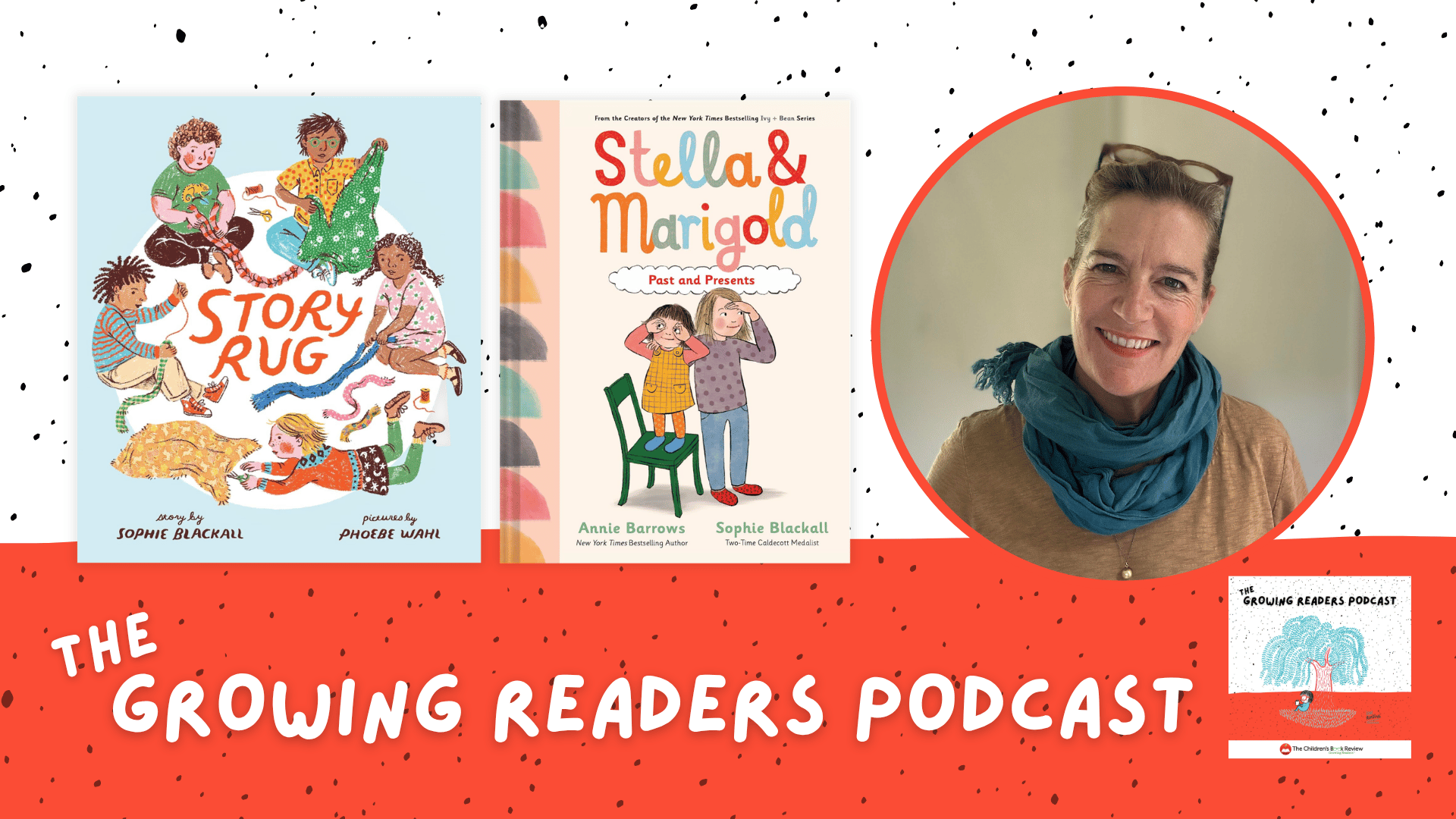
A podcast interview with Sophie Blackall on The Growing Readers Podcast, a production of The Children’s Book Review.
Two-time Caldecott Medalist Sophie Blackall joins us to talk about the joy, challenges, and surprises of making books.
From illustrating Annie Barrows’ Stella & Marigold: Past and Presents to writing Story Rug illustrated by Phoebe Wahl, Sophie shares what happens when creative roles shift and new perspectives take shape. Along the way, she reflects on the gap between imagination and the finished page, the unexpected places inspiration can hide, and why collaboration might be one of the best parts of storytelling.
Subscribe to The Growing Readers Podcast to ensure you never miss an episode celebrating the creators shaping young readers’ lives.
Listen to the Episode
The Show Notes
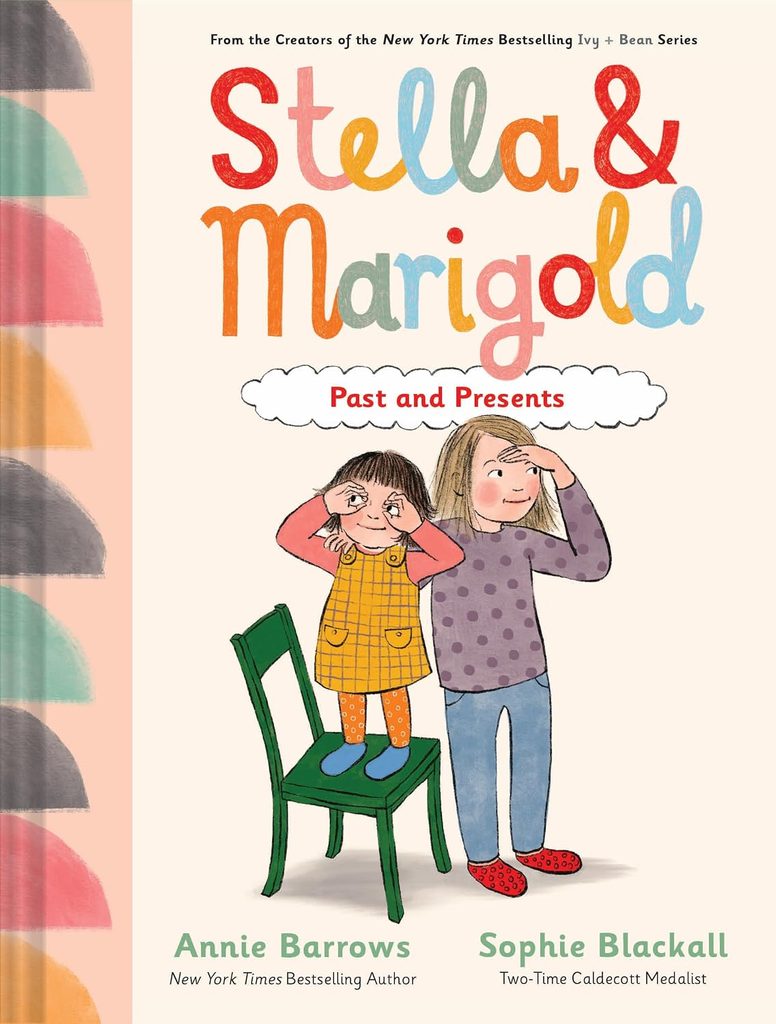
Stella & Marigold: Past and Presents: Book 3
Written by Annie Barrows
Illustrated by Sophie Blackall
Ages: 6-9 | 124 Pages
Publisher: Chronicle Books (2026) | ISBN-13: 978-1797219721
Publisher’s Book Summary: The next adventure in the fun and funny early chapter book series about two small sisters with very big imaginations―from the beloved creators of the New York Times bestselling Ivy + Bean, Annie Barrows and Sophie Blackall.
There is the whole world, and in it, there’s a city, and in that city, there’s a house, and in that house lives a pair of sisters named Stella and Marigold. But the house is very old, so they are not the only children who have ever lived in it. One surprising day, they discover that there was another girl, maybe named Ziamara, who not only lived in their house, but wrote on the wall and left secret presents for Stella and Marigold. Inspired by this hero from the past, Stella and Marigold make great plans for the future.
With lots of adventure, a dynamic relationship, and colorful pictures, this series is perfect for emerging readers. This unlikely duo will have readers LOL-ing!
Buy the Book
Borrow the Book
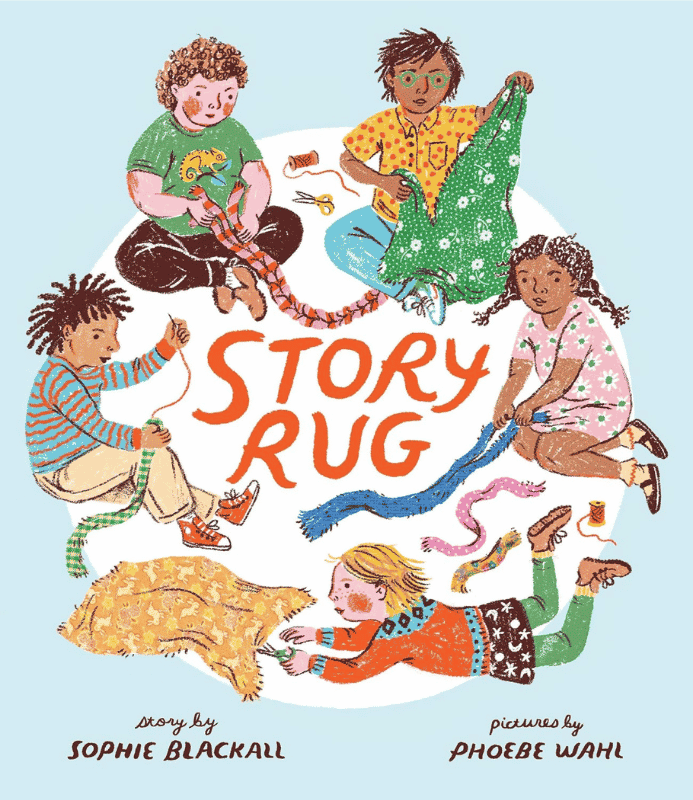
Story Rug
Written by Sophie Blackall
Illustrated by Phoebe Wahl
Ages: 4-7 | 40 Pages
Publisher: Little, Brown Books for Young Readers (2026) | ISBN-13: 978-0316535380
Publisher’s Book Summary: From two-time Caldecott Medalist Sophie Blackall and beloved artist Phoebe Wahl comes a luminous book that braids together the joy of storytelling with the satisfaction of learning a new craft.
The children of Class 203 are learning to braid. They started with hair and shoelaces, and now the children have brought rags from home. Their braid gets longer and longer until one idea transforms it into an extraordinary surprise for their teacher.
Here is the story of a rag rug, woven through with the stories of the scraps used to create it and those told during its making. The result is a special handmade spot where the whole class can gather, ready for more stories.
This beguiling celebration of storytelling is woven through with an easy-to-learn and impressive craft project, including instructions, will have readers reaching for scraps to make their own rag rug.
Listen to the accompanying song on YouTube.
Buy the Book
Borrow the Book
About the Author
Sophie Blackall, AM, is an award-winning illustrator of over 50 books for children, including the New York Times best-selling Ivy and Bean series, the 2016 Caldecott Medal winner, Finding Winnie, and the 2019 Caldecott Medal winner, Hello Lighthouse, which she also wrote. She is the five-time recipient of The New York Times Best Illustrated Picture Book Award and has worked with UNICEF and Save the Children, UK on global health and literacy initiatives. Originally from Australia, she now splits her time between Brooklyn, New York, and the Catskill Mountains, where she and her husband run a retreat for the children’s book community called Milkwood Farm.
Learn more at sophieblackall.com.
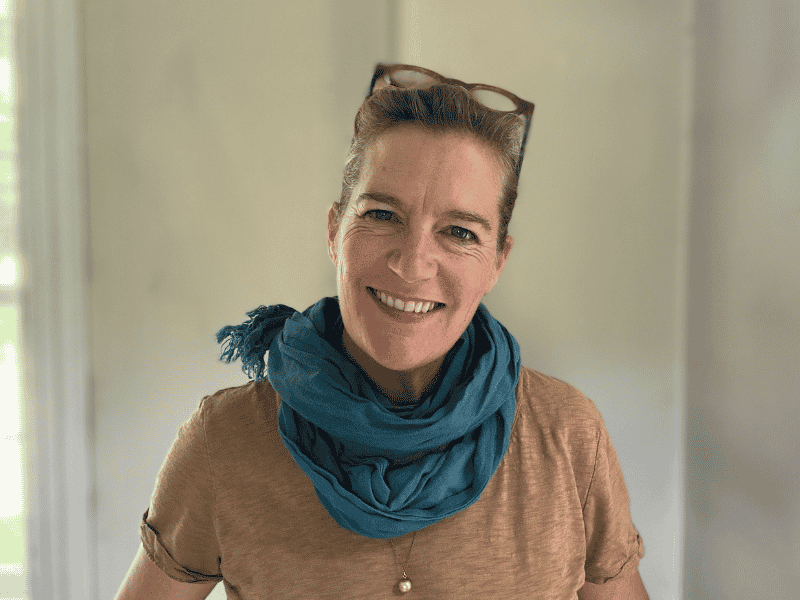
Credits:
Host: Bianca Schulze
Guest: Sophie Blackall
Editor: Kelly Rink
Producer: Bianca Schulze
Read the Transcript
Bianca Schulze: Hi, Sophie. Welcome back to The Growing Readers Podcast.
Sophie Blackall: Hi, Bianca. It’s always so nice to talk to you.
Bianca Schulze: I want to start with some fun rapid-fire questions. Is that okay with you?
Sophie Blackall: I’m as ready as I’ll ever be.
Bianca Schulze: You’re also welcome to say “pass” at any time. All right: favorite Australian food.
Sophie Blackall: Pavlova.
Bianca Schulze: Oh my gosh, yes. Okay, the first family-friendly Australian saying that comes to mind.
Sophie Blackall: I’m so glad you clarified “family-friendly.” I think it has to be “Yeah, no, yeah, no.” My kids and I can go on a long time like that. You know that Australians do that? You’re saying everything and nothing at the same time. So, “Yeah, no, yeah, no.” That’s it.
Bianca Schulze: Yeah, exactly. Although we’re probably both a little Americanized, so it’s probably more like “Yeah, nah. Yeah, nah.”
Sophie Blackall: “Nah, yeah. Yeah, nah.” It’s so useful.
Bianca Schulze: All right. Pencil or paintbrush, if you could only keep one?
Sophie Blackall: I’m a big Blackwing convert when it comes to pencils. You can sharpen them to the most beautiful point, and they have this rich, inky black. I should do an ad for Blackwing. They’re beautiful. They’re worth the dollars.
Bianca Schulze: I’m going to go buy one now. All right, one art supply you never travel without.
Sophie Blackall: It’s silly, but I travel with a Chinese inkstone and ink stick. It’s the way I paint. If I’m not taking a whole little set of watercolors, I just take my Chinese ink, but I am literally carrying a stone around. Ed is always asking, “Why does your bag weigh so much?” Well, it’s the inkstone. And then there are all the stones that I collect wherever I am. So it’s my own fault. I should carry my own bag.
Bianca Schulze: I love that. My husband collects stones and rocks, and we have bowls of random rocks. I love it, but my brain wants them to be more organized or something. We just have little bowls of rocks around. I need to figure that out.
Sophie Blackall: Yes, don’t come to my house. There are stones everywhere. Ed is incredibly understanding about the stones.
Bianca Schulze: All right. A picture book you wish you’d illustrated.
Sophie Blackall: That’s an interesting one, because that means I wish somebody else hadn’t illustrated it. That’s hard, Bianca. That’s wishing someone undone. I’m going to go instead with something I wish I could illustrate. I’m sure it has been illustrated, but to my knowledge, I haven’t seen an illustrated version. And it’s not a children’s book, so I’m cheating on every count. It’s Dylan Thomas’s play Under Milk Wood. We named our retreat, Milkwood, after Under Milk Wood. It’s a play, but you can read it like a poem or a book. It’s a quick read, and it’s so full of delicious details that I’m itching to draw it one day.
Bianca Schulze: That’s the perfect Sophie answer. All right, on a scale of one to ten, with one being the least and ten the most, how messy does your studio get mid-project?
Sophie Blackall: I have deep shame about this. It’s not only that my studio gets messy, Bianca, but that I leave the mess and then go and create a mess somewhere else. I’m not proud of this, and I’ve talked about it before, which makes it even worse, because I haven’t learned anything in the intervening period. I probably talked to you about this in the past.
When I’m working on a book, especially an analog book with paints and paper, a collage book is the worst. The last one was Farmhouse, which took over the entire workroom: the floor, every surface. I used materials from the falling-down farmhouse to make that book, so there were bits of fabric, ancient and probably mold-covered wallpaper, and so much detritus. Because I was already on deadline with the next book, I just couldn’t clean it up, so it stayed there. Then, to make things worse, I went and made a mess in a different room.
Then I went back to Australia, and while we were away, part of the inside of the chimney collapsed. The soot in the chimney went down into the vents, and we had left the heat on low during the winter. For six weeks, the heaters just went puff, puff, and blew soot all over the house. Sooty, sooty soot, puff, puff, puff. That’s what we came back to. It was hanging like some sort of Halloween decoration, these sooty cobwebs everywhere: in every room, on every surface, inside the drawers. That was my wake-up call that I really did need to clean up.
Bianca Schulze: Oh my goodness.
Sophie Blackall: But have I learned anything? No. I’m still making messes all over the place. So, ten. I could have just said ten.
Bianca Schulze: You and me both. I have such a leaning pile of books. I have this stash right behind where I sit and work, and I think, “This book is amazing. I am definitely going to talk about this book somewhere, somehow.” Then the next books come in, and the stack of all the books I want to talk about looks like it’s going to fall over, but it doesn’t. My husband says, “I can’t look. It’s just going to come crashing down if I look at it.”
Sophie Blackall: But you need them all within reach all the time. I completely understand that.
Bianca Schulze: All right. The last thing you drew just for yourself, not for a book.
Sophie Blackall: The last thing I drew was on stones. I’m working on a book called House on Wheels, which follows Hello Lighthouse and Farmhouse, so it’s a third house book. To research it, I needed to get a house on wheels, obviously. Ed occasionally says, “Can’t you just Google that? Do you have to get a house on wheels?” Of course we do. So we got a house on wheels, and he is endlessly generous and patient. We went on a research trip, and then we had brake issues and had to get a tow truck to come and get the house on wheels. While I was waiting, we were in a place without any Wi-Fi, and it was blissful, because I could just paint on stones. They were all different shapes, and they suggested different pictures. Again, circling back to stones. It was a delightful time, waiting for the tow truck and painting on stones.
Bianca Schulze: All right. Now, a sound that instantly makes you think of childhood.
Sophie Blackall: That’s a good one. My childhood, or my children’s childhood? There are so many. There’s the sound of sprinklers coming on. There’s the sound of the ice cream truck in Brooklyn; that’s a very obvious one, I’m sure. And there are cicadas. Now I’m thinking about summer, those long summer days as a kid where I grew up in South Australia, where we were allowed to go and roam. We lived in a country town, and it was only so big. My mother would ring a bell at the end of the day, and we would hear that bell. But the sound of cicadas kicking in during the late, hot afternoon: that’s childhood.
Bianca Schulze: Yeah, they get so loud. It’s definitely a summer sound. All right, Stella or Marigold: who are you most like?
Sophie Blackall: I’m definitely Stella. I can’t even pretend for a second that I’m Marigold, but I love Marigold with my whole heart. She makes me laugh so much. She is such a person; she is so real to me. But I’m more like Stella, always wanting to do the right thing and be responsible.
Bianca Schulze: Well, we’re going to dig into Stella & Marigold, because book three is releasing. We can’t talk about Stella & Marigold without talking about Annie. Annie couldn’t be with us today, but I don’t want her to go unmentioned. You two have been creative partners for a long time now, across Ivy + Bean and now Stella & Marigold. What do you love most about working with Annie, or about her as a person, that people might not get from the books alone?
Sophie Blackall: I think you get a lot about Annie from the books. Annie has a way of channeling childhood like no other writer I know. She is right there, and she finds all the incredibly specific things that, as soon as we’re reacquainted with them, come back in a rush of “Yes, that is what it feels like to be a child.” A child’s sense of time, a child’s sense of injustice, a child’s sense of who they are. Those beginning realizations that they are a person in the world, that there are other people in the world, and that the people around them are so important. And then we begin to realize that there are other people beyond the people around us. Annie is so funny and so wise, and she’s possibly the smartest person I know.
We started working together on Ivy + Bean when our beloved oldest kids, my Olive and Annie’s Cleo, were seven, and those kids are now 29. It’s been that long. We’ve all grown up making these books together. Not only that, but we’ve seen kids grow up reading these books. The fact that we get to make these books and continue to make books together is one of the great joys of my life.
As women in our prime, Bianca (you have this ahead of you), we realized that it’s very important to our creative process to go off somewhere together for four or five days, preferably somewhere warm in the dead of winter, with a wild sea to look at. That’s where we do our best work, so we try to do that once a year. That’s where Stella and Marigold materialized, on one of those retreats.
Annie’s quite ferocious. She’s a bit older than I am, so she’s the oldest sister in the equation, although she’s much more like Marigold. She sets the agenda. We go walking in the morning, and I’m not allowed to have coffee until we’ve walked. When we’ve come back from a walk and we’re all virtuous from having made the blood course through our veins, then we’re allowed to have coffee. Then we settle down to work. We often sit literally opposite each other, and Annie will be clacking away on her typewriter, giggling. She makes herself laugh, and I’m not allowed to know what’s funny until I’ve done my bit of drawing. Then we’ll have lunch and swap stories, and she’ll read me bits, and I just can’t believe how lucky I am.
Bianca Schulze: That’s so beautiful. You’ve created art for Annie’s words, and you’ve illustrated Kate DiCamillo’s words, too, along with other great writers. So stepping into someone else’s manuscript isn’t new territory for you. What’s different, if anything, about finding the pictures inside Annie’s sentences specifically, versus other writers whose words you’ve illustrated?
Sophie Blackall: If I’m talking about Annie and Kate, sometimes I just have to pinch myself that I get to work with two of my favorite writers in the entire world, Annie Barrows and Kate DiCamillo. Their stories are very different. They’re both hilarious. Annie’s stories are more grounded in everyday life and realism, and Kate’s usually have an element of magical realism, so I get to do more fantasy-type work with Kate. Her stories are also period pieces, in a way, so I get to meld those two delightful visual things.
With Annie, it’s really a lot about characters and finding how to convey all of Marigold’s feelings in a spread. Marigold patting a banana because she feels sorry for it. Marigold wondering what dust tastes like, because she’s so bored she can’t think of a single other thing to do except get on her hands and knees and pick dust out of the crevices in the floor. Marigold waiting a hundred years for her sister Stella to come back from school, because that’s how long it feels.
Marigold jumps off the page in Annie’s writing and is really in my head. The challenge isn’t seeing her, because the words are so clear, the story is so funny, and the descriptions are all there. It’s something I struggle with as an illustrator, and if anyone else listening is an illustrator, this may or may not resonate with you. I can see the pictures so clearly in my head. It’s about getting them onto the page. That’s where I have to depend on my hand to try to convey the image in my head, and my hand is a flawed little meaty stump of fingers. It never does what I wish it could do. So I have to resign myself to what comes out on the page. It’s a sad kind of attempt at the picture I see in my head. Then, bit by bit, I reconcile myself to it and fall in love with it. But it’s always a little bit disappointing.
I talk to kids a lot about this, because I think it’s one of the terrible hurdles that confront us all. We have to clamber over it in an ungainly way; there’s no leaping over this hurdle. The hurdle is the disconnect between what we see in our head and what we can put on the page. It’s there, and we have to get over it. Most of us clamber over it, but a lot of us balk at it and don’t clamber over it at all.
This is an extended metaphor, but I think that’s what happens when kids draw and draw and draw as little kids, because they’re not worried about that disconnect. Then they reach a certain age where they’re suddenly conscious that what they see in their head isn’t what’s on the page. It’s so disappointing and disconcerting that they stop drawing, and they don’t clamber over the hurdle. So I’m all for ungainly clambering over the hurdle and keeping going, and then realizing that what comes out of your hand is its own magical thing. It’s an interpretation. It’s like our singing voice: it’s ours, and we should embrace it and love its flawed, fallible, wonky aspects. There you go. That was my little soapbox.
Bianca Schulze: I love that. Your soapboxes always come with these amazing metaphors and analogies. As receivers of art, whether it’s words or pictures, what you just described is why certain people fall in love with certain artists’ work: the intricacies that come up when you try to get an interpretation from your brain onto the page in the only way you know how. I love all of the quirks and character that show up in the people you put on the page.
Sophie Blackall: It’s reaching for that specificity that I talk about a lot, or at least think about a lot, especially in this particular time we find ourselves in, where AI is infiltrating everything and a lot of things are starting to look the same in a weird, glossy way. Making things as real as possible, which is what both Annie and Kate do with words, is the human goal. It’s what we should be striving for as illustrators, and in the process we show kids, and remind them and ourselves, that we are human beings and we’re all different. Here are the myriad ways that make us individuals, and we should be celebrating those things instead of aiming for something homogeneous and crowd-pleasing. Let’s lean into the weird, gristly, knobbly bits.
Bianca Schulze: Yeah. All right, so you have Stella & Marigold, but Ivy + Bean was so successful. You went on one of your writing retreats with Annie, and Stella and Marigold appeared. How did the legacy of Ivy + Bean sit within the conversation of creating Stella & Marigold?
Sophie Blackall: Annie and I have lived with Ivy and Bean for twenty-something years, and we adore them, obviously. They made us laugh so much, and we loved living with them out in the world and meeting hundreds of thousands of kids. All of that has been so glorious. But we wanted to do something a little bit different.
In Ivy + Bean, the sister relationship between Bean and Nancy is very contentious. Nancy is the terrible older sister, and it was so much fun to delve into all the terrible things that Bean would do to Nancy (I’m laughing just thinking about them) and vice versa. Ivy is an only child who pines for a sibling and doesn’t get one, even though she tries to bring a baby doll to life by sticking an iPhone charger in its mouth. That’s a whole other story.
But we really wanted to explore a sibling relationship where the kids are nice to each other, because Annie and I both have kids who are really, really nice to each other. Not that they didn’t have their little scrapes and battles, but ultimately they were kind and loving and each other’s biggest defenders, and we wanted to explore that in a book. Stella and Marigold are each other’s best friends, and they understand each other in a way that the grown-ups just can’t and never could. Stella is Marigold’s first line of defense. Marigold is just trying to wrestle her way through; she’s very angry about a lot of things.
When Annie was thinking about names, she came up with Stella because Stella is celestial. She is cool, composed, and ethereal in a way, a wise soul like a star. Marigold is hot and close to the ground. She has big feelings. So in the books, I drew Stella in cool colors, and Marigold is always in reds, yellows, and oranges, and she bursts off the page. Having two kids who really understand each other is something Annie and I hadn’t seen quite so much in books. It’s been lovely hearing from families whose kids do love each other, and who are glad to find books that aren’t just about sibling rivalry and the irritating-little-brother or awful-older-sister tropes.
Bianca Schulze: So beautiful. I’m a huge fan of the books Chronicle Books puts out into the wild. I’ve never met a Chronicle book that I haven’t admired in some way. Everything you just described is exactly why I love Stella & Marigold. The only other series that’s similar, though for slightly earlier readers, also comes from Chronicle Books: the Charlie & Mouse series by Laurel Snyder. Even though it’s been quite a few years since I read them with my son, there’s a moment where they have bedtime popsicles, and I was like, “Yes! Yes to bedtime popsicles.”
Sophie Blackall: Yes, exactly. Early in book three of Stella & Marigold, Stella goes and gets the old, saggy yellow blanket that they’re allowed to do anything to. It’s things like that. Yes to having an old, saggy yellow blanket that you’re allowed to do anything to! They can tape it, drag it through the mud, make a fort out of it, turn it into whatever they need it to be.
I saw something recently on Instagram, I think, that came out of Sweden, where a lot of the great early childhood ideas originate these days. They asked kids, “What’s one thing you’re not allowed to do that you wish you could do?” The answers were so surprising and beautiful. It was a short film, and the kids were allowed to do those things. One kid wanted to ride their bike barefoot. As parents, we say, “No, you have to put shoes on to ride your bike.” But there was this kid riding around a garden in bare feet, and it brought that kid so much joy. Another kid wanted to eat outside in the rain.
Kids ask for the weirdest things, and our default is “No, no, you can’t do that.” Sometimes we don’t even know why as parents. We reach for caution, because it might be dangerous, or inconvenient, or it might cause us a bit more work, and we’re tired and our resources are stretched. But sometimes we could stop and say, “Maybe they could eat their sandwich out in the rain.” It’s not going to hurt anyone, and they’ll get to have this experience that, for whatever peculiar reason, they want to have. I’ve been thinking about that little film ever since.
Of course, Marigold wants to sit on the roof of the house, and she’s never been allowed to, for all the obvious reasons. We’re not saying, “Yes, go let kids sit on the roofs of houses!” Not at all. It’s more about stretching toward the idea of what a kid really, really wants to do: testing their boundaries and expanding their tiny little worlds into something a bit bigger. Maybe there are things you can find, or work around, that give them that little experience.
Bianca Schulze: Exactly. I love that you brought up Marigold wanting to sit on the roof. Each chapter in these books, one through three, is very episodic. They’re little stories in themselves, but there’s also a story that runs through the whole book. In book one, Marigold talked about wanting to live upstairs in their townhome so she could be on the roof and see the moon. Without giving any spoilers, in book three there’s a moment where that comes to fruition, and it’s beautiful. It’s everything you just described.
What you said earlier about Annie: she can really write into that space of letting kids do things that we as parents often say no to, for no particular reason. You mentioned that parents are probably seeing into the future of the disasters that could happen, and we’re exhausted and burnt out and trying not to make extra work for ourselves. I think Stella and Marigold’s dad embodies that, too. And I love it; it almost seems like he’s had a little personal growth between book one and book three.
Sophie Blackall: I love that. I love what Annie does with the parents, who are so recognizable to us grown-ups reading the books. There’s a moment where Stella comes to find Marigold, who is hiding behind the sofa. She’s only just been able to pull it out; yesterday she couldn’t, and today she can, which nods to that thing about being a small child where you’re growing so much that one day you can do something that was unavailable to you before. So Marigold’s hiding behind the sofa, and Stella finds her, and Marigold says, “How did you know I was here?” And Stella says, “Well, Dad said you had gone away to contemplate life’s injustices, whatever that means.” It’s so funny.
There was an Ivy + Bean where Ivy wanted a sibling and went to ask her mother, and her mother started singing, “The old gray mare, she ain’t what she used to be.” Annie does it without the snide thing we’re sometimes tempted to do, which is a nod to the adults that excludes the kids. It’s right there. Kids can read it and think about what they think it means, and when they get older, they’ll put two and two together. I think Annie does it in such a lovely way.
Bianca Schulze: There’s nothing more beautiful for me as a parent than that time of day when you can hop into bed with your kid and share a book together. Some of my favorite memories (and I’m past it now, so it’s sad) are of reading a chapter and then having them read a chapter. I feel like Stella & Marigold is ideal for that, because there are little moments that parents are going to chuckle at as well.
But I wanted to talk about Marigold a little bit, mostly because I think I’m more of a Marigold. I had all my books with sticky notes so I could read passages verbatim, and of course they’re not here, because I’m a Marigold.
Sophie Blackall: I see that, Bianca. I see that.
Bianca Schulze: I love the little details. For example, the parents are putting them to bed, and we know kids never go right to sleep. Stella and Marigold share a room, and their parents are trying to get them to quiet down, calling through the door. The mom says something along the lines of “Not a peep. No more peeps.” And of course, Marigold can’t help herself: “Peep, peep.”
Then, in one of the books, Stella is having friendship problems. She’s upset because her best friend is making a second best friend, and Marigold’s response is, “You should just kick her.” You said you’re more of a Stella. Are there any precious Stella moments for you?
Sophie Blackall: “Just kick her.” Stella is just so good, but not in a sappy way. She’s thoughtful and kind, but she’s strong as well, and she stands up for what she thinks is right. In book two, she wants to make it snow, and she’s convinced she can make it snow through sheer willpower, by thinking ferociously about snow. Without meaning to, she convinces the whole class that she has telepathic powers, and then she’s backed herself into a corner. You feel for her so much, because she’s torn between being a very creative, imaginative kid and wanting to do the right thing. Marigold wouldn’t care at all. Marigold would just stomp her foot and say whatever her truth was. But Stella is aware of everybody and considers everybody else, and she knows she’s led them down this path of “Can she make it snow?” I’m not going to tell you what happens.
Bianca Schulze: All right. I want to dig into Past and Presents, book three, and the premise of this other girl. I’ll pronounce her name the way I read it: Ziamara. Is that how you say it?
Sophie Blackall: Yes, I think it’s Ziamara.
Bianca Schulze: Okay. So Ziamara possibly lived in their house before they did, and she did a drawing on the wall. We don’t actually meet her, but we do through your artwork. Talk about how you came up with Ziamara.
Sophie Blackall: This was all Annie. When Marigold is finally able to pull the sofa out from the wall, she discovers a tiny drawing of a sun on the wall with writing that says, “I draw on the wall. Ha ha.” This is Marigold: she cannot believe that someone has drawn on the wall, because she has been told her entire life, all four and a half years of it, that you are not allowed to draw on the wall. So she’s simultaneously indignant, outraged, and jealous, because this is what she wants to do more than almost anything, except go on the roof.
Stella, who is always quick with a way to explain the world to Marigold, says, “Well, it was done by somebody who lived here before.” That idea strikes a kid suddenly: the realization that there were people before you. I think it happens with a thud for kids when they realize one day that their own parents were once children. You can’t wrap your head around it, because you think they’ve always been the age they are, and then you have this new information that once they were children.
It’s the same thing with a house. If you don’t live in a brand-new house, and most of us don’t, there were likely children who lived there before you. Once you come to terms with that enormous fact, it’s only a small leap to realize that there will be children who come after you. That’s what this book is all about: that stretchy, elastic, slippery thing called time, and how kids relate to it. They begin to understand that their little presence in this world is both interminable and fleeting, which is life for all of us, right? So Marigold waiting for Stella to come home from school takes a hundred years, but they also might find a portal in the house that they can leap through to visit children in the past.
That includes Ziamara, who becomes an alter ego for Marigold. She’s an imaginary friend, in a way. Stella has conjured her to explain away the drawing on the wall, but Marigold starts to imagine that Ziamara does all kinds of things that Marigold secretly wishes she could do. So she channels Ziamara a lot, for all kinds of things. It doesn’t always go well, especially at school. But yes, Ziamara is a fantastic character.
Bianca Schulze: There are full-color illustrations throughout these books, and the well-spaced text makes it easy for new readers. There’s at least one spot illustration on every double page. They’re often small, and sometimes there’s a beautiful double-page spread. I know from the notes in the front of the book that you worked in Procreate, using a 6B pencil with gouache and watercolor. Is it “gouache”?
Sophie Blackall: Gouache, yes.
Bianca Schulze: My brain always wants to say it the other way. It feels more fun to say. So, Procreate, using the 6B pencil with gouache and watercolor. What led you to that particular combination, and can you give us a quick rundown of your process?
Sophie Blackall: It’s as close as possible to how I work with paper, pencils, and paint. I think I’ve done about 60 books now, and only the most recent ones have been in Procreate. I’m still working the way I have always worked; it just happens to be with digital tools instead.
I’m just starting to realize there are some things I can do in Procreate that I can’t do with actual paints, brushes, and pencils. That’s kind of thrilling, and it also makes me a tiny bit sad, because I’ve personified my paints and brushes, and I feel like they’re going to feel neglected. I actually walk by them and give them a little pat, because they’re gathering a bit of dust at the moment, since I’ve been working a lot in Procreate.
At the same time, there’s something so wonderful about it. Being able to choose a million colors and work from anywhere, because you just need an iPad and the pencil that goes with it, makes it very, very accessible. But when I talk to younger artists who are starting out working digitally, I really want to encourage them to work with pencils and paints on paper first. Really figure out what drawing a line is all about before you go onto the digital screen, because it’s not the same. It’s a different thing. I try to echo the way I work as much as possible, because I want to avoid it looking too flat and digital. That’s the issue.
Bianca Schulze: I’m not an artist or illustrator, but I do enjoy doodling and drawing. I took my son to a little course at an Apple store. I forget which app we were using, but my drawing degraded incredibly when I switched to a tablet. My drawings are much better with a pencil. The second I used the tablet, it was just too slippery.
Sophie Blackall: That’s interesting. Yes, it is slippery. The pro tip I got came from the queen of Procreate, LeUyen Pham, who is a dear friend and an extraordinary illustrator. She’s very, very generous with her time and skills and will drop everything to give you a mini tutorial. When I had never touched Procreate, she said, “Give me ten minutes, and I will change your life.” And she did. In ten minutes she showed me the very basics, and it really was life-changing.
Her biggest tip was to get a stick-on sheet called Paperlike. It’s clear, but it has a texture that makes it feel like paper, so your pencil doesn’t slip all over the glass in the same way. It has a little tooth to it, and it really feels like drawing with a pencil on paper.
Bianca Schulze: So you have one of those on yours?
Sophie Blackall: Yes. It’s a game changer, for sure.
Bianca Schulze: What’s different for you about illustrating chapter books versus picture books?
Sophie Blackall: The fun of illustrating a chapter book is all these little spots. On every single page, I’m thinking, “What does a kid want to see on this page?” It’s building up the world these characters live in, in this case over three books. With Ivy + Bean, it was over twelve books, and I could talk a lot about that. I did not know when I started out that it was going to be twelve books. In the first book, I gaily drew the houses on Pancake Court where Bean and Ivy live, without thinking that I was going to have to draw them for another fifteen years. And I cursed the day! For the next twelve books, I’d have to go back and check: Where is that tree? How many windows does the neighbor’s house have? Why did I put that fence there? Because it’s causing me no end of headaches now. Continuity is the bane of my existence.
With a picture book, you can make really beautiful paintings that are whole worlds in a different way. If you’ve done your job well, they become part of a young child’s life, lodged in their deep subconscious the way my beloved picture books were for me as a kid. Those books stay with you your whole life. My dream is to make books that kids love when they’re children, and that they keep as they grow up and share with their own children. It was so thrilling for me to have kids and share those beloved books with them. It’s one of the great joys of reading. They don’t even have to be your own children; reading books you loved as a child and sharing them with a new generation of kids is incredibly rewarding.
Bianca Schulze: I’m going to pop in the book summary for Story Rug right here, because I want everybody to hear about it. Sophie, you’ve spent your whole career drawing your own books and illustrating other people’s words. Now, with your picture book Story Rug, it’s flipped: you wrote it, and Phoebe Wahl illustrated it. What was it like to be on the other side of that relationship for once? Was it harder than you expected to let go of the pictures?
Sophie Blackall: It was so easy. It was water through my fingers. I love this book so much, and I love Phoebe’s drawings so much. I’ll tell you the story very quickly.
When I conceived of the idea for Story Rug and wrote the manuscript, I could see the pictures so clearly in my head. Remember what we talked about at the beginning of this conversation, the disconnect between imagining a picture in your head and what actually happens on the page? With this book, I felt like I knew exactly what the drawings would look like if they were in my own hand. I love the thrill of not knowing with a picture book: the puzzle of it, not quite being able to see it clearly, that haziness and shimmeriness that only becomes clear once you start to work on something. The finished book often becomes very different from how you set out. But I could see my imagined drawings for Story Rug so clearly that it felt like I’d already done them, and there wasn’t that itch.
So I suggested to my editor, Susan Rich, “How would it be if someone else were to illustrate this?” She was thrilled. She said, “I’ve been waiting and hoping that one day you might want to do that.” Then we had the great fun of thinking of illustrators. There are so many incredibly talented and wonderful illustrators, many of whom I consider friends. Who were we going to ask? We both came up with Phoebe Wahl immediately.
Phoebe’s drawings are so warm and funny, and she has that specificity we were talking about before. She does it so beautifully: creating worlds and believable environments, and kids you feel like you know, because they’re all individuals with little details that tell us who they are. Seeing her drawings start to come through was unbelievably thrilling, but it also had the effect of making my own drawings evaporate. I can no longer see the drawings I could so clearly see in my head. It became Phoebe’s book, and it was a joy to see how she interpreted it. It’s Phoebe’s book now, and I love it so much.
Bianca Schulze: Did you give her any notes going in?
Sophie Blackall: Heavens, no! I wouldn’t dream of it. None at all. She worked digitally as well, but the book, as you said, is about braiding a rag rug in a classroom from scraps of fabric that the kids have brought in from home. So she sourced different fabrics for each kid, scanned those textures in, and used them as a sort of collage. It has a rich texture in the book. The images are so beautiful.
Bianca Schulze: Is there a moment in Story Rug where Phoebe drew something you never would have pictured yourself, a specific moment that really surprised you?
Sophie Blackall: I think it’s the classroom setting, and there’s an irony there, because Phoebe was homeschooled and she unschools her children. Her kids are very little, and they don’t go to a traditional classroom yet. Yet she captured the traditional classroom setting so fantastically. The teacher’s name is Miss Morena, and if you look at Miss Morena’s pinboard, you can see all kinds of things about her life. You can see her desktop computer and the things she has on her desk, the potted plant, the mug that some kid gave her. You see all the art projects on the shelves and walls: the drawings, the self-portraits the kids have done, the crafts made out of toilet paper rolls. I think they’re reindeer made out of toilet paper rolls. There’s a bottle of cleaning spray on the side.
You know this classroom and all the things in it that make it that specific classroom, because every classroom is a mini community. For the year that those kids and that teacher are together in that homeroom, they make it their own. It’s all those little things. It’s again what we were saying before: it’s the opposite of generic. Making it so specific is what makes it universally recognizable, because the details are different for everybody, but the existence of those details is what we share and what makes us human.
Bianca Schulze: Did watching Phoebe interpret your words change how you think about what Annie and other authors must feel when they hand their books over to you?
Sophie Blackall: That’s a really good question. I don’t think I’d thought of it like that. Annie loves sitting right next to me, physically leaning; her body is right next to mine. Sometimes we’ve taken a flight together, and I’ll be working on the plane, and she’ll practically have her elbow on my page, watching me draw. It’s so funny. She is Marigold, and I’m like, “Get off me!” There’s no one else I would allow to be that close to me while I draw. And she says, “But you don’t understand. It’s magic for me. There wasn’t a line, and then there is.”
She was right there the first time I drew Marigold. That’s the kind of language we’ve developed after twenty-something years of working together: she can describe a character, I start to draw it, and Marigold materializes on the page. And Annie will say, “That’s it. There she is. She wasn’t there before, and there she is.”
With Kate, I’ll send her pictures, and she’ll say, “There it is. You’ve made this thing come to life that was in my head. I couldn’t quite see that it was like this, but now that’s exactly how it is.” What a gift. I said it before, but I just think I’m so lucky.
Bianca Schulze: Maybe this is too similar a question, but you’ve been on all sides now. You’ve created art for your own words and for other people’s words, and now you’ve written words and had someone else create the art. Did doing these different projects teach you anything new about yourself?
Sophie Blackall: I think I want to do more of this. I wrote another book that, again, I felt like I could see. With this one, I imagine I could have done the pictures; I couldn’t see it quite as clearly as I did with Story Rug. But I wondered what it would be like if Doug Salati did the drawings. Doug Salati is one of my favorite illustrators on the planet. We happen to share a studio, and he is going to draw the pictures for this book. It won’t be out for a long time; he’s just barely started, and I’m probably not allowed to tell you anything about it, because I don’t think it’s even been announced yet.
That was a different case. It felt like I could sew my own dress, or I could get Christian Dior to sew me a dress, in some fantasy world where Christian Dior was still alive and would ever make me a dress. Could I ask Doug to do this? And my goodness, the thrill when he said yes! I’ve only seen his roughest, roughest sketches, and they kind of made my heart stop. It’s so exciting. So I think more of that, if only I can think of good books. There are so many illustrators I adore, and to imagine that I might be able to write something for other people to illustrate is very exciting.
Bianca Schulze: So it sounds like collaboration is fulfilling for you.
Sophie Blackall: So, so fulfilling. It’s why we do anything. I love it because it changes the thing. There’s something unexpected, something that’s going to be greater than the sum of its parts. It’s why we do Milkwood. It’s why we do everything. Every book is a collaboration, even if I’m doing both the writing and the pictures. It’s a collaboration with my editor and with the designers, and ultimately, of course, with the reader. Books are by nature collaborative, and I think that’s why we love them so much.
Bianca Schulze: You’ve been a kid, you’ve raised kids, and you’ve drawn a lot of kids. Has drawing kids changed how you see actual children, in your life or out in the wild? Do you notice them differently because of your drawings than you did before this was your job?
Sophie Blackall: Yes, for sure. I think a lot of us illustrators are guilty of something that sometimes seems to verge on stalking. I lived near an elementary school, and I would walk behind the kids on their way to school because I wanted to see how they carry their backpacks and the things dangling off them on keychains, their odd socks, the hats they wear. Winter is especially fun, with all the hats and scarves and mittens on strings. Ed has to remind me, “Stop staring, stop staring,” because I forget that people can see me staring. I just want to squirrel away visual details.
You can look at a picture book with a bunch of kids in it, and if the drawings have those little details, like the backpack slipping off a shoulder, rumpled socks, clothes that aren’t perfect, or that mat of hair on the back of a kid’s head that they’ve slept on and haven’t quite managed to comb out, all of those things make the book feel true and real, and kids recognize them. I think those are the qualities that make a book go the distance. Even as times and fashions change, those truthful details make a book resonate long enough that it’s read again and again.
Bianca Schulze: Imagine a kid has just read Story Rug. What do you hope they do after they close the book?
Sophie Blackall: Oh my goodness. Okay, can I give a plug at this point for the video and the song we made to go with the book? I don’t know if you’ve seen it, Bianca, but I’m going to make sure it gets to you.
At Milkwood, the creative retreat we run for the children’s book community in the Catskills in upstate New York, we have wonderful young staff who come and go over the summer. When Story Rug was coming out, I asked if they’d be willing to pose for me braiding strips of fabric and reading picture books on the rag rug we have in the Milkwood library. I wanted them to pose kind of like the cover of the book. So I set it all up, with picture books everywhere, and we ripped up fabric and sat around braiding.
Then we couldn’t stop. Everybody was reading the books and braiding. The braiding was so addictive, and we thought, “Well, maybe we should just make a rug.” I said, “All this needs is a song,” because the four young people working with us, Paige, Violet, Chloe, and Elliot, had been making songs together, particularly Elliot and Chloe, who are musicians. They went off and composed a song just like that, and it is the catchiest song you will ever hear. I’m not exaggerating; I’m not the only one who has said, “I cannot get this song out of my head.” The four of them sang and recorded it, and then Paige, who is our right-hand person at Milkwood, turned it all into a video.
It’s my favorite thing this summer. It has gone far and wide, and teachers are starting to use it in classrooms. It’s become a conversation about collaboration and the joy of making something bigger than the sum of its parts. There’s a song, a video, and a rag rug made from all the scraps that came from all the different people who contributed them, with their lives and stories woven into those scraps of fabric, and then the stories told while the rug is being made.
It has been this joyous thing that has started to come to life in real communities. Bookstores have held braiding parties where people come in and donate scraps one week, and then the next week they get together, braid them, and read aloud while they’re doing it. It’s everything I hoped and dreamed might happen with this book, in my wildest imagination, and it’s happening. I’m so thrilled about it.
Bianca Schulze: I love that. I’ll make sure the link to that clip is in the show notes so everybody listening can find it easily. Then, Stella & Marigold. What do you hope an oldest sibling and a younger sibling each take from the Stella & Marigold books? I think they’ll take different things.
Sophie Blackall: I think they probably will, too. I’m going to keep harping on the collaboration theme, but it’s what we get from each other. It’s not always the older sibling who knows the answers to everything. Sometimes you can have a younger sibling who will say, “Go kick her,” for instance. Not that anyone is suggesting kicking is a good solution to any kind of problem! But having a younger sibling who is so on your team that she would say that is beyond valuable.
So I think it’s knowing that we have things to offer each other, the old and the young. As siblings, the age difference can feel so vast. Two years, when you’re four and six, can feel like a great big stretch, and then, of course, when we’re older, it’s nothing at all. But hopefully what comes out of these books is being able to see wisdom in the other person, even when we’re four and six, and knowing that you can be each other’s greatest ally.
Bianca Schulze: So beautiful. Sophie, I feel this every time you’re on the show, but there’s something about the way you talk about your work that makes me love it even more than I already did. Thank you for being here once again, and give Annie our love next time you talk to her. I can’t wait to see all of the amazing books I know you’re going to keep putting out into the world. Thank you for being you.
Sophie Blackall: Thank you for having me. It’s always a joy to come back and chat with you, Bianca. Thanks for everything you do.
