


A podcast interview with Grace Lin and Alvina Ling discussing The Gate, The Girl, and The Dragon on The Growing Readers Podcast, a production of The Children’s Book Review.
After nine years away from middle grade fiction, award-winning author-illustrator Grace Lin returns with The Gate, The Girl, and The Dragon—a stunning fantasy that weaves ancient Chinese folklore with contemporary urban legends.
In this special episode, Grace joins her childhood friend and longtime editor, Alvina Ling, to reveal the patient, magical process behind creating this gorgeously illustrated novel. Discover why this book took nearly a decade to write, how a Shanghai highway legend unlocked the story, what it takes to publish a book with sprayed edges and full-color art, and why Grace believes that trying your best is what makes you a hero. This is a masterclass in creative partnership, the power of diverse storytelling, and the art of letting books become exactly what they’re meant to be.
Subscribe to The Growing Readers Podcast to ensure you never miss an episode celebrating the creators shaping young readers’ lives.
Listen to the Episode
Show Notes

The Gate, the Girl, and the Dragon
Written by Grace Lin
Edited by Alvina Ling
Ages 8+ | 352 Pages
Publisher: Little, Brown Books for Young Readers | ISBN-13: 9780316594684
Publisher’s Book Summary: A New York Times and IndieBound bestseller!
From award-winning and bestselling author of Where the Mountain Meets the Moon Grace Lin comes a gorgeously full-color illustrated story about a lion cub and a girl who must open a portal for the spirits, based on Chinese folklore.
Jin is a Stone Lion—one of the guardians of the Old City Gate who is charged to watch over humans and protect the Sacred Sphere. But to Jin, those boring duties feel like a waste of time.
What isn’t a waste of time? Perfecting his zuqiu kick, scoring a Golden Goal, and becoming the most legendary player of all the spirit world.
But when Jin’s perfect kick accidentally knocks the Sacred Sphere out through the gate, he has no choice but to run after it, tumbling out of the realm he calls home and into the human world as the gate closes behind him.
Stuck outside the gate, Jin must find help from unlikely allies, including a girl who can hear a mysterious voice and a worm who claims he is a dragon. Together, they must find the sphere and return it to the world beyond the gate…or risk losing everything.
Award-winning and bestselling author Grace Lin returns with another gorgeously illustrated adventure story about duty, love, and balance—expertly written in the vein of the Newbery Honor winner and modern classic Where the Mountain Meets the Moon. Based on Chinese Folklore, this beautiful novel features ten full-page pieces of stunning full-color art, as well as intricate chapter header illustrations.
Buy the Book
Other Books Mentioned:
Where the Mountain Meets the Moon by Grace Lin: Amazon or Bookshop.org
A Big Mooncake for Little Star by Grace Lin: Amazon or Bookshop.org
Chinese Menu by Grace Lin: Amazon or Bookshop.org
The Year of the Dog by Grace Lin: Amazon or Bookshop.org
Starry River of the Sky by Grace Lin: Amazon or Bookshop.org
When the Sea Turned to Silver by Grace Lin: Amazon or Bookshop.org
About the Author-Illustrator
Grace Lin is the award winning and bestselling author and illustrator of Chinese Menu, When the Sea Turned to Silver, Starry River of the Sky, Where the Mountain Meets the Moon, The Year of the Dog, The Year of the Rat, Dumpling Days, and Ling & Ting, as well as picture books such as The Ugly Vegetables, A Big Bed for Little Snow, and A Big Mooncake for Little Star. Grace is a graduate of the Rhode Island School of Design and lives in Massachusetts. Her website is gracelin.com.

About the Editor
Alvina Ling is VP and Editor-in-Chief at Little, Brown Books for Young Readers (a division of Hachette Book Group), where she has worked since 1999. She edits children’s books for all ages, from picture books to young adult. She has edited such books as A Big Mooncake For Little Star by Grace Lin; Mr. Tiger Goes Wild by Peter Brown; Dave the Potter by Laban Carrick Hill, illustrated by Bryan Collier; Where the Mountain Meets the Moon by Grace Lin, The Land of Stories series by Chris Colfer, The Candymakers by Wendy Mass, Daughter of Smoke and Bone by Laini Taylor, and The Cruel Prince by Holly Black. She Tweets with the handle @planetalvina and is on Instagram @alvinaling.
Credits:
- Producer: Bianca Schulze
- Host: Bianca Schulze
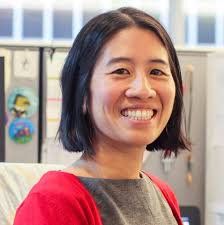
- Guests: Grace Lin and Alvina Ling
Read the Transcript
Bianca Schulze: Well, hello, Grace. Welcome back to the Growing Readers podcast.
Grace Lin: Hi, thanks for having me.
Bianca Schulze: Oh my gosh, such a pleasure. And you have a friend with you today—not just any friend, a best friend. So do you want to let everybody know who’s come with us today?
Grace Lin: Sure, it’s my book friend forever, my childhood friend who grew up to be my editor for my books, Alvina Ling.
Alvina Ling: It’s great to be here.
Bianca Schulze: Welcome, Alvina. Oh my gosh, such a pleasure. Well, I can’t believe that it’s been over two years since you came on the show with Kate Messner, Grace, to talk about Once Upon a Book. But this time, we’re going to be talking about your latest middle grade novel, which if we can believe it, it’s been eight years since you released a middle grade novel—or even over eight years now.
Grace Lin: Yeah, I think we counted. It was like nine years, I think.
Alvina Ling: I think it’s nine, as 2016 was the last book.
Bianca Schulze: Wow. So I have to ask, what was happening during that time that kept you away from the genre of middle grade writing? And was it intentional, or is that just kind of the way the cookie crumbled?
Grace Lin: I think I wanted to take a step back from middle grade for a bunch of different reasons. But I also really wanted to get back into picture books and early readers and all these other genres that I was so interested in. I began as a children’s book illustrator, and then it was so strange for me to realize that most people knew me as a writer or an author. And I was like, that was like a disconnect from my identity. I was like, I want people to see me as an illustrator too. So I started—I turned back a bit to picture books and I loved it. I produced—I made A Big Mooncake for Little Star, which is I think my favorite book of all the books that I’ve made so far in my life, and other picture books like that. But it felt like this was the time to go back to middle grade as well.
Alvina Ling: I will interject that Chinese Menu, which came out—gosh, was that last year? Yes, that is technically middle grade, although it’s nonfiction and it’s not fiction. So this is your first…
Bianca Schulze: I think it was, yeah.
Grace Lin: Yes. So this is—so yeah, so technically my first middle grade fiction novel. So yeah, exactly.
Alvina Ling: Novel in nine years.
Bianca Schulze: I love it. Well, since you brought up Chinese Menu, I have to say, so every year I celebrate Lunar New Year with my friend Anne. And I was so excited to gift her a copy of Chinese Menu because she always, when we sit down, she always tells us why we’re eating like a specific meal and, you know, the amazing things that come with those, like the mythology and just the culture. And I love it. So I was so excited to gift it to her, and then everybody got sick. And so I had your copy of Chinese Menu sitting on my desk for, I want to say like three months, and it was just staring at me. And then finally we did our belated Lunar New Year and she was so excited to get your book.
Alvina Ling: Oh no.
Grace Lin: Oh good, I hope—Chinese Menu is a book that is really close to my heart. I love—I’m very proud of that book. And I really believe that if people read this book, it makes their food taste better because it tells all the stories behind the food that you’re eating at a Chinese restaurant. Like when you’re eating the dumpling, you know the story behind it. And I really think it makes food taste better when you know the stories.
Bianca Schulze: I agree with that. Well, Alvina, I’m going to have a question for you in just a sec. But Grace, was there something specific in the story about Jin, who’s in your latest middle grade novel, that you think finally pulled you back to middle grade? So what do you think made this the right book to return with to middle grade?
Grace Lin: Well, the truth is I had this idea for a long, long time. So the story of Jin—I had it all the way back in I think 2016. I think it was a mixture of—I didn’t feel—so I had Jin’s story. I think it was a mixture of finding the other stories that are interwoven with Jin’s story, finally feeling like, okay, now it all comes together. I think slowly I was waiting for all the seeds that were being planted over the years to kind of grow and become what this story is. I think just Jin by itself, to me, just his story alone didn’t feel complete—didn’t feel complete enough to me. It was when the other stories came to me that I was like, okay. And then I could see how they all fit together and how they kind of interwoven. And then I was like, okay, now it’s time to write this book.
Bianca Schulze: Yeah. Well, Alvina, did you ever nudge Grace toward returning to middle grade, or did you just wait for it to come to her naturally?
Alvina Ling: You know, I don’t remember. I mean, we had this book signed up for a very long time, so I knew it was going to happen eventually. But I think I was also perfectly happy to work with Grace on her picture books and Chinese Menu and whatever she wants to create. Even though, yes, I was very excited when she did say she was working on this book, but I don’t remember, Grace, do you remember if I nudged you at all?
Grace Lin: Well, I do know every once in a while you’d be like, so when do you think you’re going to work on the middle grade novel? And I’d be like, okay, I think after this book. And then I’d get an idea for something else and be like, okay, well, move the middle grade after that one. And then we’ll move the middle grade after that one. And we kept moving the novel after. So finally, it was like, okay, let’s do the novel now.
Alvina Ling: The novel.
Bianca Schulze: Yeah, I love that. And, you know, like, I feel like I’ve been working on something myself for a while, and I finally end up like, it’s not coming to me right now. And like, I put it aside. So how often does that happen to you, Grace, where, you know, you have something and you know, like, now is—like, you don’t have all the puzzle pieces yet. And how often do you just put something aside? And how many are in your, like, graveyard file that you’ve just never returned to?
Grace Lin: It happens to me all the time. I would say every project I do has some kind of—has some kind of like put on the back burner, let it sit, let it grow kind of moment. Some take longer than others. And sometimes the deadline helps force it to grow a little faster. But other times it just wants to grow when it wants to grow. And I feel really, really privileged and really, really lucky that I have an editor like Alvina who lets me kind of move puzzle pieces around for when things are ready to—for projects, when they’re ready to go, we can work on those instead of like, no, no, no, we signed this in 2016, we gotta do it now. Because it would be a lesser quality product in my mind. And I feel really privileged that I’m allowed to let my books be what I want them to be so that when they come out, they’re exactly what I want them to be instead of something kind of half-baked.
Bianca Schulze: Yeah, so on that, Alvina, I have a question for you. So as an editor, you’re managing—I guess you want the highest quality, you want to draw the best from your creators, so the authors that you’re helping bring their books to life. But you’re also managing the deadlines of your publisher and all of that. So just go into that a little bit, like how as an editor you manage the combination of deadlines, meeting, making sure that you get the best book possible. And then specifically with Grace’s latest book, what kind of pressure do you feel as an editor when there’s so many people who love Grace’s books and the beloved Where the Mountain Meets the Moon? You’ve got so much pressure, I think, as an editor to manage the business side as well as the creative and bringing them to fruition. So talk about that.
Alvina Ling: Sure, yes. I mean, it is a balance because it is art, but it’s also commerce. I am dealing with a lot of different things at the publishing house in terms of—we have a certain season and maybe we’ve launched the list. And then if a book moves after that, I mean, it happens all the time, but it’s not ideal. And it’s definitely not ideal when—and Grace and I talk about what launch meeting is and sales conference on our podcast, Book Friends Forever. But basically it’s the first time we’re introducing a list to the group. And I definitely have had situations where I am launching a book and then we’ve had to move it. And then the next season I’m launching it again and I’ll say, this may sound familiar. And then we move it again. And you ideally don’t want to do that more than twice because it does make the rest of the team feel less confident that, is this going to really happen? What’s going on with the creator? So that didn’t happen—luckily with this book, I think we were able to move it out appropriately before I think the team was expecting, you know, like, okay, this book is going to publish. But it is a fine line between, you know, managing the deadlines. I mean, there will be situations—unfortunately, thankfully, that hasn’t happened with Grace, but there will be situations where if an author just misses the deadlines too many times, we do have to say, you know what, like this is a last chance and if we don’t have it by now, we probably will have to cancel the book. And that has happened. Sometimes it’ll be a case—well, you know, Grace did have a book under contract that she decided on her own that she didn’t want to do it anymore and wanted to replace it with a different book. So that can happen too, and I think that’s more likely to happen if it’s a book that maybe we signed up in 2010 and now it’s 2025 and we haven’t worked on it yet, because the market just changes so quickly. Now I feel like I went off on a tangent and I’m not sure if I answered your question.
Bianca Schulze: No, you did. I mean, Grace, it looks like you want to say something, but just also when you’re working—because I mean, your publishing house puts forth some of the best books out there for children. And so when you’re working with authors like Grace, you know, like what pressure do you feel to make sure that the next book they put out is going to meet what the readers are maybe expecting, but you also want them to be pleasantly surprised and unexpected by the next book. So what about that aspect?
Alvina Ling: Well, I think I feel lucky that Grace is who Grace is and that she is the type of creator she is where I do feel like her fans will be happy with whatever it is that she does next, whether it be a picture book or an early reader or a nonfiction kind of gift book or a novel. So I don’t feel that much pressure in terms of what Grace does next. And I also feel like Grace is the type of creator where it’s always worth the wait. So I think when you’re dealing with, say, series, it’s a little more like, okay, especially if it’s middle grade, you really need a book a year or faster, or else, you know, the readers age out. But you know, I think Grace’s books are all standalones for the most part, even though they might be connected in some way, they can all stand alone. So I think that’s been pretty lucky in that case.
Bianca Schulze: Yeah.
Grace Lin: Yeah, I think that’s a good point. I think if I was writing a series, you kind of can’t be such a perfectionist. I think when you’re writing a series. Yeah, that’s true. I’m not a perfectionist, but I don’t think you can—I don’t think you could be as picky. Maybe that’s a better word. Yeah.
Alvina Ling: Right. Well, but you’re not a perfectionist, which I think is also—I think benefits both of us.
Alvina Ling: Right, and you can shift categories like you have. Whereas I think sometimes you feel like, okay, now I have to stick with middle grade for a while, or you have to stick with picture books for a while. But I think with you, I do feel like the audience is just excited with whatever you want to do next.
Grace Lin: Yeah, well, and I think—I feel like if there’s other authors listening and they’re like, oh, I wish I had the time to give my book more time to stew, my advice is just give your editor, the people you work with, plenty of time in advance. Like if you—like as soon as you know that you need more time than they can give you, contact them right away because if it’s early enough, then they can definitely give you more time. They can push it to next season. But it’s like if you procrastinate and like, no, no, maybe I’ll make it—then I feel like that’s when it gets really, really sticky. So my big advice is if you feel like you need more time, tell your publisher as soon as possible and if you’re early enough, they—I feel like they’re usually able to finagle something.
Alvina Ling: Right. I would agree with that.
Bianca Schulze: Yeah, I’d love to. And I feel like the one bonus for you, Grace, is that you’re doing the artwork. So if you’re just an author and not an illustrator and you’ve got an illustrator lined up waiting and their window is closing, that’s also a pressure for the writer to kind of get their final manuscript done.
Grace Lin: That is true. Yeah, I mean, I feel like I am in a very lucky position where I do get—I am my own illustrator. I do do different genres so I can jump back and forth and I have Alvina as my editor. So like I really—I have nothing to complain about. Yeah, I still find things to complain about. But really, when I take a step back, I realize I don’t really have that much to complain about.
Bianca Schulze: Yeah.
Bianca Schulze: We all do.
Bianca Schulze: Well, The Gate, The Girl, and The Dragon is sort of a book of firsts for you. So it’s your first fantasy set in contemporary times and your first book with a lead animal protagonist, if I’m correct. So what drew you to break new ground in these ways with Jin the Stone Lion?
Grace Lin: So yeah, so it’s my first in contemporary time, first fantasy in contemporary times. And I think that was probably one of the things that caused me to take so much time to write this book. I really felt like I wanted to do something contemporary. You know, when we signed this book, it was 2016. And that’s when We Need Diverse Books, a big movement about diversifying literature, was just gaining steam—and now it’s an established thing, it’s been ten years. And so at that time there was not a lot of Asian American books. And in a lot of ways even though my books like Where the Mountain Meets the Moon are Asian American to a degree, I mean they’re placed in like fairy tale China, you know. And I felt like the world did not need another story that was taking place in a fairy tale China at that time. It needed something in like—in America for it to show Asian Americans. But I was having a really hard time writing—I don’t really write well on like, these are the things that we need and so like you should write—you should write a contemporary Asian American novel about the Asian American experience. Like that’s—I wanted to write. But I found when I sat down to try to do that, it just—the—it wasn’t really working. And so it took me a while to let it stew. And so this is kind of my—the closest I could probably get to a contemporary Asian American novel with the way that I want to do it, because I’m so right now in love with like fairy tales and Chinese Asian folk tales and things like that—in how I could integrate it into what I wanted to make a more contemporary story. So yes, I mean that’s really why it took—one of the reasons why it took me so long. But I’m really, really happy that I did it. You know, one of the things that I talk about with why I love folk tales and fairy tales so much is that they are so evergreen, right? They’ve been around forever. And we tell them over and over and over again. And because we tell them over and over and over again, that’s kind of why they live so long. And so what I think is interesting—what maybe contemporary kids don’t get is that even though we tell these old stories, we’re also making new stories. And so that’s why I wanted to put like the urban legends in as well as the old legends and say like, yes, we still have these old stories, but we’re making stories now. You know, like our stories will be somebody else’s fairy tale in the future. And I’m hoping that they can see that. And that’s why I was interweaving really, really old tales with the urban legends and like—and who knows, what we’re doing now is going to be somebody else’s story. So that’s what I was—that’s what I’m really proud of in this book.
Bianca Schulze: Yeah. Do you know, like, I follow you on social media, and before I read the book, I saw the video posted of the highway and kind of the dragon. You know where I’m going. So why don’t you just talk a little bit about the kind of folklore and the urban legends that helped you piece together this story? Why don’t you share? Because I’m such a fan of folklore and myths, and I love the way you’ve woven it all in. I mean, it’s so rich. So just talk a little bit about finding those pieces of your puzzle for the story.
Grace Lin: So like I said, I have really old stories mixed with more contemporary stories. One of the contemporary stories that was a big puzzle piece for me for this book was when I went to Shanghai, I think like in 2020 or something like—oh no, not 2020, because that was right before the pandemic. I was in Shanghai and I was with a group of people who were driving down the Shanghai Highway. And while we were driving, I looked out the window and I saw the highway and also I saw this big metallic pillar, huge, gilded with these dragons decorating all over it. It was like this very impressive gilded pillar in the middle of the Shanghai Expressway. I was like, what is this pillar doing here? And of course, you know, the couple of locals who were in the car laughed like, that’s the dragon pillar. And then they told me the urban legend that a long time ago, in the ’90s, when they were building this highway, they were trying to dig in that area. And for some reason, they could not dig in that area. Everything that they—all their machines would break, nothing would work. And it was so mysterious that people started to believe that maybe it was some kind of spiritual interference. So the story goes that the construction company secretly hired some feng shui masters to come and survey the area and figure out what was going on. And the feng shui masters said there was a dragon that was sleeping here. And you woke it up with your construction. And it’s very angry at you. It’s not going to let you dig. You have to do something to honor this dragon and appease him before he lets you dig there. And so their way of appeasing him was to build this beautiful, gilded, huge column right there. And they did. And then after they did that, they were able to dig, and they finished the highway. And that’s why there’s this gilded dragon pillar in the middle of the Shanghai Expressway. And of course, the government and the construction company officially deny that story. But all the locals say that that’s the real story.
Bianca Schulze: Yeah, I love that. I mean, just it was so fun, actually. Sometimes, like often I’ll pick up a book and I don’t know any of the backstory behind it. That’s most typical for me. But I actually—I had been seeing you did such a great job and I listened to your episode on your own podcast about the marketing efforts and like the things that you were doing as an author to prep it. And you did such an amazing job of getting it in front of people. And so I actually, for this book, I loved knowing those little nuggets and pieces of kind of backstory before reading it. And it helped make it even more rich for me. So Alvina, question for you. So when you’re sort of dealing with an author that’s creating something fantasy, but also maybe there’s a little bit of a history baked in, like what’s your job as an editor to sort of make sure that everything is flowing and working and going to appease the readers?
Alvina Ling: I mean, I think my job is the same for any book I’m editing, which is to act as the proxy for the eventual reader. I mean, I really just see myself as being a careful reader of the book and to point out anything that I think might take another reader out of the story or maybe make another reader confused or not understand something or if something doesn’t feel resolved. So I think with this book, because there’s so many different storylines interwoven and then there’s also the folktales interwoven, it was a very complicated book. So I do think for this one, Grace and I had many, many more back and forths. Well, maybe not many more, but more back and forths than we typically do to make sure everything was working just right. But that is what I feel my job is and my worth is as an editor.
Bianca Schulze: Yeah, I love that. Well, not that you have to prove your worth and especially anybody that’s in the industry—everybody knows your worth. So I think I want to sort of touch—like we’re talking about how there’s the urban myths and it’s a contemporary setting. So I think what’s great is the story begins with Jin kind of being bored with his guardian duties and just wanting to perfect his—I’m going to say soccer, but I want you to say the Mandarin word if we say it.
Grace Lin: Sure, it’s a word I made up so there’s no way you can say it wrong. It’s zuqiu. That’s what I call it, but you know, you can completely—I made up the sport, so you can say it anyway and it wouldn’t be wrong.
Bianca Schulze: Okay, zuqiu. Okay. You know what?
Alvina Ling: But it’s probably inspired by—well actually, qiu is how you say ball in Mandarin and so most sports is like something qiu. Yeah, zuqiu, but yes, it’s not the actual Chinese word.
Grace Lin: Zuqiu I think it’s qiu, yeah.
Bianca Schulze: There you go. See, that’s another great thing about writing fantasy is you can make this stuff up. So I was like, this is a legit word, Grace. So you had me convinced, which is awesome. But I love that that’s kind of a relatable thing for all readers. There’s a lot of—so many kids play soccer. And so I think what makes him relatable for kids is that he’s balancing this sort of need to be a responsible child and he has his duties. But he also just—he just wants to go and play soccer and he loves it. So like just talk about that finding that relatability within this sort of mythological fantasy realm.
Grace Lin: Oh, well, you know, I think—I’m trying to think. Yes. Okay, sorry, I was doing this thing about like—I had my daughter in 2012. So I was like, yes, this is the first novel that I’ve written, first original novel that I’ve written since my daughter was born. And so I think it’s given me kind of an interesting viewpoint again of how kids—they just—kids just want to be kids, right? You know, they just—they just like, responsibility is boring. Like doing their homework, brushing their teeth is boring, you know, like, yet you still have to do it. And it’s really important. So I think, yeah, at the same time, it’s really kind of a coming of age story in a way, as a child. And I think a lot of middle grade books are that. And I think I just—it’s the kind of coming of age story that I like to tell because I like the folk tales and the fairy tales and the legends so much. I think it would just came—I don’t want to say naturally, but I don’t know if I’m able to tell a coming of age story in any other way.
Bianca Schulze: I love it. Well, Alvina, when you first read about Jin accidentally kicking the sacred sphere out of the gate, so from his sort of mythological, magical world into our real world, what was your reaction? I guess, like, I mean, I’m going to scrap the second part of my question because I’m looking at it and I’m like, no, that’s irrelevant. I just like what…
Alvina Ling: I mean, I didn’t know—I didn’t know hardly anything about this book before I read it. I mean, I think I knew that it was inspired by the Stone Lions because Grace kept referring to it as the Stone Lion novel. But that’s pretty much all I knew. So for me, it was a very magical experience reading it for the first time. I was delighted by the soccer subplot. Actually, I found—I don’t know why, I found that the most unexpected, I think, in the book. And I thought, but that’s like really kid-friendly and fun. So I guess my reaction was that of delight. And also I think Grace keeps surprising me with—I think with each project. And this one, I think because it was three storylines, was it three? Kind of interspersed and that—she hadn’t done that before. I was just really impressed with how that all came together. And I think I remember in the first editorial letter, I might’ve said that this was an ambitious novel and it is.
Grace Lin: I just wanted to add, because I’m thinking that a lot of your listeners might be authors. So like the way that I write a book is usually I have the end scene in mind. I’ve always had like, once I get that end scene, I’m always writing towards that end scene. So I always had that end scene of Jin kicking the ball through the gate and all these spirits blowing out. And so, because he was kicking the ball through the gate, I was like, I guess he has to play ball soccer. So like, it wasn’t like I wanted to play soccer and then he was going to kick—it was like I knew he had to kick a ball. And so that’s how it came around for me.
Bianca Schulze: Yeah, that’s so fun to know. And, you know, I love knowing that you sort of have your end of the story. So like in terms of process, like what for you—do you have the seed of an idea and then you think about what the ending is and then you go back and kind of fill in the pieces or, you know, what does that look like for you?
Grace Lin: Yeah, I think I have the seed of the idea exactly. And I’m like, wouldn’t it be great if this little lion cub could have an adventure of his own? Okay, so that’s like the seed. And then I think about it. And then I’ll have like a couple ideas. But then it’s only when I get that very, very last image in my mind of what’s going to happen, then I know where I’m writing to. So for this book, The Gate, The Girl, and The Dragon, I had this idea—the two stone lions in the front, two stone lions in the beginning, one holding the ball, one holding the cub. Then I was thinking the image of them not holding anything and at the end, returning to holding those things. And also, sorry, this is very—I should have framed this better. But that end scene of the reason why they’re finally holding the correct things being because the stone lion kicks the ball in and all the spirits come out. So yeah, it’s always like this kind of culmination scene that I’ll have in my head and I’m always writing towards it, like all the little things that happen to get there. So I am a plotter in terms of like I plot out what’s going to happen, but many, many times I’ll change that plot as I’m writing. But no matter which way I change it, I’m still going towards that end scene. So it’s like that end scene is like the lighthouse. And so maybe I might take a couple detours here and there, but I’m always going towards that lighthouse.
Bianca Schulze: Okay, then I have to ask when you’re saying end scene, so for you is—when you’re saying end scene, are you describing the final climactic showdown or are you thinking the end scene, the moment that you leave the reader with, with the culmination of what this story means? What is the end scene for you?
Grace Lin: Both, honestly. Usually, I think I need to have both before I can start writing. So I guess I consider both the answer. Like I need the culminating—the culminating like thing that makes them all come together. And then I need the like what I leave behind with the reader. Like I see it all together as one thing.
Bianca Schulze: Yeah. And then, so Alvina, you’re the first editor we’ve actually had on the show, so this is kind of fun. I’m thinking as an editor, you know, and not just Grace here, like every single kind of author that you’ve worked with across your career, which part of the story do you feel as though most manuscripts end up needing support with? Is it sort of that overall feeling that you leave the reader with, or is it finding the right sort of pacing and climactic moment to keep the pages turning? Like what would you pick is the sort of number one thing that tends to need more work?
Alvina Ling: I don’t think there’s a number one because every author is so different and I work with authors whose processes are—yes, I mean, Grace is a plotter, but I also work with pantsers as they say. I think pantsers maybe need more help with the kind of overall theme. Sometimes I’ve had authors where I’m editing the book and I have my comments, but when I send the first editorial letter, I actually have to ask the author, what is your story about? Because it’s not fully coming through. And I think if I know what you want the story to be about or what takeaways or what themes, then I can help you make sure that the story is actually achieving that. But every project is different. So I don’t think there is a number one, unfortunately.
Bianca Schulze: Yeah, that’s all right. That was a great answer. So let’s go back to the story. So the story explores themes of duty and love and finding balance in, you know, obviously your responsibilities in life and also finding joy. So, were those the themes that you kind of decided you wanted to explore from the beginning or did some of those just emerge naturally as you wrote the book?
Grace Lin: You know, it was only when you started talking about that that I realized, you know, what was the big culmination of what made this book all come together? It was actually the pandemic. And I’ve told this story before. It was like, so I had all these kind of ideas and all these little stories. But it wasn’t really jelling completely together until—I mean, I think everybody has a pandemic story. But during the pandemic, you know, I had my daughter, she was, I think, in third grade at the time. And we had to do at-home learning. And so what we did at our house was that we had like three other—three other of her friends would come over and they would do outdoor learning outside in the backyard. And so one day when they were doing outdoor learning, we were setting up the tables early in the morning and we were putting things on it and somehow the folding table collapsed. All four girls screamed, you know, as third graders, like, dear God, how’d you do that? And it was complete chaos. And I remember I was in charge that morning and we were all stressed out. And I remember yelling at them and I said, it doesn’t matter whose fault it is. We just need to fix this. And when I said that, I was like, I’m not talking about the table. I’m like talking about everything.
Alvina Ling: Ha ha ha.
Grace Lin: And I think that’s one of the big—and then when I realized that it was more than just a folding table I was yelling about, I was like, oh, that’s the theme. That’s one of the big themes of this book. I think that’s the theme of this book. It’s like, there’s a problem. We’re all responsible for it. We’re all not responsible for it. You know, like everybody’s responsible, you know, like we’re—it doesn’t even matter if we’re responsible or not. We’re all connected. We all have to do our part. And we just have to fix it together. And so that became one of the major themes of the book. And when I got that, that’s really when I was like, okay, I think I’m ready to write this book.
Bianca Schulze: Yeah. Well, you know, everybody that knows you knows you create the art and you mentioned it before. And with this book, we definitely cannot not talk about the—like just the whole book as a masterpiece, the way it was put together and your just your beautiful visual elements. It’s got the full page pieces of full color art, you know, intricate chapter headers. So like how did you decide as the illustrator which moments deserved that full page, full color treatment?
Grace Lin: Yeah, that’s always hard because sometimes I want to do ones that are like really close together, but then it kind of ruins the balance of the book where you’re like, then there’s like five paintings in the first half and then there’s nothing in the second half. So some of it was because I would see like, we really need an illustration here. Otherwise, it feels really imbalanced because I think about the reading experience, you know, and like if you don’t—when you see a full color illustration and then you like you really go for too long, you know, so part of it is trying to find where in the story, in the reading experience I think would be good and then other times it’s just things that I think that I saw so clearly in my mind that I want to paint it to show the reader, you know, and it’s just seems like—and hope that how I painted is how they pictured it too. So it’s kind of a personal thing. Like the part that I do for the reader is trying to make sure that I put it in the right places so it enhances the reading experience. But the other part is, I mean, purely selfish. It’s like, that’s the part I want to paint.
Bianca Schulze: Yeah, yeah. I’m just—I’m not gonna include this in the recording. I only have the advanced reader copy, so I don’t have like the full one. So there’s a scene that was so—yeah, I don’t—I’ve seen it though. I’ve seen it and it’s so stunning. So I wanna bring up like just a particular moment that was really pretty, but I wanted to make sure that if it was illustrated or not, but it’s the giant Buddha carved from the side of a mountain was larger and older than any other gongxi. Does that have an illustration? No.
Grace Lin: No, it does not. And that’s because it’s based on a real—it’s based on a real—it’s based on the Leshan Buddha. And I didn’t know if I would get in trouble if I use the—like the real—like if I copied a real image or not. So, okay. Okay.
Bianca Schulze: Yeah, okay, perfect. That’s good to note. So I’m not gonna mention that bit just yet. I’m gonna bring that up in a moment, not attached to our sort of illustration part. So Alvina, then let me talk to you because the book itself has incredible stenciled edges. And I believe that’s just for the first edition and it’s got foil stamps and designed endpapers all created by Grace. This has to be, you know—all authors can have their dreams of having, you know, the sparkles on the cover or, you know, like whatever they can imagine. But ultimately, that’s the publisher’s decision of whether that book gets that treatment. So like, just talk to me about knowing that this was a book that was going to get the full workup.
Alvina Ling: Well, it started with Where the Mountain Meets the Moon. So that was the book where Grace had a vision that she wanted to have full color illustrations. And so I had to work within the publisher to see if that vision was a possibility. And that involved working with our production department on getting costs and seeing where we’d have to print the book and how, you know, we had looked into doing inserts, color inserts, like we had in our classic—the classic books that we all read like Little Women. And actually we found out that that was actually more expensive to do than to print the book in full color. And, you know, I didn’t know this before. It’s because the inserts are manually inserted in the book. And so that manual labor is more expensive than just printing the book in full color. So once I was able to get those costs, I had to get approval from our publisher. And I told Grace, if I had one finished piece to show her, I think that could help convince her, and it did. So Grace painted a beautiful painting and I shared that with our publisher and she said, okay, this is beautiful, let’s do it. And I do think that helped that book really stand out in the market and potentially go on to win a Newbery honor. And so once we established that format, I was able to then replicate it for Starry River of the Sky and When the Sea Turned to Silver. So when we knew we were going to publish this book, we knew it was going to already be in that same full color format. So the interior design and all of that was pretty much already approved, pre-approved and was a given. But I think all the other extras, again, we had to work with our production department on figuring out how much we could do. I guess I’ll just mention that Where the Mountain Meets the Moon, we used gold ink, which is actually not that expensive. It’s only a penny more, but it’s also—the impact isn’t as impressive either. It’s very subtle. So this one, I was glad that we could actually do gold foil, which is more expensive. And then the stenciled edges actually came from our sales department. They suggested it, which I was really surprised by and also very excited by.
Grace Lin: Yeah.
Alvina Ling: We had a meeting where they were talking about how this could help it kind of tip into potentially more accounts and have accounts take on more copies. And once they had that suggestion, of course, I was really excited and I told Grace and she was also really excited and it had to come together very quickly. I think from the time I told you we were going to do it, I think we had like two weeks to have final files to the printer. So that was a really quick turnaround, but it was really exciting. And I think it was in part because, you know, sprayed edges or some people say spreads or stenciled edges, if it’s, you know, design that had been gaining traction mostly in the young adult and adult fantasy world and not as much in middle grade, but there was a middle grade book that had sprayed edges earlier in the year which was Impossible Creatures and that did really well and I think that it was one of the reasons why our sales group had the idea of trying it out for Grace’s book. So I’m really grateful that they did and that we could do this really beautiful, beautiful package.
Bianca Schulze: Yeah, it’s so stunning. I mean, Grace, you have to say what that feels like to you as a creator to get that special treatment.
Grace Lin: Yeah, it’s—well, number one, I feel extremely, extremely lucky, like I said, and I don’t want to ever take that for granted because when you get these kind of things it is—it’s unusual, you know, like it’s not—it’s not an everyday like given. I think sometimes when you first start in the industry, you’re like, hey, it’s gonna be like unicorns and glitter and gold. But so I always try to tell people like, well, you have to remember, you know, I was publishing for 26 years before, you know, like before I got something like this. But I am so—but honestly, it’s so lovely to have a book that is completely like your vision of—like one of my mission statement things is just, you know, I really want to make beautiful books and then to feel like, oh, this is really—this is really what, like, this is the most beautiful book I can make, you know, and so to feel like I had achieved that is such a nice feeling. Like, I’m like, okay, now I can die. But it is—but it is that kind of feeling like, okay, I, you know, like all of these years was not in vain.
Bianca Schulze: Please don’t.
Alvina Ling: Hehehehe.
Bianca Schulze: Yeah, it’s just so stunning. Well, Alvina, pretending that Grace just isn’t here right now, you’ve worked on so many of her books over the years. Do you have a favorite Grace Lin book? And if so, what makes it special to you?
Alvina Ling: I mean, I have to say The Year of the Dog, because that was Grace’s first novel, and that was a book that is inspired by our childhood friendship. I remember I had suggested to Grace to—I had asked Grace if she had any ideas for novels, because at the time our publisher was starting to publish more middle grade and young adult, and Grace at that point had only published picture books. And she said, I do have an idea. And when she sent me the initial draft—she hadn’t told me what it was about. So when I started reading it and realizing that it was, you know, involving our friendship and when we met when we were around ten years old, of course, I was just delighted by it. And it’s such a rare, unusual experience, I think, for an editor to edit a book where she is a character in the book. So that one’s my favorite. It’ll always have a special place in my heart.
Bianca Schulze: Yeah.
Bianca Schulze: Did you have to make any corrections to your character in it, Alvina?
Alvina Ling: Well, I did ask Grace to change my name because in the first drafts, my name was Alvina Ling in the books. So I said, well, this feels a little weird, so maybe you should change her name. So Grace chose the name Melody because she knew my parents—when they were coming up with my name, they had narrowed it down to two names, Alvina or Melody, and they went with Alvina. And I just liked that Grace remembered that and she made Melody Ling live on after all, even if she doesn’t in real life. Yes. And there were other little things because—
Grace Lin: She’s your alter ego.
Grace Lin: I think of your Halloween costume, I think.
Alvina Ling: Right. Well, actually, so some of the things I think because, you know, there’s a lot of things that are fictional, but there are a lot of things that are based on reality. And I remember early on, one of the feedback, some of the feedback we received at my acquisitions meeting was, you know, this book is great, but there’s not enough conflict. And so during the revision process, I told that to Grace. And so I said, well, maybe—I don’t know if who had the idea, but in the book, in the first draft, we won the science fair, which is actually what happened in real life—we won the science fair—but in the book, we don’t win the science fair, and that adds a little bit of tension.
Grace Lin: Yeah.
Bianca Schulze: That’s so fun. I mean, we could do a whole episode on this. So I have to tell you, because you brought up how starting around 2016, there was a much better movement for finding diverse voices and diverse books. So I had a book that came out in 2016 called 101 Books to Read Before You Grow Up. And obviously I created that book leading up to 2016. And so I was trying to find some great voices that—when it was a lot of sort of what we would consider classics, which obviously a lot of white books, quite old. And, you know, I was trying to find some great diverse books to put in there. And so The Year of the Dog was one and Matt de la Peña’s Last Stop on Market Street. And so there was some good ones in there. I recently said to my publisher of that book, I said, I would like to do a revised edition because since 2016, there’s just been such a great shift. And so I got to rewrite and the new one is coming out—101 Books to Read Before You Grow Up: The Revised Edition. And not all the titles have changed. So your book is still one of the featured books in there. And yeah, so that was just a little fun. So I love that you picked that book because I also love that one. Okay, so—
Grace Lin: Yay!
Bianca Schulze: Do you guys—are you on a tight schedule? Do you have a little bit more time to chat? Okay, good. Okay, good. All right. So for both of you, what was the most surprising thing about working on this latest book together?
Grace Lin: Alvina, you go first. I gotta think about it.
Alvina Ling: Well, I think I already touched on some of the surprising things for me and one was the soccer subplot. I think it was also the very intertwined plots. And also, I mean, I love animal books and I’ve been wanting to publish more animal books. So I was also very delighted that Jin the stone lion cub was the main character because again I didn’t know that that was going to be the case. I just knew that the book involved stone lions. I think I just assumed it’s going to be a girl or a boy and they’re going to maybe interact with the stone lion. So those were some of the surprises for me.
Grace Lin: I think for me, what was surprising was how difficult it was for me to write it. We’ve been talking a couple times about how I’ve been doing books for 26 years, and I keep thinking each book is going to get easier. It doesn’t really get easier. Each book is really its own thing. Every time I start a new project, I’m like, I can do it because I’ve done this one, it’s going to be like that one. And it wasn’t. And you were—before you were asking Alvina, which parts is the hardest, like do authors need support? And for me, I feel like I always need support in the middle, like it’s always that messy middle, like I got the beginning, I got the end, but I don’t know, like the middle is just like it—like it doesn’t have enough tension, it doesn’t have this, you know, like it doesn’t make sense, like—and so that’s—that I guess it’s not really surprising because I know it in my head that it’s always going to be a slog. There’s always going to be a part of the writing that it’s a slog. But when you’re in it, it feels surprising. You’re like, wait, why is this so hard? So I guess that’s what it is for me.
Alvina Ling: Yeah.
Alvina Ling: Yeah.
Bianca Schulze: I love that. Well, I was hoping we could just do some fun rapid fire questions. You know, they’re in the theme of the book. So, Alvina, you go first. Would you rather be a guardian with a boring but important duty or an adventurer with no responsibilities?
Alvina Ling: I guess an adventurer. I mean, yes, I will say an adventurer with no responsibilities. Seems more fun.
Bianca Schulze: How about you, Grace?
Grace Lin: It’s tempting to say adventurer with no responsibilities, but I think knowing myself, I’d probably be fine with a duty. I’d just sit around and read books. I’ll do my adventuring—doing my adventuring while I’m doing my duty.
Bianca Schulze: Ha ha ha!
Bianca Schulze: I love that. I love that. Okay, so Grace, staying with you. If you accidentally broke something magical and got kicked out of our world, what’s the first thing you’d want to find in a fantasy world?
Grace Lin: A place to eat. I want to see what kind of food they have. I want to find the closest bakery and—because also if I got kicked out I’d feel—I mean I’d probably want to drown my sorrows in something too. So the closest thing to an ice cream shop that this fantasy world has.
Bianca Schulze: I love that.
Bianca Schulze: Perfect, Alvina, how about you?
Alvina Ling: I mean, honestly, food was my first instinct too, because of course I think about Turkish delight, although I don’t really like Turkish delight when I finally had some. I know. But I guess since Grace said that, I’ll say a friend. I guess I’d want to find a friend first to help me navigate the different world I’m in.
Grace Lin: Yeah.
Grace Lin: Yeah, it was so disappointing.
Bianca Schulze: Yeah. Or on Turkish Delight. Do either of you know anybody that likes Turkish Delight?
Grace Lin: Edmund. Narnia.
Alvina Ling: I—I have met people who like it, maybe if you’ve grown up with it more so than if it’s new. And I have had good Turkish delight, which I do like better than cheap Turkish delight, I guess. So I could see why people would like it. I think it’s just not what I imagined it would be, so it was disappointing.
Bianca Schulze: Yeah.
Grace Lin: Yeah, it’s not something that you think you would give up your family and your life for.
Alvina Ling: Right? Betray your family. Yeah.
Bianca Schulze: My mom loves Turkish delight, so.
Grace Lin: Would she betray her family for it?
Bianca Schulze: Yeah, she might. I don’t know. Well, if you have to choose this. So would you rather perfect your soccer skills, Grace, or save the world?
Alvina Ling: Ha.
Grace Lin: Oh, definitely save the world. I don’t—I’m—my soccer skill’s not worth perfecting anyway.
Bianca Schulze: Alvina, no-brainer for you. Yeah.
Alvina Ling: Yeah, me too. But if you could, I mean, I don’t play soccer, but if you could save the world while perfecting your soccer skills, why not?
Bianca Schulze: Exactly. All right. Gate, girl, or dragon. Which word from the title speaks to you most, Alvina, right now and why?
Alvina Ling: Dragon, I think because I just see dragons as exciting and mythological and fun.
Bianca Schulze: Grace.
Grace Lin: For me, definitely gate. I just love the idea of gate. It’s like a doorway. It’s beginnings and endings. And what I love about Chinatown gates is like they symbolize a beginning and ending, but they don’t have a door that closes behind you. And they don’t have a door that you have to open. You just have to walk through. So I just love the idea that it’s like beginnings and endings—nothing is closed off, nothing is over, you know. So that’s what I like.
Bianca Schulze: Yeah. All right. Fill in the blank. Chinese folklore teaches us that…
Bianca Schulze: Chinese folklore teaches us…
Alvina Ling: …that there is a reason behind everything. I don’t know. That wasn’t worded correctly, but…
Grace Lin: I feel like Chinese folklore teaches us that we’re all human, I think, because I feel like that’s what all folklore kind of does, right? It teaches us our good and bad things in humanity, what we want things to be like, what we don’t want things to be like. And Chinese folklore is just another folklore, you know, so it’s—so I feel like it just teaches us that we’re human and ideally teaches us how to be better humans, I think.
Bianca Schulze: Yeah. So I would love to ask you both this. What’s driving and guiding you each right now to create children’s books? So what feels most important about this work that you get to do in this moment in your careers? And Alvina, let’s start with you.
Alvina Ling: I think what’s driving me is what has driven me since the beginning and part of it is the wish to have more books out in the world that reflect our world. And I think, you know, the now more than ever saying—I do think it’s important now more than ever in a way because of the book banning and the attacks on diversity. I mean, diversity has been my whole mission. And so the fact that it’s seen by some people as a bad word now is really terrible and abhorrent. But I just feel like all I can do is my job, which is to help bring these beautiful books for children out into the world.
Bianca Schulze: Beautiful. Grace.
Grace Lin: Yeah, it’s interesting that you said the caveat of now, right? Because I feel like for so much of my career, I just wanted to make books that showed people how human Asians were, you know, like I just wanted to show how similar—how like, I really wanted to bring Asian books into the mainstream. And by doing that, showing people that Asians are just as human, just as part of the population as everyone else. But honestly, as time has gone on, it’s not that that mission is less to me. It’s still very, very important to me. But I think because there’s been so many other wonderful, amazing Asian-American authors and illustrators out there, I don’t feel the pressure as much to make that my guiding mission anymore. Though current events sometimes—I feel like I keep going back and forth. For a little while—if I don’t think about current events for a little while, if I don’t think about current events, I think what drives me is the fact that I get to create something like—like I think about this book, The Gate, The Girl, and The Dragon. I wrote the story and some kid gets to read it and it gets to come alive to them and they get to—all the things I dreamed up, it becomes a part of their consciousness. Like it comes alive and that’s just such a magic when you think about it. The fact that like my story gets to be a part of someone’s life, even if they don’t like it, it’s still a part of their life. And so I love that idea and that’s what’s starting to drive me more and more is this idea that what I create, someone else gets to hopefully enjoy and bring to life. So that’s—though, like I said, the current events make me go back and forth to—it’s kind of—I think it’s like the activist part as well, but then there’s just the pure author, illustrator, art, artistic part, which has been more prevalent in the last couple of years.
Bianca Schulze: Yeah, yeah.
Bianca Schulze: Yeah, and I have to ask Alvina this question, and it’s such a sort of, I guess, a classic question that editors get asked. I think, you know, on behalf of all of our writer friends that are listening, so what are you looking for in manuscripts from an editorial sense? And like, what’s on your publishing wish list right now? And I say that in the sense that, you know, I guess from my perspective, we talk about the climate of the world and what’s going on. And it can feel really, really heavy. And sometimes it can feel insignificant to just put a piece of joy out in the world. But we need more of it in times like this. So with all of that in mind, I am so curious about, from your editorial perspective, what’s on your wish list.
Alvina Ling: You know, someone reminded me that I said this—I don’t know how long ago, but I said this in some interview a while ago and I thought, that is what I should be looking for right now. So I have been telling agents that I am looking for dystopian again, the inspiring type of dystopian, but this person reminded me that back in the day I said I wanted more utopian fiction. And I think that really is what I would love to see. I mean, I feel like it’s something that we don’t see a lot of, but I would love to see utopian fiction and like a world that we can aspire to as opposed to what it feels like right now, because it does feel dystopian right now to me. And in general, I—yeah, so hopeful books. I am—I’m looking for things that just feel really fresh and different to me, and I’m always just looking for something that I will fall in love with. And I can’t really predict that, kind of like with dating, you know, you just don’t know. But, you know, I can—I’ll read something and I can really like it and think, this is really good. That actually just happened today, actually, I was like, you know, this is really good. I do think it’s special, but I don’t love it. And so I sent it to a different editor and maybe that editor will love it. But yeah, so I’m just looking for something to love.
Bianca Schulze: Yeah, I love that. Now, aren’t we all? We’re all just looking for something to love and to be loved in return.
Grace Lin: Well, that’s an Anne of Green Gables quote. She’s like you’re never poor as long as you have something to love.
Alvina Ling: So…
Bianca Schulze: Well, if Jin the Stone Lion could hear this podcast, Grace, what do you think he’d want listeners to know about his story before we go?
Grace Lin: Gosh, if Jin—what would Jin want people to know? I think Jin would want people to know… Hmm. There’s so many things that you could say that are kind of like kind of preachy and I don’t think he would want to say anything preachy because that would be really annoying to him. I think he would just say do the best you can. Because that’s really what he did. I mean, he made a lot of mistakes. I mean, I’ve talked about this before where, you know, one of the things I try really hard—all of my books from Where the Mountain Meets the Moon to this one. You know, right now a lot of stories—fantasy stories—they tend to have main characters who are like the chosen one who have been born with this power or who have—who got a special something, you know, like and they’ve got the biggest muscles or the strongest, you know, something. And I really didn’t want to do that with my books. You know, I really want to show that my characters are just kind of normal characters that are just trying their best to do something—to do the right thing honestly—and they may mess up and they try to fix it and they’re just trying sincerely and earnestly to do the right thing and just by sincerely and earnestly trying to do the right thing, they are the hero. And I guess that’s what I hope that readers get from my books—that you can be a hero just by trying your best. And I think he would just say, try hard. So that’s what I think.
Bianca Schulze: Yeah, I love that. Well, Grace and Alvina, thank you so much for sharing your time and your insights today. It’s been such a joy for me to hear about the magic behind The Gate, The Girl, and The Dragon. And I think your partnership clearly creates something really special. So thank you for the care that you put into every detail from Jin’s relatable struggles to those stunning stenciled edges and for continuing to create stories that help kids—all kids—see themselves and their heritage celebrated in literature. So thank you so much.
Alvina Ling: Thank you so much. This was wonderful.
Grace Lin: Thank you, thanks so much for having us.
