

A Library That Asks: What Kind of Adventure Do You Want to Have?
The first thing you feel is awe. Then, almost immediately after, something quieter arrives—peace, a kind of grounding you don’t expect from a public building. That is the sensation people describe walking onto the site of the new Anythink Nature Library in Thornton, and it is, I think, exactly the point.
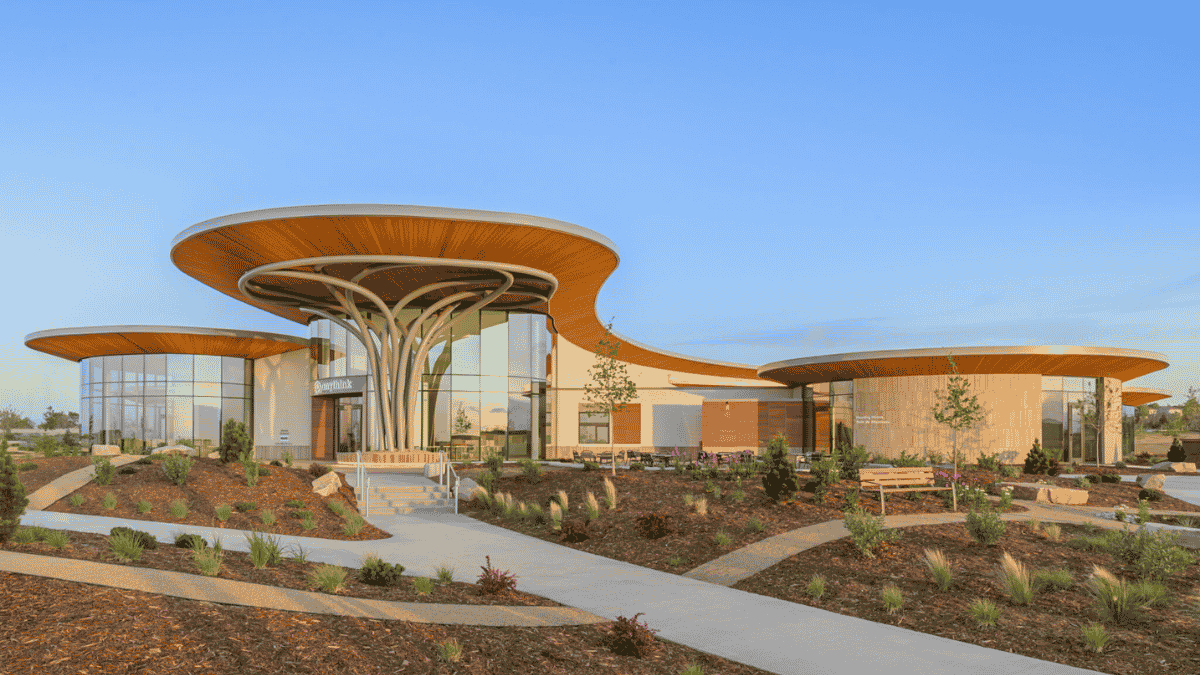
The way most of us learned to picture a library is with quiet rows of shelves and a hush enforced by habit. This library is not that. This library elicits hushed voices simply out of awe. It comprises three buildings whose rooflines meet at a single central point, like three blades of grass bending in the same wind—an intentional architectural feature that drew on the surrounding land. We think of Colorado as mountains, but this building remembers the other half of the state: the vast grasslands and prairie that stretch out east of the Front Range.
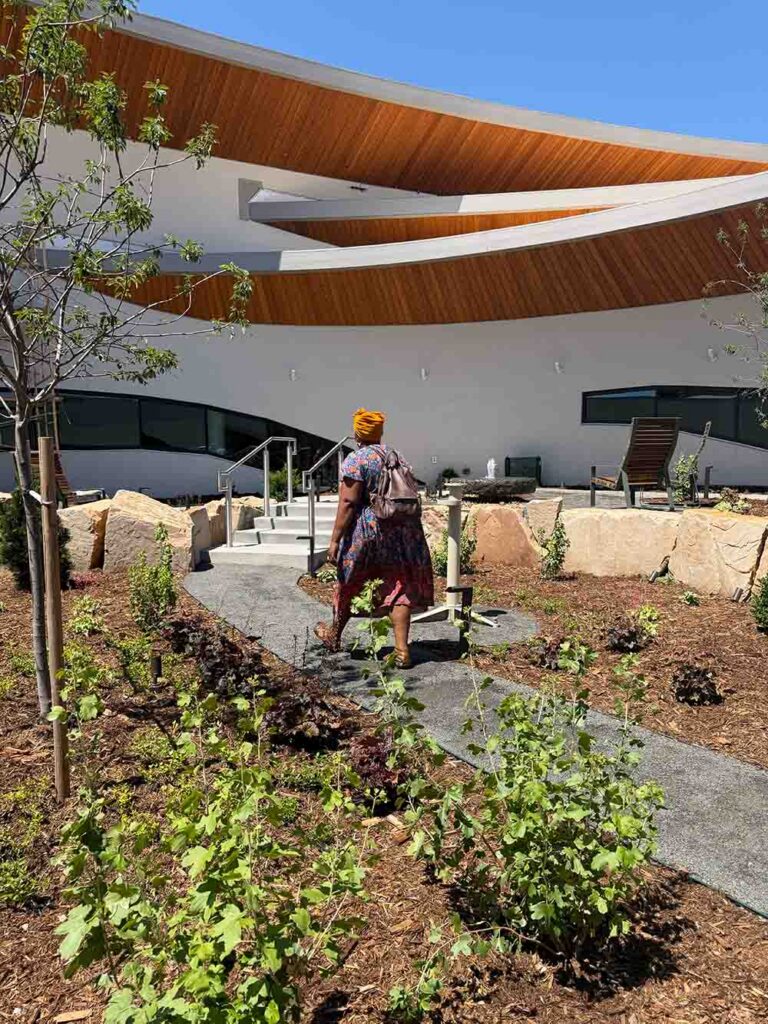
Anythink Nature Library sits on 15 acres carved out of the 140-acre Aylor Open Lands, a former working farm the City of Thornton bought fifteen years ago, holding on to the idea that someday it could give something back to the people who lived around it. Someday turned out to be now. A one-mile loop trail already winds through the property, with the rest of the acreage slated for trails still to come. Opening day is August 8th, and Generation Wild is partnering on programming to help mark it.
Put simply by Anythink’s executive director, Mark Fink, it’s “Part Library, Part REI.” You can check out a novel or a pair of binoculars with equal ease. The “Try-Its” collection includes snowshoes, gardening tools, backpacks, hiking poles, the kind of gear that usually stands between a person and the outdoors. But that line is also a little bit of a decoy, because the deeper ambition here isn’t gear. It’s relationship. Relationship to ourselves, each other, and nature.
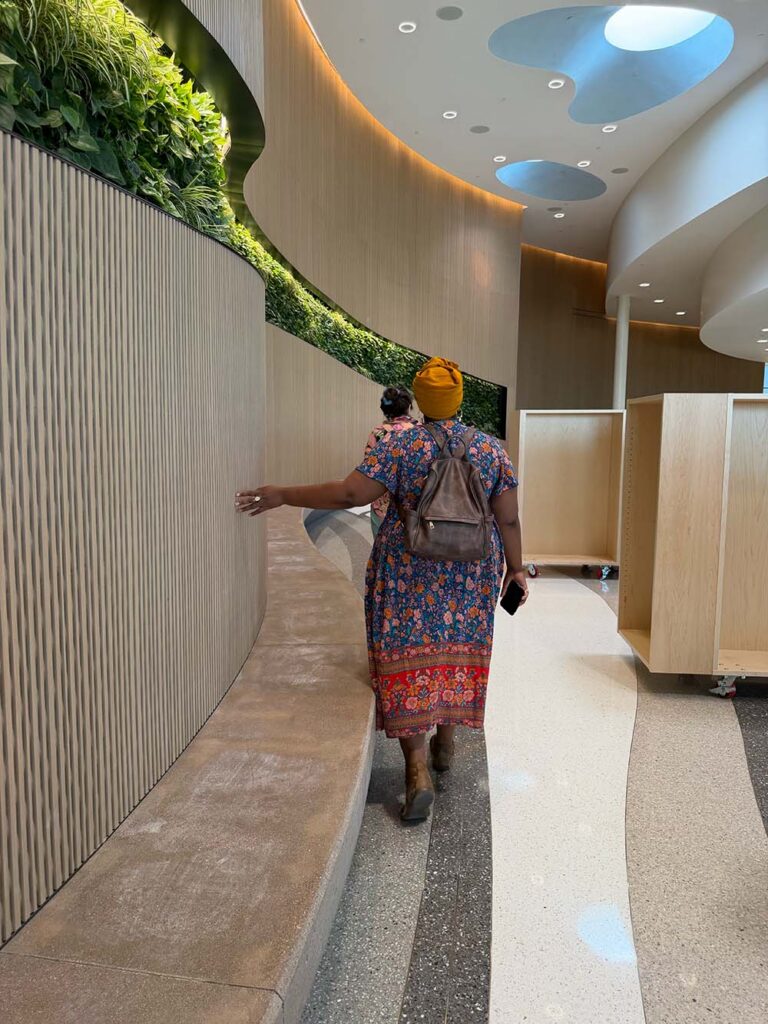
The whole building is organized around a framework the design team calls the Kinship Model—four prepositions of connection to nature: About, In, With, and For. It’s a genuinely different way to walk through a library, and it shows up first in how the books themselves are shelved. Rather than Dewey Decimal, the collection follows these four zones, closer to a bookstore’s logic than a card catalog’s.
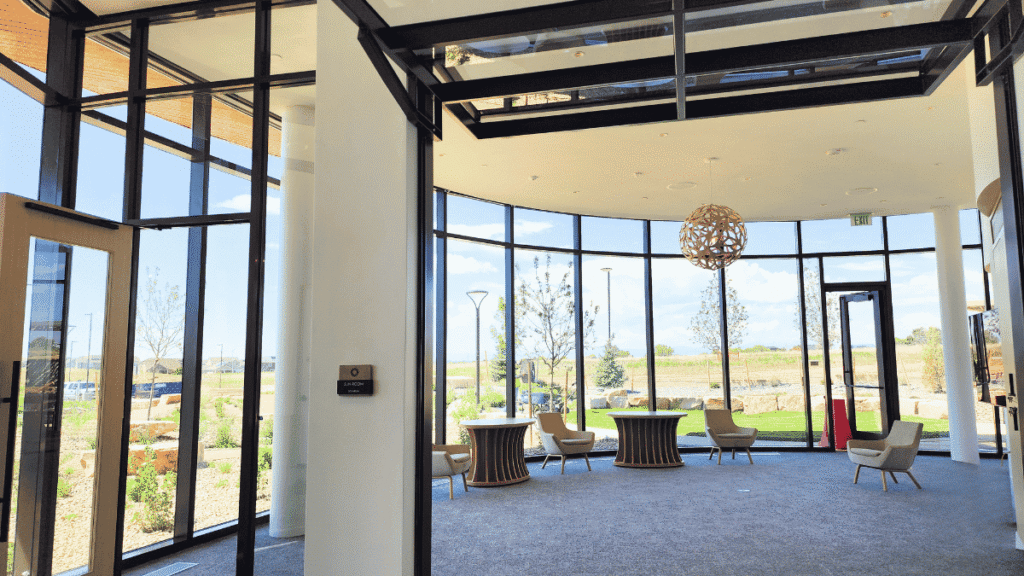
About houses most of the nonfiction, and it’s where you’ll find the sunroom—mountain views, and an envisioned read-aloud space for early literacy, doing double duty as a home for sunrise yoga.
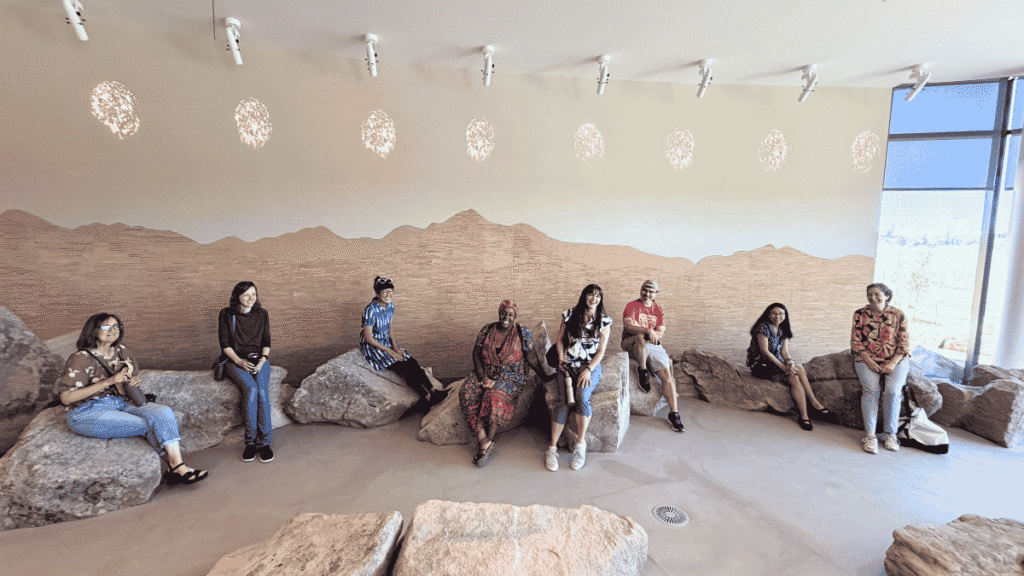
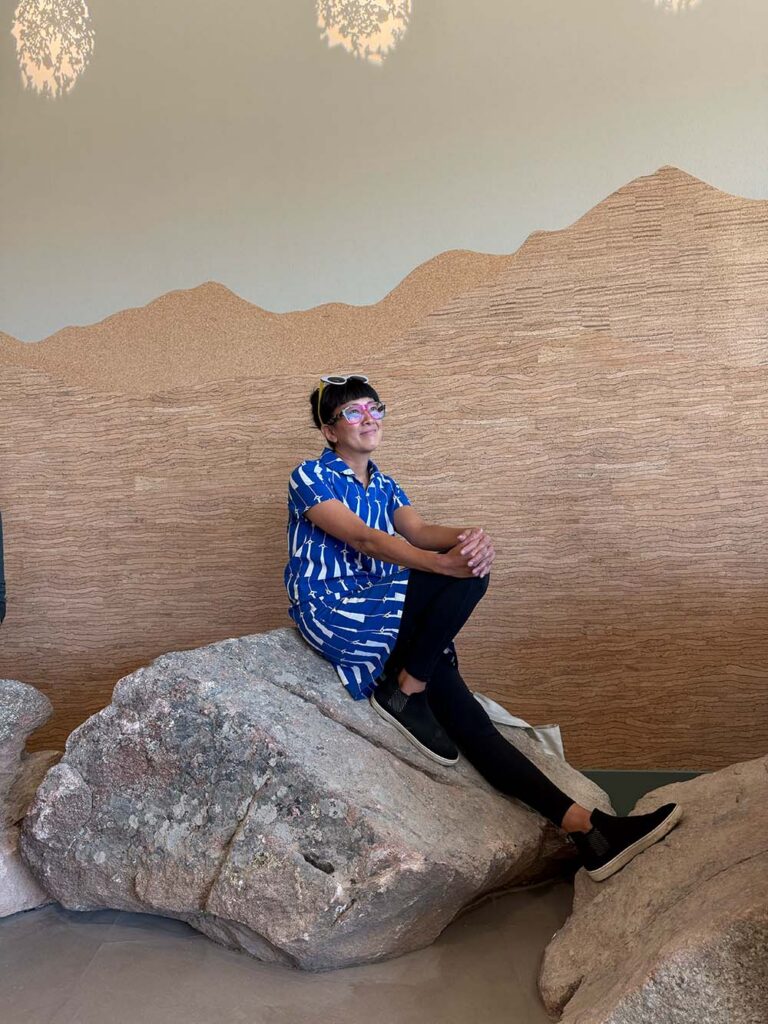
In is learning in nature, literally. The granite boulders here were set in place before the concrete floor was even poured around them. There’s a mud pit just outside for carefree, messy play, water pumps and all, with a mud room inside for the inevitable cleanup. It’s built for testing, sensing, pushing toward an adventure, for the kind of imaginative play that doesn’t need an app.
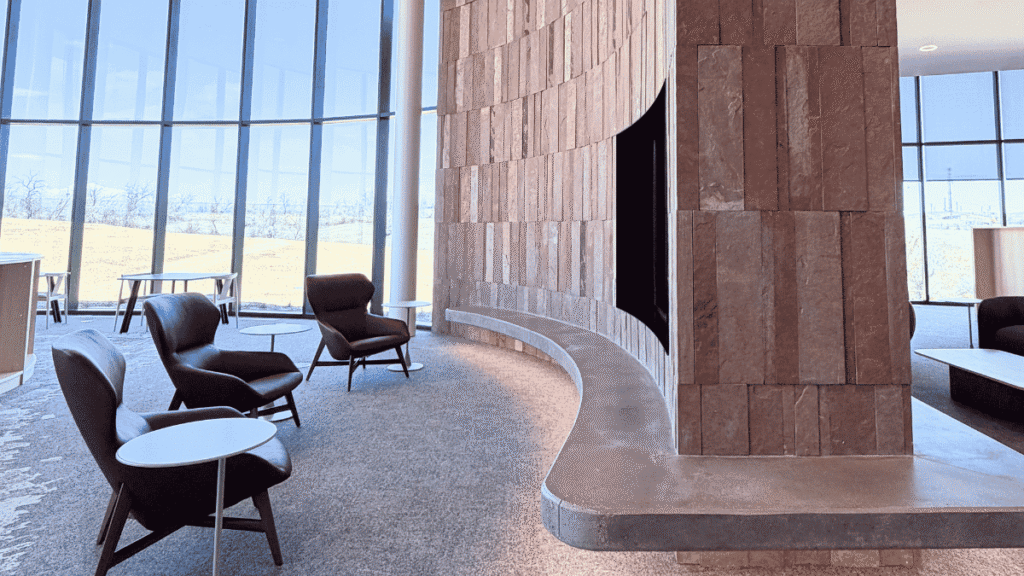
With holds most of the fiction and poetry, along with an Indigenous Voices collection that moves outward from hyper-local to worldwide. This is the wing with the Redstone fireplace, a real fossil pressed into the stone above it, and study rooms wallpapered in an organic, flower-filled pattern. Large windows throughout open onto wide vistas of the land beyond.
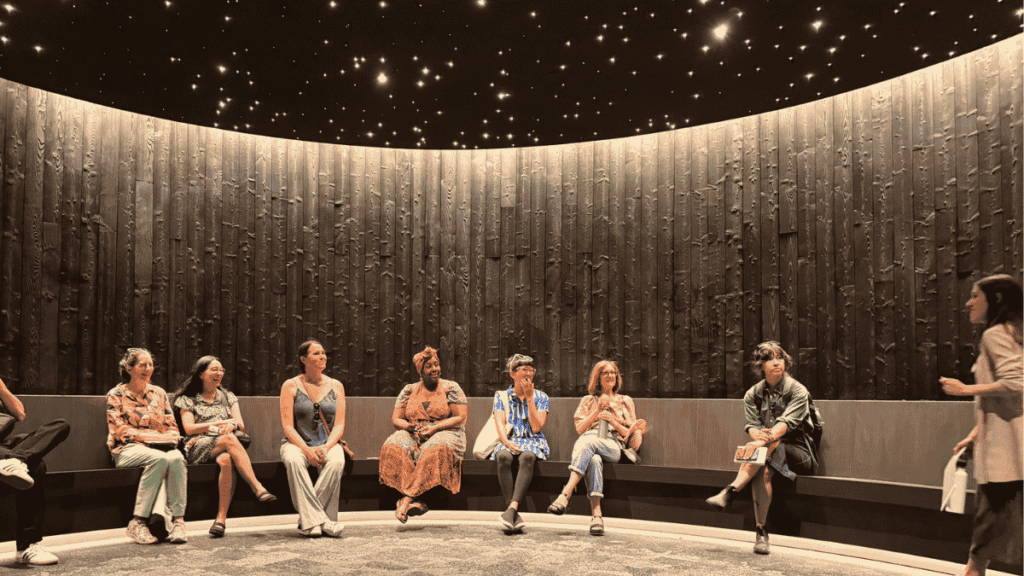
For is about sustainability and giving back, and it’s where you’ll find the library’s most talked-about room (at least amongst our specific pre-opening tour group): a completely circular dark room, built for sound baths, astronomical learning, and storytelling beneath a projected night sky. “Studies show that children learn differently in the dark,” goes the reasoning behind it—calmer, but more alert.
At the exact center of it all — where the three roof lines converge — sits the Kinship Garden, the intersection of all four areas and, by design, the heart of the building meant for one-on-one moments rather than crowds. Serviceberry trees are planted there—ready to blossom with clusters of fragrant white flowers in April that will give rise to edible berry-like fruits later in the year.
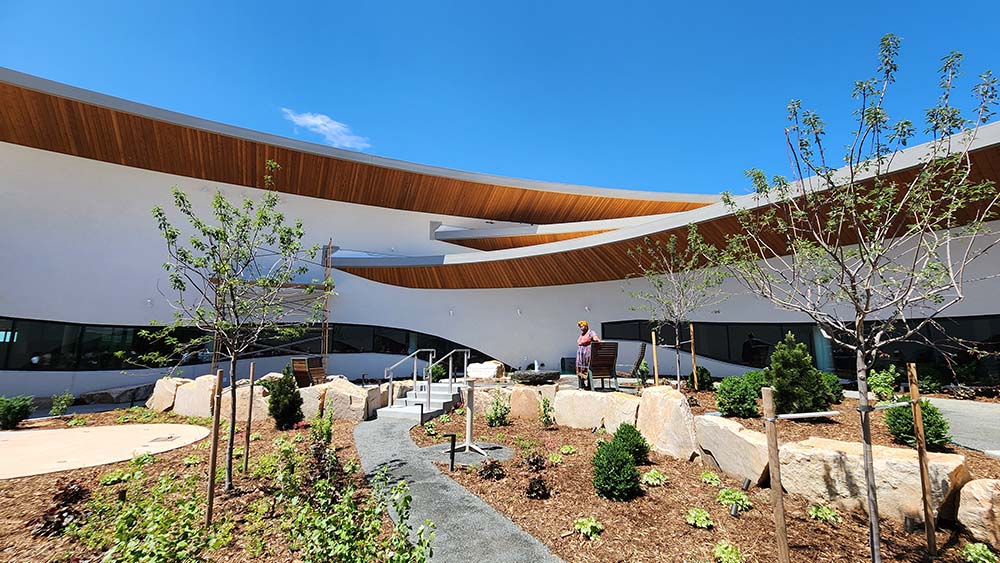
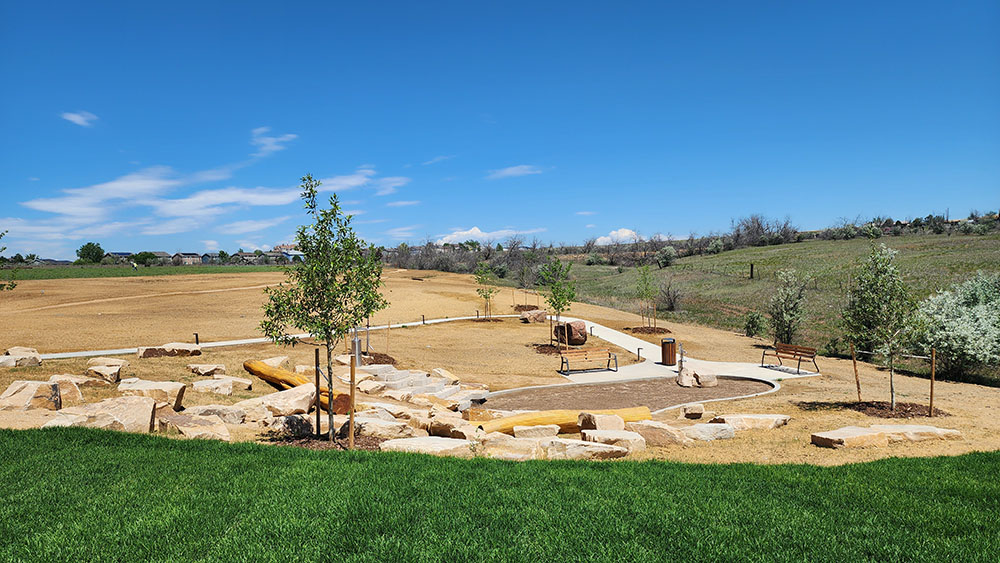
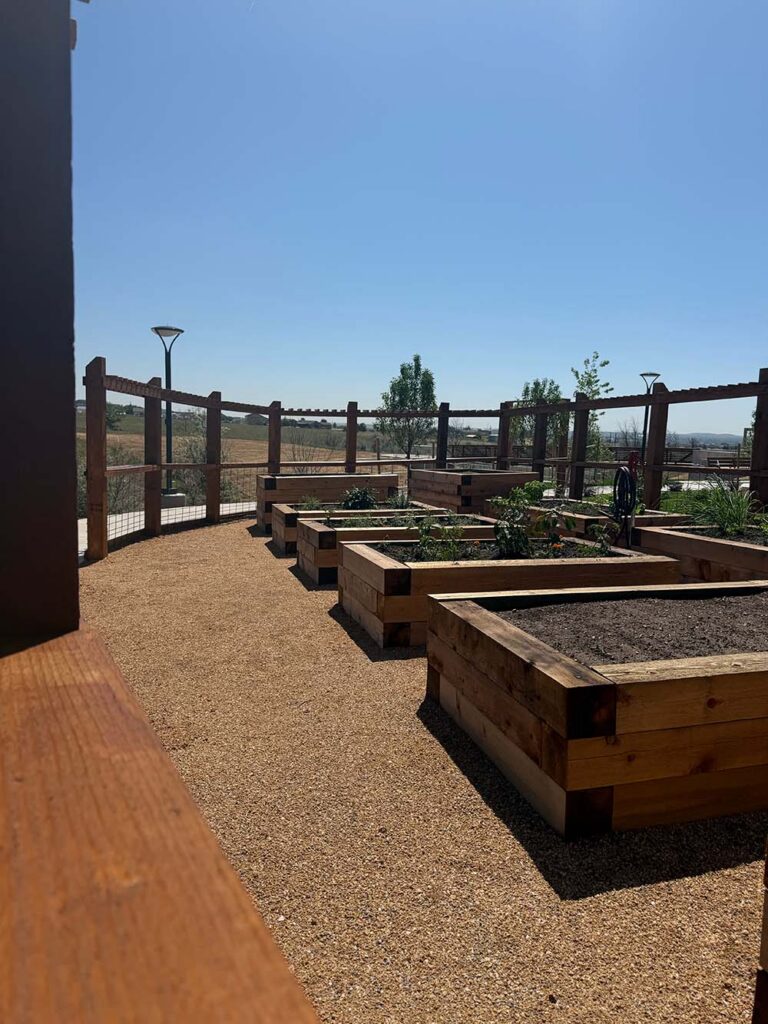
Outside, nine mini-botanic gardens fan out from the building: mountain, sensory, desert, and more, plus a demonstration garden envisioned for programs on composting and natural dyes, and a community garden space on the far side of the parking lot for neighbors who want a plot of their own. A round, outdoor storytelling space, shaped with guidance from an advisory council of Indigenous and Native American leaders, sits among them. Fifty Colorado native animal species are set into the terrazzo floor underfoot—a quiet census of who else lives here. The windows are bird-safe glass, dotted so birds don’t mistake them for open sky. Everything, wherever possible, was sourced locally. That kind of care doesn’t happen by accident.
A group of children’s book authors toured the building with me before opening, and everyone was moved. Saki Tanaka told me: “The thoughtfulness with which the team curated and designed the purpose and the spaces was what made the biggest impression on me—everything from consulting local communities and native tribes to design the various gathering rooms, to choosing responsibly sourced materials and solar and geothermal energy.” She admitted the dark room, with its night sky overhead, brought her to tears.
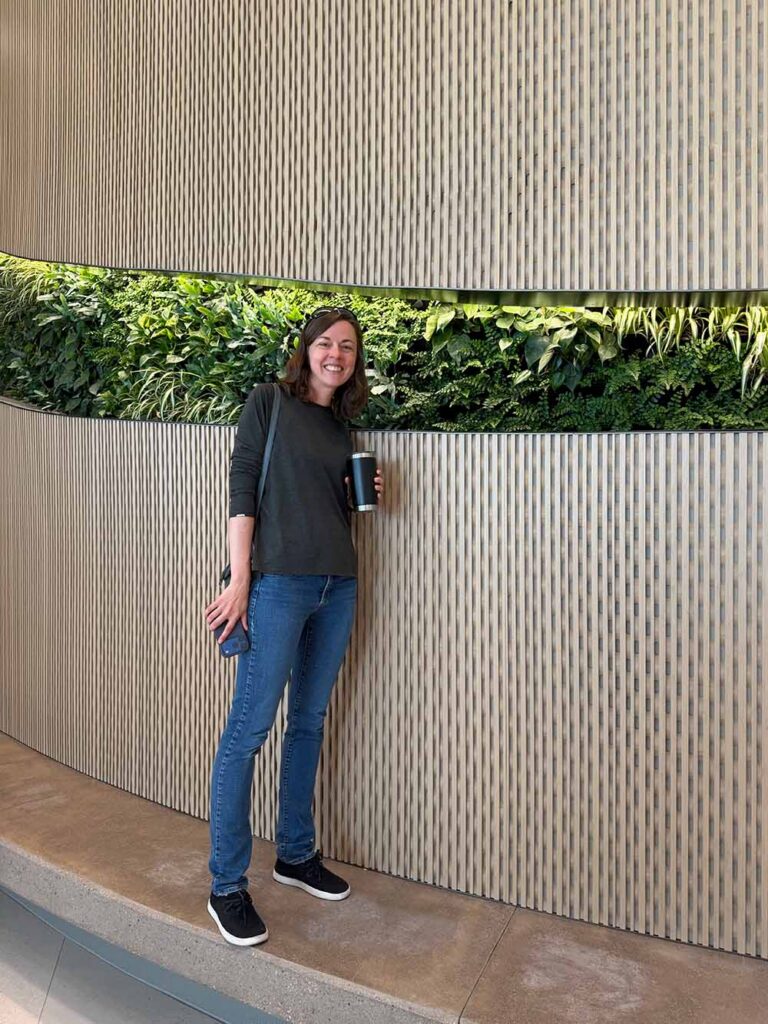
Brittany Cicchese felt something similar, though she landed on a different word for it: hope. “It was such a magical morning, and I left feeling so inspired and hopeful—two things that are hard to come by nowadays,” she said. What resonated most with her was Anythink’s effort to close the access gap: a place where people can learn the skills to have an adventure in nature without first needing to buy the latest gear. The Try-Its, she pointed out, are proof that libraries are learning to meet people where they are.
That, ultimately, is the throughline of this whole project. The library staff have said, in effect, that they built this by asking the community what it actually wanted, then building the programming around the answer, rather than deciding in advance what people should want and hoping they’d show up for it. As the land changes with the seasons, so too will the collection change with the community. Everywhere you turn, there are what the design team calls “portals”—small architectural surprises meant to delight rather than merely function. Nothing here forgot that a library is still, first, a place for people.
It is worth pausing on what it means that a city government did this. Thornton held onto a piece of farm land for fifteen years, waiting for the right use to reveal itself, and then didn’t build a strip mall or a subdivision. Instead, they built a place where a child can look up at a ceiling lit up like a starry sky and hear a story, where an adult can do sunrise yoga in a sunroom with the Rockies in view, where a hawk overhead might be the most honest welcome sign the building has. When it’s all too easy to feel cynical about what public institutions are capable of, this is a bright spot and proof of what government can still choose to build for its people, when it chooses well. As Fink told it, “This library is the result of good government… We listened and invested in something special.”
Anythink, as a name, was always meant to mean different things to different people. That flexibility turns out to be the whole philosophy. Walk in wondering what you’re feeling today. Walk in wondering what kind of adventure you want to have. The building will meet you where you are—in the sunroom, in the dark room, amongst the bookshelves, on the trail, in the garden built for you, where librarians are known as guides, and Anythink is possible.
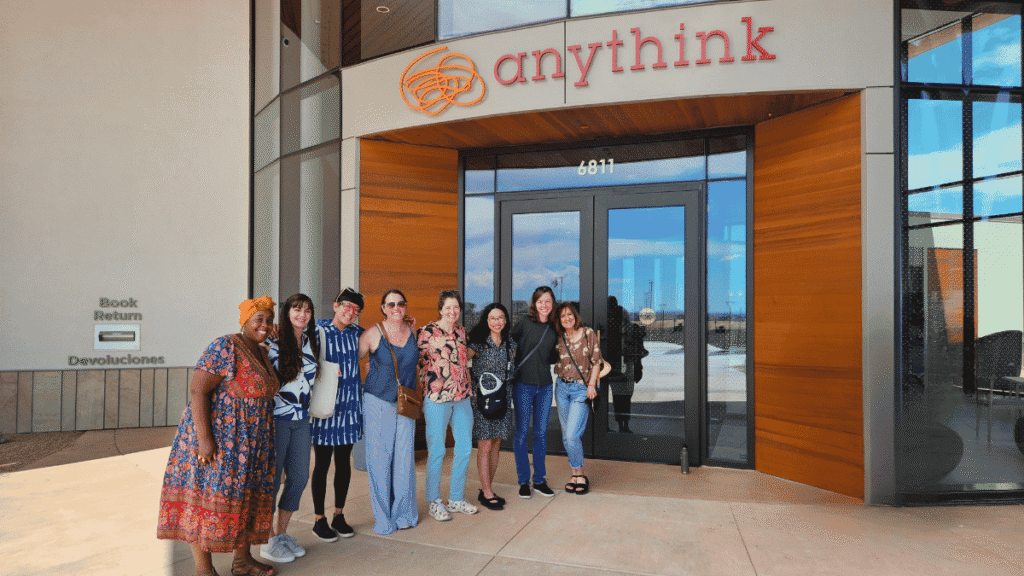
A special thank you to Susan Wroble for sharing her meticulous notes from our tour of the incredible Anythink Nature Library in Thornton, Colorado, and to Jolene and Eduardo Gutiérrez for sharing their photographs.

2 Comments
I hope this model catches on all around the country—it was truly incredible, and my one wish was that there were similar libraries close to my home!
Agree! Let’s hope this model catches on.